


Insider Brief
- China is shifting its quantum computing strategy toward commercialization, aiming to translate laboratory advances into industrial applications and measurable economic productivity.
- The plan prioritizes government-led pilot projects, integrated computing infrastructure, and workforce development to bridge the gap between technology and market adoption.
- By 2030, China aims to establish a nationwide quantum computing network to support scalable applications and underpin long-term economic growth.
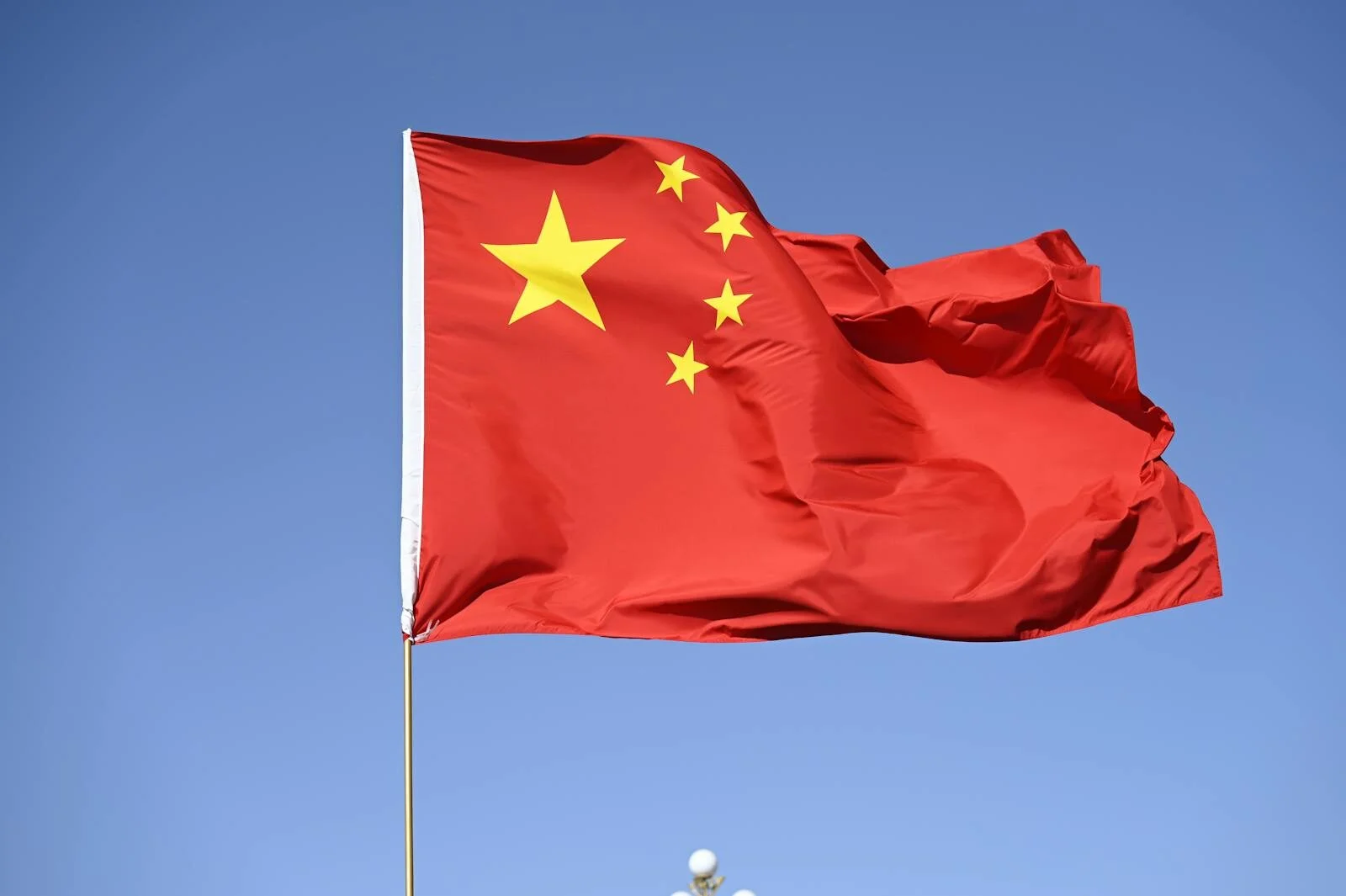
China is a world leader in quantum research, but it lags its global quantum counterparts in turning those scientific advances into real-world applications and services.
Now, China appears to be shifting its quantum computing strategy from laboratory progress to commercial deployment, according to a recent interview in Science and Technology Daily, a state-backed newspaper focused on science, technology, and innovation policy.
Guo Guoping, a member of China’s National People’s Congress and chief scientist at Benyuan Quantum Computing Technology, said in an interview with the newspaper that the field has reached a stage where technical gains alone are no longer sufficient. The next phase will be defined by whether quantum systems can deliver measurable economic value, he suggested.

“Quantum technology is currently in a critical stage of application and implementation,” said Guo, according to a computer translation of the interview. “We must abandon the closed-door mindset and push the government ‘visible hand’ and the market ‘invisible hand’ to work in the same direction. Currently, quantum computing is in the process of empowering new-quality productivity, but it still faces challenges such as the disconnect between technology and the market and an imperfect talent echelon, which restrict the full release of its core effectiveness.”
Quantum computing uses the principles of quantum mechanics to process information in ways that differ from classical computers. While the technology has shown promise in controlled settings, practical use in business and industry remains limited. Guo acknowledged that gap directly, pointing to what he described as a “disconnect between technology and the market.”
Based on these comments, China is facing the same challenges as the broader global quantum sector. Governments and companies have spent years building experimental machines and improving their performance. The focus is now turning to applications, or how those machines can solve real problems in areas such as finance, drug discovery and power systems.
Guo outlined a plan to accelerate that transition by aligning state policy with market demand. He called for government-led demonstration projects and pilot programs in key industries, with the goal of producing several widely recognized use cases by the middle of China’s next five-year planning cycle. These projects should be evaluated not only on technical success but also on whether they meet the needs of end users, he told the newspaper.
The emphasis on application is an interesting admission and hints that the evolution of China’s quantum strategy may be at a inflection point. Earlier efforts focused on building hardware and advancing core research. The current approach places more weight on turning those advances into products and services that can be deployed at scale.
Based on Guo’s interview, China is anticipating a commercialization timeline that is similar to ones proposed by other global quantum leaders.
He suggests the nation is outlining a phased push to commercialize quantum computing through the 2026–2030 period, with early efforts focused on launching government-led pilot projects in key industries, followed by the development of integrated computing infrastructure and talent pipelines, and culminating by 2030 in the establishment of a nationwide quantum computing network designed to support industrial-scale applications and contribute to broader economic productivity.
From Prototypes to Products
According to Guo, a central challenge is moving quantum systems out of specialized labs and into broader computing environments. He proposed integrating different types of computing resources — including quantum machines, supercomputers and artificial intelligence systems — into shared platforms accessible through the cloud.
This type of integration would allow companies to experiment with quantum tools without owning the hardware, lowering barriers to entry. It also reflects another shared global view that quantum computing is unlikely to replace classical systems outright, but will instead operate alongside them in hybrid workflows.
China is already building elements of this infrastructure. Guo pointed to domestic systems such as the “Origin Wukong” superconducting quantum computer and the “Origin Sinan” operating system as examples of a full-stack approach, in which hardware, software and cloud services are developed together.
He said the government plans to expand this model into a broader network of advanced computing centers across major economic regions, including the Beijing-Tianjin-Hebei area and the Yangtze River Delta. The aim is to create a coordinated national system for quantum computing power that can support industrial use.
“Ecosystem construction is also a key support for quantum computing to empower new quality productivity,” said Guo.
The nation is betting heavily on core advantages of independent superconducting quantum computers such as ‘Origin Wukong,’ Guo suggested He added that the domestic operating system ‘Origin Sinan’, will also be important guiding “various types of quantum hardware to be connected to cloud platforms, and promote the deep integration of ‘quantum—supercomputing—intelligence—communication’ computing power.”
Closing the Talent and Adoption Gap
Guo also identified workforce development as a limiting factor in commercialization. While China has invested heavily in research talent, he said the industry lacks enough engineers and technicians to translate scientific advances into usable products.
To address that gap, he proposed a multi-tiered training system that includes university research programs, industry partnerships and vocational education. The goal is to produce a broader range of workers, from high-level scientists to application-focused engineers and skilled operators.
The approach mirrors challenges seen in other countries, where companies report difficulty hiring workers with both technical expertise and practical experience in quantum systems.
“Talent is the core element of high-quality development of the quantum computing industry,” Guo told The Science and Technology Daily, adding, “It is necessary to build a multi-level and all-round talent cultivation system, taking into account the cultivation of research-oriented, application-oriented and skilled talents, and make up for the shortcomings in talents. Quantum computing empowers new productivity over a long period of time, and through continuous breakthroughs, it can become an important engine for high-quality development.”
At the same time, Guo suggested that China should expand its quantum offerings beyond its borders. By providing access to domestic systems through cloud services and technical partnerships, Chinese firms could build an international user base and promote their software frameworks and operating systems.
That strategy could increase global competition in a field already shaped by national investment and industrial policy. The United States and Europe have also launched programs to support quantum commercialization, though their approaches tend to rely more on private-sector leadership.
Guo framed the commercialization push as part of a longer-term effort to position quantum computing as a driver of economic growth. He described the technology as a potential contributor to what Chinese policymakers call “new-quality productivity,” a term used to describe advanced, innovation-led development.