

Insider Brief
- The Canadian government launched two Innovative Solutions Canada challenges offering up to $5.55 million in potential funding for Arctic optical ground stations and long-distance quantum repeater technologies aimed at strengthening next-generation communications infrastructure.
- The Department of National Defence is seeking a ruggedized, transportable optical ground station capable of high-bandwidth laser communications with low Earth orbit satellites in Arctic conditions, with Phase 2 prototype funding worth up to $2 million.
- Innovation, Science and Economic Development Canada is funding quantum repeater technologies designed to extend quantum network distances through quantum memory and entanglement-swapping capabilities, with one Phase 2 grant valued at up to $3 million.
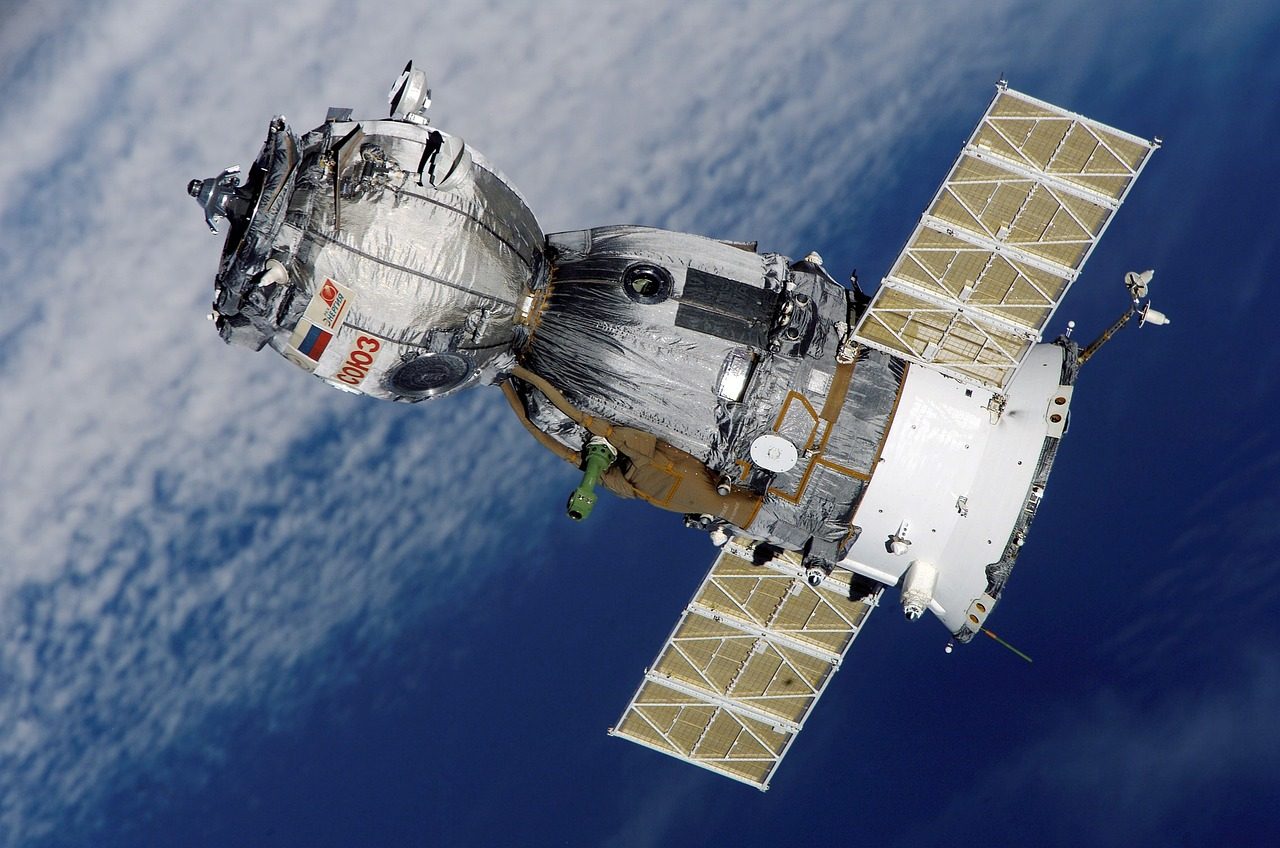
- Photo by WikiImages on Pixabay
Canada has launched a new quantum networking challenge aimed at pushing domestic researchers and companies toward building quantum repeaters capable of extending quantum communications across long distances — one of the field’s most difficult technical goals.
According to the announcement from Innovation, Science and Economic Development Canada (ISED), the federal government is seeking proposals for technologies that could eventually allow quantum information to travel farther than is possible through direct transmission alone, a major barrier facing the development of future quantum networks.
The challenge, which opened May 21 and closes July 2, offers support through Canada’s Innovative Solutions Canada program and is structured around two streams, including early-stage feasibility studies and more advanced prototype development. The effort reflects growing international competition to develop quantum networking infrastructure, an area viewed as strategically important for cybersecurity, communications and distributed computing.

Quantum repeaters are considered a critical missing piece in large-scale quantum networks. In conventional optical communications, signals can be amplified as they travel through fiber-optic cables. Quantum information cannot be copied or amplified in the same way because doing so destroys the fragile quantum state carrying the information.
Instead, researchers are attempting to build repeater systems that can store, synchronize and swap quantum information between distant nodes. The goal is to distribute entanglement — a quantum connection between particles — across long distances while overcoming signal loss that naturally occurs in optical fibers or other transmission channels.
According to the announcement, the Canadian government is specifically looking for systems that can demonstrate a “credible pathway” toward surpassing the direct-transmission limit of a chosen quantum channel.
The challenge outlines several mandatory technical requirements. Proposed systems must demonstrate or model a viable quantum memory capable of storing and retrieving quantum states, include some form of entanglement-swapping process such as Bell-state measurements, and establish a practical interface with the selected transmission channel.
The government is also encouraging applicants to integrate multiple repeater subsystems into functional nodes, develop networking software for synchronization and routing, and demonstrate scalability toward multi-node quantum networks. Additional goals include testing under realistic environmental conditions and achieving stable multi-hour operation.
The challenge highlights how quantum networking has evolved from a largely theoretical research area into an emerging engineering problem involving hardware integration, networking protocols and systems reliability.
Canada already has a sizable presence in quantum technologies through university research groups, photonics companies and quantum hardware startups. The announcement indicates that the country has established strengths in areas such as quantum memories, photonic hardware and networked quantum systems.
The announcement acknowledges that no group globally has yet achieved repeater-level performance capable of outperforming direct transmission in realistic conditions. Researchers have made progress on individual components such as entangled photon generation and quantum memories, but integrating those technologies into operational repeater nodes remains unresolved.
That limitation remains one of the central obstacles facing the broader vision of a quantum internet.
Future quantum networks are expected to support applications including highly secure communications, distributed sensing systems and modular quantum computing architectures where multiple quantum processors are linked together. Some researchers also see quantum networks as a possible foundation for future cloud-based quantum computing services.
The Canadian program attempts to bridge the gap between laboratory experiments and deployable systems by supporting both low-readiness concepts and more advanced prototypes. Applicants proposing technologies at Technology Readiness Levels 1 through 4 must apply through the feasibility stream, while more mature systems in Levels 5 through 9 must enter the prototype stream.
The challenge could also help strengthen Canada’s position in the increasingly strategic race around quantum infrastructure. Governments in the United States, Europe and China have all expanded investments in quantum networking and secure communications as concerns grow around future cybersecurity threats and technological competitiveness.
To learn more, or apply, go here.