Insider Brief
- A collaborative team from JPMorganChase, Quantinuum, multiple national labs, and UT Austin demonstrated a certified randomness protocol using a quantum computer, marking a major milestone for real-world quantum applications.
- The researchers used Quantinuum’s 56-qubit H2 trapped-ion system to perform a randomness-expansion task that cannot be replicated by classical supercomputers.
- Certified randomness was validated using over 1.1 exaflops of classical computing power, confirming the quantum system’s ability to generate entropy beyond classical reach.
PRESS RELEASE — – In a paper in Nature published onMarch 26, a team of researchers from JPMorganChase, Quantinuum, Argonne National Laboratory, Oak Ridge National Laboratory, and the University of Texas at Austin achieved a critical industry milestone by demonstrating a potential application of a quantum computer.
Randomness has many industrial uses, from solving complex mathematical problems to essential applications in areas such as cryptography, fairness and privacy. The group conducted the first successful demonstration of a novel quantum computing protocol to generate Certified Randomness. The researchers leveraged a task originally designed to demonstrate quantum advantage, called Random Circuit Sampling (RCS), to perform a certified-randomness-expansion protocol, which outputs more randomness than it takes as input. This task is unachievable by classical computation.
Ilyas Khan, Chief Product Officer of Quantinuum, said “Cementing quantum supremacy was not our objective. Of course this experiment is exactly what Google and others have stated as the core objective in demonstrating exactly why quantum computers are so important. What we have done today is show that a genuine application that can only be constructed using a quantum computer is now real and is not years away. We will be rolling out this product a little later in the year alongside the launch of Helios”

The 56-qubit Quantinuum System Model H2 trapped-ion quantum computer, with its high-fidelity and all-to-all qubit connectivity, was used for this study, demonstrating that a quantum computer can now achieve computational power beyond that offered by the most powerful classical supercomputers. Accessing H2 remotely over the internet, the team generated certifiably random bits.
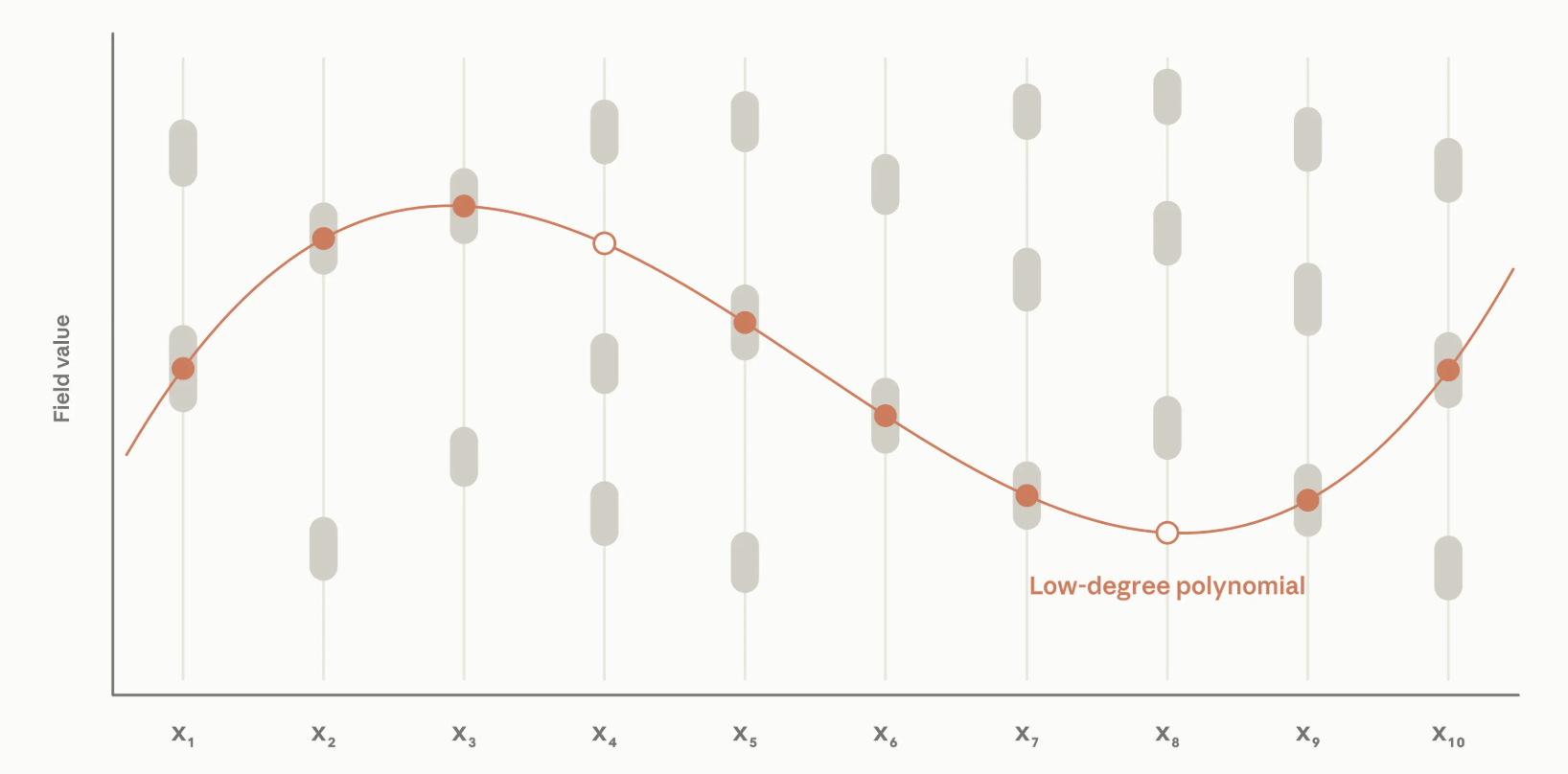
The protocol consisted of two steps. First, the team generated challenge random circuits and sent them to the untrusted remote quantum computer, which was then asked to return the corresponding samples. The response time was so quick that the challenge circuits could not be simulated classically in the same amount of time. This was tested against the best currently known techniques for simulating random circuits on the world’s most powerful supercomputers. Second, the randomness was mathematically certified to be genuine using classical supercomputers. This demonstrated randomness could not be mimicked by classical methods. Using classical certification across multiple leadership-scale supercomputers with a combined sustained performance of 1.1 x 10¹⁸ floating point operations per second (1.1 ExaFLOPS), the team certified 71,313 bits of entropy.
“This work marks a major milestone in quantum computing, demonstrating a solution to a real-world challenge using a quantum computer beyond the capabilities of classical supercomputers today,” said Dr. Marco Pistoia, Head of Global Technology Applied Research and Distinguished Engineer, JPMorganChase. “This development of Certified Randomness not only shows advancements in quantum hardware, but will be vital to further research, statistical sampling, numerical simulations and cryptography.”
“Today, we celebrate a pivotal milestone that brings quantum computing firmly into the realm of practical, real-world applications,” said Dr. Rajeeb Hazra, President and CEO of Quantinuum. “Our application of Certified Quantum Randomness not only demonstrates the unmatched performance of our trapped-ion technology but sets a new standard for delivering robust quantum security and enabling advanced simulations across industries like finance, manufacturing, and beyond. At Quantinuum, we are driving pioneering breakthroughs to redefine industries and unlock the full potential of quantum computing.”
“When I first proposed my certified randomness protocol in 2018, I had no idea how long I’d need to wait to see an experimental demonstration of it,” said Prof. Scott Aaronson, Schlumberger Centennial Chair of Computer Science and Director of the Quantum Information Center at The University of Texas at Austin. “I’m thrilled that JPMorganChase and Quantinuum have now built upon the original protocol and realized it. This is a first step toward using quantum computers to generate certified random bits for actual cryptographic applications.”
“These results in quantum computing were enabled by the world-leading U.S. Department of Energy computing facilities at Oak Ridge National Laboratory, Argonne National Laboratory and Lawrence Berkeley National Laboratory,” said Dr. Travis Humble, Director of the Quantum Computing User Program and Director of the Quantum Science Center, both at Oak Ridge National Laboratory. “Such pioneering efforts push the frontiers of computing and provide valuable insights into the intersection of quantum computing and high-performance computing.”
Read the full research paper here.