
Our international team of experts spans technology, science, and finance, delivering the small details, the big picture, and the clear, actionable insights you need for success.

Every engagement with The Quantum Insider (TQI) starts from the same foundation: the TQI Intelligence Platform, the most extensive and trusted system of record in the quantum sector. Advisory work is then built in four stages.
Engagements open with a data pull from our proprietary TQI Intelligence Platform, not a blank page. We assess the relevant companies, funding flows, patents, research activity, partnerships, and national program landscape for your question, starting from strong evidence on day one.
Our team combines seasoned consultants and PhD holders, bringing the best of quantum science and commercialization together. They interpret the data against your current reality and your goals, be they market entry, investment, ecosystem strategy, or procurement.
Where needed, we test findings directly with the market through expert interviews, stakeholder consultations, and our unparalleled network across client organizations, national programs, and research institutions.
Outputs are built for the decision at hand and delivered to the C-suite: ecosystem assessments, economic impact models, due diligence reports, national strategy inputs, and more. The results are actionable, clear, and data-driven, so you can move confidently.


A selection of engagements for governments, agencies, and industry bodies, each built on the TQI Intelligence Platform.
Quantum market data and analysis for the UK Department for Science, Innovation, and Technology.
In-depth study of quantum technologies, their use cases, and their potential implications for UK transport and society.
Ecosystem and feasibility study supporting the Chattanooga quantum program.

Quantum ecosystem study assessing and strengthening the state’s position as a leading US quantum ecosystem.
Updated quantum ecosystem assessment for the Innovation Institute at the MassTech Collaborative.
Global industry benchmarking for the State of the Global Quantum Industry report.
Twin global market studies sizing the quantum-secure communications (QKD) and quantum inertial navigation (Q-INS) markets, mapping the vendor ecosystem, standards, and entry points.
Market research and investment case across quantum security (PQC and QKD) and quantum computing: bottom-up market sizing, competitive landscape, and opportunity mapping.
Commercial due diligence on the Optical Communication Terminal (OCT) market ahead of a potential acquisition: market sizing, competitive landscape, and target positioning across next-generation space laser communications.
Whatever your goals, our team has the expertise to guide you in the right direction. Our advisors have delivered quantum strategy work for national governments, G7 agencies, Fortune 500 enterprises, and institutional investors. With backgrounds in physics, finance, journalism, and government, we’ve collectively covered the innovations, trends, and players in the quantum sector since 2019. We listen deeply to the industry. And we listen just as deeply to you.
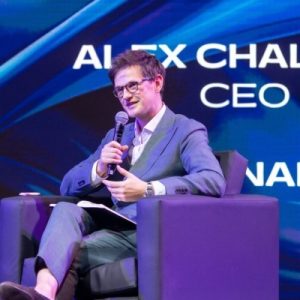
CEO
CEO and co-founder of Resonance, providing market intelligence across deep technology sectors including quantum computing, artificial intelligence, and space. Previously a Director at a UK-based private equity fund focused on data and tech investments.
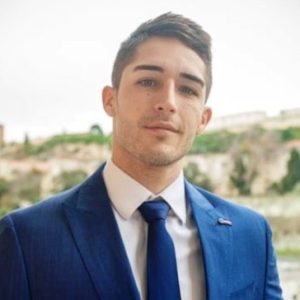
Chief of Staff, Resonance
Former Manager at Bain & Company, specialized in AI, deep tech, and infrastructure. Led consulting projects for PE funds, portfolio companies, and large corporates, including commercial and technical due diligence, value creation, and post-merger integration. MBA from SDA Bocconi.

Director: Private Clients
Former Global Lead for Space Consulting at Frost & Sullivan with a background in aerospace engineering. Advised space and deep-tech companies and government entities, including the UK Defence Space Council, Northrop Grumman, Telespazio, General Dynamics, and NEC. MEng in Aerospace Engineering from Sheffield University.

Director: Public Clients
Leads TQI’s work with government and public-sector clients, expanding strategic alliances and driving adoption of the intelligence platform across national programs and agencies. Previously, five years at the University of Oxford’s UK Quantum Computing Hub, developing and championing the UK quantum computing ecosystem. Also, Chief Quantum Officer at Entangled Positions, supporting talent across the quantum industry.

Strategy Director
Strategy Director at Resonance, advising investors and companies across quantum, space, and AI. 10+ years in private equity, venture investing, M&A, and strategy consulting. Previously Investment Manager at Surmount Ventures, leading deep tech and biotech investments, and Engagement Manager at Strategy& and PwC Deals, where he led 20+ commercial due diligence and strategy projects for private equity clients. CFA Charterholder. MSc (Hons), Rotterdam School of Management.
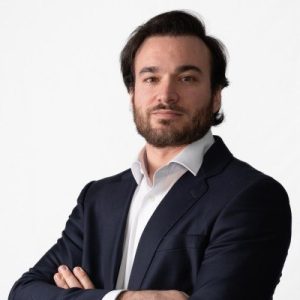
Strategy Senior Associate
Strategy senior associate developing and executing strategic initiatives for clients across the quantum sector.

Strategy Associate
Strategy associate developing and executing strategic initiatives for clients across the quantum sector. Previously, three and a half years at Monitor Deloitte in Madrid, rising from strategy analyst to senior strategy consultant. Member of Nova Talent.

Strategy Associate, Executive Office
Strategy associate in the executive office, developing and executing strategic initiatives for clients. Previously an associate at BCG Platinion in Milan, working on technology and digital transformation, and at PwC, alongside independent consulting on quantum computing, AI competitive analysis, and economic impact.

Senior Technical Adviser
Senior technical adviser with over 40 years as an executive in aerospace and defense. Former CTO of Cobham Avionics & Surveillance, Managing Director of QinetiQ Weapons, and Technical Director at Rolls-Royce (Vickers). PhD in Physics and Engineering from Cambridge.
Our advisers work side by side with the quantum-specialist analysts behind the TQI Intelligence Platform.
Quantum consulting providers fall into four groups, and the right one depends on the decision you are making.
Quantum-specialist intelligence and advisory firms work only in this sector and maintain their own data. The Quantum Insider is the largest of them, advising governments, enterprises, and investors from a dataset covering more than 2,100 quantum companies, and is part of Resonance, which runs the same model across quantum, artificial intelligence, and space. Global Quantum Intelligence publishes the Quantum Computing Report and offers membership research and due diligence. Qureca focuses on quantum training, skills, and workforce development.
Global strategy and systems integration firms, including McKinsey, BCG, Accenture, Deloitte, and Capgemini, run quantum practices inside much larger organizations. They are the usual choice when quantum work sits inside a wider digital or transformation program and the client needs implementation capacity at scale.
Hardware and software vendors offer professional services around their own platforms. That is efficient once a technology decision is made, and it carries an obvious conflict when the question is which technology to pick.
Academic and national laboratory groups take consulting engagements, usually on technical feasibility rather than commercial strategy.
For vendor selection, market sizing, due diligence, or national program design, a sector-specialist firm with its own dataset gives you evidence rather than desk research. For enterprise-wide implementation across many technologies, a global integrator is usually the better fit.
Tell us the decision in front of you. One of our team will be in touch to scope the engagement and provide pricing and options.
Your work email is all we need to start.
One of our team will be in touch to learn more about your requirements, and provide pricing and access options.
We use cookies to analyse traffic and improve your experience. Privacy Policy