NVIDIA Expands Open Source CUDA-Q Platform



Insider Brief
- NVIDIA introduced CUDA-Q Logical, an open-source orchestration layer for designing and testing applications for fault-tolerant quantum computers.
- Iceberg Quantum used the platform to model 1,000 logical qubits with 150,000 physical qubits, about 10 times fewer than Diraq’s previous estimate.
- Fermilab cut the time needed to evaluate fault-tolerant system designs from about five months to three weeks, while Sandia made its QUOPS benchmarking tool available through CUDA-Q.
PRESS RELEASE — NVIDIA today announced an expansion of the NVIDIA CUDA-Q™ open source platform with CUDA-Q Logical, an orchestration layer that provides a programmable, verifiable approach to developing useful applications for fault-tolerant quantum computers.
Fault-tolerant quantum processors with logical qubits are essential for useful quantum computing, allowing systems to overcome the errors inherent in physical qubits so they can execute the larger computations needed for practical applications such as drug discovery, financial modeling and materials development.
However, developing applications for such systems is a tedious, time-consuming codesign challenge: A change to an algorithm, error-correction code, hardware architecture or other QPU component can significantly change the resources needed to run any given application.

With CUDA-Q Logical, researchers can now design and orchestrate the many components required for fault-tolerant quantum computing applications, easily switching between options to identify optimal system configurations for performance with logical qubits.
“Quantum computing is maturing into an era of logical qubits, and researchers need an open, customizable platform capable of representing all aspects of a fault-tolerant system,” said Timothy Costa, vice president and general manager of quantum at NVIDIA. “The addition of CUDA-Q Logical provides power and flexibility to explore fully integrated, co-optimized systems regardless of qubit type and architecture — drastically shortening the timeline to useful quantum-GPU supercomputing.”
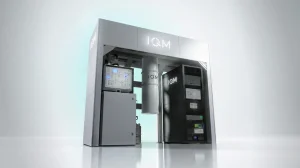
CUDA-Q Logical is already being used by QPU makers and labs including Fermi National Accelerator Laboratory, Infleqtion, IQM Quantum Computers, QCDesign Quantum Motion and Sandia National Laboratories.
Using CUDA-Q Logical, Iceberg Quantum modeled its fault-tolerant architecture for Diraq’s qubits, showing how 1,000 logical qubits can be created with just 150,000 physical qubits, roughly 10x fewer than Diraq’s previous estimates. CUDA-Q Logical gave an unprecedented way to rapidly assess potential implementations of Iceberg’s architecture, helping dramatically reduce the hardware needed for useful, fault-tolerant quantum computing.
Fermilab Uses CUDA-Q Logical to Explore Fault-Tolerant Applications
In early work, Fermilab researchers used CUDA-Q Logical to validate prior results and evaluate physical qubits, runtimes and other resource requirements across different error-correction approaches and quantum hardware.
Fermilab transformed complicated fault-tolerant system designs into a repeatable and verifiable computational workflow, accelerating fault-tolerant algorithm development from five months to three weeks, a 7x speedup.
“Fault-tolerant quantum computing is the path to unlocking new scientific discovery, but getting there will require researchers to codesign algorithm, error correction, architectures and hardware together,” said Anna Grassellino, chief technology officer at Fermilab and director of the Superconducting Quantum Materials and Systems Center. “Using CUDA-Q Logical, our team explored combinations of these resources in just three weeks, compared with what would have typically taken about five months of building specialized infrastructure.”
Sandia Creates Benchmark for Future of Quantum Computing
QUOPS is a new, independent cross-platform benchmark developed by Sandia National Laboratories that measures the progress quantum computing systems are making toward utility-scale applications.
With Sandia’s QUOPS, the industry now has access to a hardware-agnostic, open method to benchmark progress toward shared goals for fault-tolerant quantum computers. Historically, progress in quantum computing has been measured primarily through advances in physical qubits — increasing qubit counts, improving fidelity and extending coherence.
“At Sandia, we can’t wait to see fault-tolerant quantum computers helping to solve problems of national importance for the Department of Energy and the United States,” said Timothy Proctor, co-director of Sandia National Laboratories’ Quantum Performance Laboratory. “Our mission right now is to bring that about sooner, by accelerating our industry partners’ progress. To do that, we, and other quantum computing stakeholders, have to be able to track and forecast the growth of quantum computer abilities. We created QUOPS to do exactly that, and we’re excited to see it used by quantum computing vendors and customers.”
Sandia shared early results in a preprint posted ahead of IEEE Quantum Week, reporting initial QUOPS benchmarks for QPUs from Google, IBM and Quantinuum. A QUOPS reference implementation is available in NVIDIA CUDA-Q.
Expanding the Quantum-GPU Supercomputing Platform
The ecosystem is also adopting NVIDIA’s larger lineup of quantum computing technologies for turning qubits into useful quantum-GPU supercomputers.
Diraq used NVIDIA Ising, the world’s first family of open models for building and deploying AI for useful quantum computing, to calibrate its silicon-based qubit processor.
Companies are integrating their quantum processors with GPU supercomputing using NVIDIA NVQLink™, the open system architecture for tightly coupling quantum processors with GPU supercomputers. With NVQLink:
- Anyon Computing developed a new quantum control system.
- Quandela developed a QPU-GPU architecture.
- Quantum Machines ran a demo of integrating state-of-the-art supercomputing resources with qubits at the Israeli Quantum Computing Center.
- The NVIDIA CUDA-Q open development platform continues to be adopted across the quantum computing ecosystem:
- BlueQubit launched the Quantum Flywheel grant program for researchers, to give them access to NVIDIA accelerated computing through CUDA-Q. ● Qedma Quantum Computing and QCentroid each integrated their technology with CUDA-Q to support quantum error correction and mitigation, as well as the deployment of quantum applications.
The quantum ecosystem is also working with NVIDIA to develop new and improved quantum applications:
- IonQ announced progress on DQAOA-GPT, a quantum generative AI framework, using NVIDIA accelerated computing.
- MITRE published work on building GPU-accelerated digital twins of quantum sensors.
- Phasecraft is using NVIDIA cuQuantum to generate the largest-known variational quantum eigensolver emulated molecular database.
- UCLA and Caltech are advancing the design of control sequences needed to run quantum applications.
Availability
CUDA-Q Logical is now available through GitHub. Explore the QUOPS repository. Learn more by reading these papers on CUDA-Q Logical and QUOPS.

Keep track of everything going on in the Quantum Technology Market. In one place.

Matt Swayne
With a several-decades long background in journalism and communications, Matt Swayne has worked as a science communicator for an R1 university for more than 12 years, specializing in translating high tech and deep tech for the general audience. He has served as a writer, editor and analyst at The Quantum Insider since its inception. In addition to his service as a science communicator, Matt also develops courses to improve the media and communications skills of scientists and has taught courses.
[email protected]

Stay Ahead of Quantum
Get the latest research, company news, and market intelligence every week.
MENTIONED IN THE ARTICLE
NVIDIA
NVIDIA Corporation is an American multinational technology company and a global player in accelerated computing and Artificial Intelligence (AI). Founded in 1993, the company pushes the aerospace frontier with the Space-1 Vera Rubin Module, a platform for orbital data centers that delivers massive AI-compute Space Computing. This NVIDIA technology enables satellites and autonomous spacecraft to process and fuse sensor data rapidly Space Computing.
→

Iceberg Quantum
Iceberg Quantum specializes in designing next-generation fault-tolerant quantum computing architectures, focusing on reducing the hardware overhead for quantum error correction. It develops innovative architectures based on quantum low-density parity-check (qLDPC) codes to address the scalability challenges of quantum error correction. It emphasizes dramatically lower qubit overhead compared to traditional surface-code approaches, working with leading quantum hardware companies to accelerate the transition to useful fault-tolerant quantum computing.
→

Diraq
Diraq is a full stack quantum company which is building a quantum computer using silicon CMOS-based spin qubits.
→

Fermilab Quantum Institute
Fermilab QI is focusing on: using technology developed for superconducting particle accelerators to vastly improve qubit systems, including those used for future quantum computers; Developing ways to convey information across large distances with entangled particles ; Improving quantum sensors for many applications and deploying them to potentially detect dark matter and give us new insights into the universe ; Writing algorithms that can simulate subatomic interactions on quantum computers, with many other uses outside of physics ; Developing methods to use quantum computing to improve data analysis and theoretical calculations.
→

Sandia National Laboratory
The Sandia National Laboratories is one of three National Nuclear Security Administration research and development laboratories in the United States, managed and operated by the National Technology and Engineering Solutions of Sandia.
→

National Security Engineering Center (MITRE)
NSEC delivers research, engineering, and analytical solutions to the Department of Defense and the Intelligence Community. Since 1958, NSEC has contributed transformational innovations to essential systems such as the Semi-Automated Ground Environment (SAGE), the nation’s first air-defense system. These include Joint STARS, the Air Force/Army airborne ground surveillance, battle management, command and control aircraft, and Intelink, the first secure intranet used by the Intelligence Community. A team of physicists led by MITRE’s Gerry Gilbert, a theoretical physicist and quantum expert, are working on a quantum moonshot: a mission to build a scalable universal quantum computer.
→

Atom Computing
Atom Computing builds quantum computers using nuclear spin qubits formed from arrays of optically-trapped neutral atoms.
→

Quandela
Quandela is a French startup that specializes in photonic quantum computing by providing modular, scalable, and energy-efficient photonic quantum computers, accessible both on the cloud and on premise. They provide prototyping services with their Perceval simulator alongside their general purpose chips optimized chips, and development of algorithms and protocols which provide photonic solutions for applications ranging from pharmaceutical and material design, to quantum machine learning, networking and optimization.
→
Quantum Machines
Quantum Machines develops operational and control systems (both hardware and software) for quantum computers.
→

BlueQubit
BlueQubit specializes in quantum computing software, providing a cloud-based platform that enables enterprises, defense, and academic users to run advanced quantum algorithms on leading QPUs such as IBM Heron and Quantinuum H2. The company focuses on making quantum computing accessible for research and industry applications in finance, AI, and optimization. BlueQubit offers high-performance quantum simulators, SDK integration, and seamless migration from other quantum frameworks, supporting rapid prototyping and benchmarking. Its solutions address real-world challenges such as risk analysis, derivative pricing, and combinatorial optimization, emphasizing ease of use and practical value for early adopters.
→

IonQ
IonQ is a developer in trapped ion quantum computing founded in 2015 that actively applies its technology to the aerospace and defense sectors. The company empowers satellite-based quantum networks and quantum enabled drones to improve positioning, navigation, and timing resilience in GPS denied environments, and collaborates with industry leaders like Airbus to optimize aircraft loading.
→

Phasecraft
Phasecraft is developing the fundamental quantum theory and software that will enable quantum computers to be useful.
→

UCLA
The University of California, Los Angeles, commonly referred to as UCLA, is a public research university located in Los Angeles, California. Its origins date back to 1881 when it started as a normal school called the southern branch of the California State Normal School. It later became part of the University of California system in 1919 and was officially established as UCLA, making it the second-oldest campus among the ten in the University of California system.
→

California Institute of Technology
The California Institute of Technology, situated in Pasadena, California, is a private research university. It has played a crucial role in numerous contemporary scientific breakthroughs and stands alongside a select few technology institutes in the United States that prioritize teaching in pure and applied sciences.
→