Xanadu and HyperLight Reduce Photonic Switch Loss to 7 mdB


Insider Brief
- Xanadu and HyperLight have demonstrated an optical switch insertion loss of 7 millidecibels (mdB) using HyperLight‘s thin-film lithium niobate (TFLN) Chiplet platform, improving on their previous 20 mdB result from 2025.
- The new result was achieved on a high-volume wafer manufacturing line and is intended to reduce photon signal loss, a key challenge in scaling photonic quantum computers.
- The companies say the improvement could support more efficient manufacturing and the development of larger photonic quantum systems, with potential applications across data centre infrastructure.
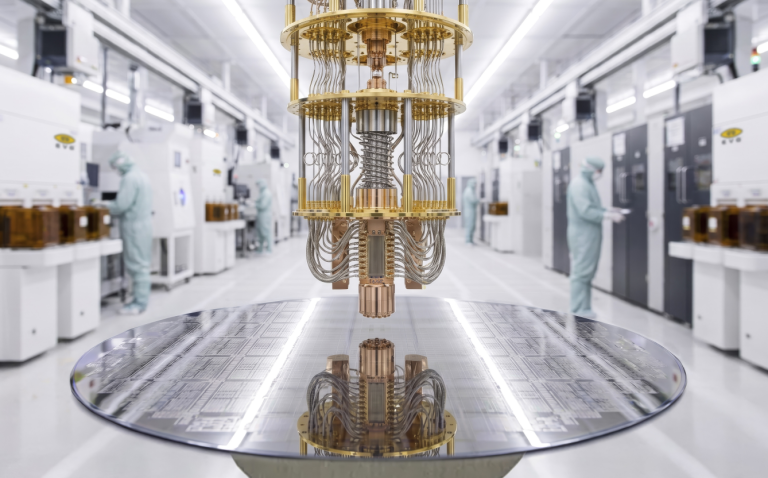
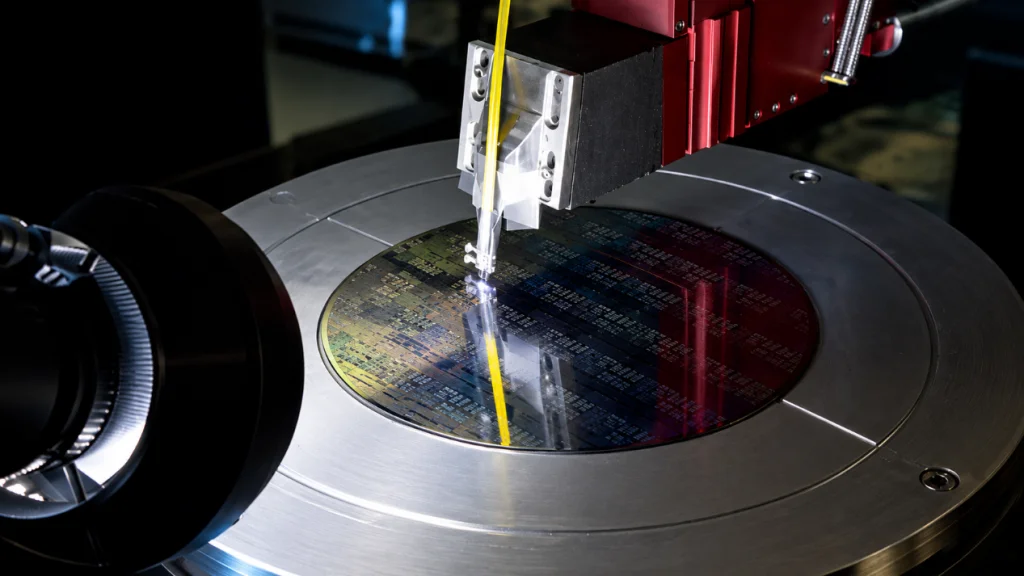
PRESS RELEASE — Xanadu Quantum Technologies Limited (“Xanadu”; NASDAQ/TSX: XNDU), a leading photonic quantum computing company, in collaboration with HyperLight Corporation, a leading thin-film lithium niobate (TFLN) photonics company, today announced a significant hardware performance milestone using TFLN technology, reducing optical switch insertion loss to 7 millidecibels (mdB). This achievement represents a nearly threefold improvement over Xanadu and HyperLight’s previous breakthrough of 20 mdB in 2025, drastically reducing qubit signal degradation, which is one of the most critical challenges in scaling quantum computers. This industry-leading achievement was demonstrated using a high-volume wafer manufacturing line on HyperLight’s TFLN Chiplet™ platform and shows excellent yield and repeatability.
“This notable switch insertion loss milestone indicates that Xanadu’s quantum-compatible switches are ready to ramp to production, bringing scalable quantum hardware and utility-scale quantum computing (USQC) one step closer to reality,” said Dr. Christian Weedbrook, Founder and Chief Executive Officer of Xanadu. “For Xanadu, minimizing optical loss is one of the most critical factors in making fault-tolerant photonic quantum computing commercially viable, and innovative partners like HyperLight are key to our go-to-market strategy.”
Optical switches are vital components in photonic quantum computers, responsible for routing light particles (photons) that carry quantum information. Because quantum signals cannot be conventionally amplified without destroying fragile quantum states, ultra-low insertion loss is paramount. Lowering switch loss preserves quantum state fidelity, prevents lost qubits, and allows photonic networks to scale efficiently without requiring exponential increases in laser power or physical hardware redundancy.

“Achieving 7 mdB switch loss, nearly 3x lower than our previous benchmark set just over a year ago and 10x lower than our closest competitor’s most recent published result, is a major hardware milestone that enhances performance and reduces overhead for utility-scale systems,” continued Weedbrook. “We expect that this advancement will translate into improved manufacturing economics, a reduced footprint, and direct progress along our commercial roadmap. Beyond quantum computing, we believe our ultra-low-loss photonic quantum technology could offer value across the broader data center ecosystem as data centers become faster and more energy intensive.”
“Our longstanding partnership with Xanadu continues to demonstrate the power and versatility of HyperLight’s TFLN Chiplet™ platform,” stated Mian Zhang, CEO of HyperLight. “The same platform that powers high-volume AI data centers and telecom networks has now delivered a record-setting 7 mdB switch loss for quantum computing with Xanadu, a testament to our platform’s ability to meet the most exacting demands.”
With this latest breakthrough, Xanadu continues to systematically and efficiently solve core physical scaling challenges in photonic quantum computing and aims to bring USQC closer to reality.

Keep track of everything going on in the Quantum Technology Market. In one place.

Mohib Ur Rehman
Covering quantum and emerging technologies, Mohib explores the intersection of technology, security, and society. His work also frequently examines surveillance infrastructure and the institutions shaping the digital world. In addition to his work at The Quantum Insider, he co-runs SK NEXUS, an independent technology publication that helps readers understand the technologies shaping their lives.

Stay Ahead of Quantum
Get the latest research, company news, and market intelligence every week.
MENTIONED IN THE ARTICLE

Xanadu
Xanadu is a Canadian photonic quantum computing company founded in 2016 that is building fault tolerant systems utilizing light. The company collaborates with defense and hardware partners like AMD and Lockheed Martin to accelerate computational fluid dynamics simulations and train an aerospace engineering workforce.
→
HyperLight
HyperLight Corporation specializes in developing and integrating photonics materials at scale, using a proprietary platform based on thin-film lithium niobate (TFLN) on insulator.
→