QuiX Quantum Leads National Mission to Develop 100+ Qubit Photonic Quantum Computer


Insider Brief
- QuiX Quantum will lead a national mission under Phase II of the PhotonDelta National Growth Fund programme to develop the technology foundations for a universal photonic quantum computer with more than 100 qubits.
- The project runs from January 2026 to December 2028 and brings together QuiX Quantum and nine Dutch industrial and academic partners to develop twelve components across the photonic quantum computing stack.
- The work targets lower optical loss, improved photon sources, advanced detection, faster control electronics and more manufacturable chips, with the results intended to support QuiX Quantum‘s fault-tolerant computing roadmap.
PRESS RELEASE — QuiX Quantum, a Dutch-German developer of universal photonic quantum computers, has been the Photonic Quantum Computing Mission awarded funding under Phase II of the PhotonDelta National Growth Fund (NGF) Integrated Photonics Programme.
QuiX Quantum and seven partners awarded the photonic quantum computing mission to solve the challenges of scaling.
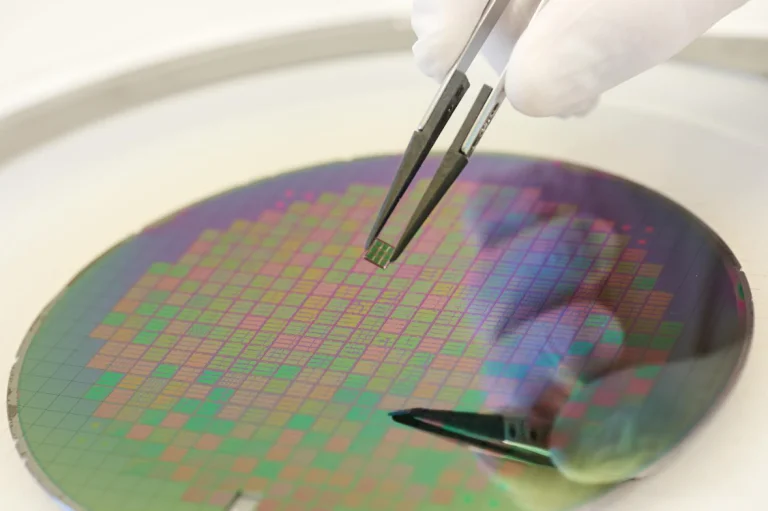
Running from January 2026 through December 2028, the mission, “Delivery of a 100+ Qubit Universal Quantum Computer”, brings together QuiX Quantum and nine Dutch industrial and academic partners. Together they will develop and integrate twelve deliverables covering the quantum photonic stack, from low-loss chips and photon sources to detection, control electronics, packaging and manufacturing.

For QuiX Quantum, the award marks an important step in turning its technology roadmap into industrial reality, and the company is eager to start working with its partners.
From Universal to Fault Tolerant: Solving the Challenges of Scale Together
Earlier in 2026, QuiX Quantum delivered its Universal Photonic Quantum Computing hardware platform developed for the German Aerospace Center’s Quantum Computing Initiative (DLR QCI). Building on this achievement, the company is advancing its next-generation Fault Tolerant architecture, with the development and demonstration of loss-tolerant logical-qubit capabilities planned throughout 2028–2030, laying the foundation for commercially deployable fault-tolerant photonic quantum computers beyond 2030.
Reaching that goal requires progress on several technical fronts at once. The mission targets them directly:
- Lower optical loss: ultra-low-loss silicon nitride waveguides and novel high-speed modulators (imec), and fibre-to-chip coupling at a target of 0.1 dB per facet (PHIX, MicroAlign)
- Better photons: a quasi-deterministic single-photon source (University of Twente) and photon distillation with resource-state generation to operate below the error threshold (Eindhoven University of Technology)
- Better detection: on-chip photon-number-resolving detectors (Leiden University) and integrated SPAD arrays (Eindhoven University of Technology)
- Faster control: flip-chip control ASICs targeting latencies below 10 ns (Bruco-IC), compared with 150 ns for today’s feed-forward control
- More robust, manufacturable chips: inverse design and post-fabrication tuning to improve tolerances and yield (Eindhoven University of Technology)
QuiX Quantum leads the mission, integrating the partner results at system level and tracking progress against a shared KPI and technology-readiness framework. The mission concludes with a manufacturing strategy for 100+ qubit systems, preparing the ground for the next phases of industrialisation.
Strengthening the Netherlands and Europe’s Quantum Supply Chain
The mission connects scientific expertise, photonic chip manufacturing, packaging and assembly, control electronics and system integration within a single, vertically integrated consortium. It supports the NGF programme’s goals of developing application technologies and industrialising integrated photonics, and helps build a resilient, internationally competitive quantum photonics supply chain in the Netherlands.
By strengthening local capabilities in fabrication, packaging, testing and integration, the mission helps ensure that more of the technological expertise, intellectual property and economic value generated by Dutch and European quantum research stays in Europe.
“This grant is a strong vote of confidence in the Dutch photonics ecosystem and in our roadmap,” said Stefan Hengesbach, CEO of QuiX Quantum. “Scalable, Fault-Tolerant Quantum Computing cannot be built by one company alone. The challenges (loss, photon quality, detection, control speed and manufacturability) sit across the whole supply chain. We are very eager to work with our partners, and their expertise will help us overcome these technical challenges and bring Fault Tolerant architecture closer to reality.”
From a National Mission to Global Industrial Leadership
The mission’s timeline through December 2028 aligns with a critical phase in QuiX Quantum’s roadmap, as the company moves toward logical-qubit demonstrations between 2028 and 2030. The technologies and manufacturing strategy developed in the mission are intended to support the longer-term industrialisation of increasingly complex photonic quantum systems.
By combining customer-driven development, European manufacturing partnerships and sustained industrial investment, QuiX Quantum aims to help translate the region’s scientific leadership into lasting technological sovereignty and global competitiveness.
This project has received funding from the PhotonDelta National Growth Fund programme – www.photondelta.com

Keep track of everything going on in the Quantum Technology Market. In one place.

Mohib Ur Rehman
Covering quantum and emerging technologies, Mohib explores the intersection of technology, security, and society. His work also frequently examines surveillance infrastructure and the institutions shaping the digital world. In addition to his work at The Quantum Insider, he co-runs SK NEXUS, an independent technology publication that helps readers understand the technologies shaping their lives.

Stay Ahead of Quantum
Get the latest research, company news, and market intelligence every week.
MENTIONED IN THE ARTICLE

QuiX Quantum
QuiX offers integrated photonics for optical quantum computing.
→

PhotonDelta
PhotonDelta supports the industrialization of photonic chip technology by funding startups, innovation projects, and talent development while facilitating international collaboration. It coordinates a European integrated photonics network, bringing together companies and research institutes that have worked for over 25 years on Photonic Integrated Circuits (PICs) and PIC-powered opto-electronic modules. With a focus on communication, computing, and sensing, PhotonDelta plays a key role in advancing photonic technologies, particularly in the Netherlands.
→