

Insider Brief
- BlueQubit, Qedma, IBM, and RIKEN demonstrated an error-mitigated quantum simulation of a Floquet Ising model that was compared against advanced classical computing methods.
- The study used IBM’s Heron quantum processor with Qedma’s QESEM software and evaluated results against classical simulations run on Fugaku and GPU-based systems.
- The researchers reported that the validated quantum approach produced consistent results for a problem where tested classical methods could not reach agreement at larger scales.
Press release – When will meaningful applications of quantum computers arrive? The standard answer has been at least five to ten years, while we wait for fully fault-tolerant hardware with millions of qubits. A new landmark study disagrees, saying Quantum Advantage is already here.
BlueQubit supported Qedma Quantum Computing alongside IBM and RIKEN in demonstrating that today’s quantum computers can solve problems beyond the capabilities of the most powerful classical computers.
Standard physics suggests materials quickly dissolve into randomness when rhythmically driven, like an ice cube melting instantly in hot coffee. The original shape of the ice cube is lost to the chaotic heat. Properties of advanced technologies like room-temperature superconductors, next-generation EV batteries, ultrafast optoelectronics, and other non-equilibrium quantum materials reside in the steady oscillations of a protective “prethermal” barrier.

Qedma led the team in simulating the sub-atomic oscillations of a Floquet Ising magnet over extended periods on both classical and quantum architectures, with an extensive validation strategy.
To push classical simulation to its absolute limits, RIKEN executed over 500,000 CPU-core hours on the Fugaku supercomputer, while BlueQubit ran state-of-the-art tensor network and Pauli path simulation algorithms across high-performance GPU clusters. They validated that only an error-mitigated quantum processor can deliver consistent, stable results.
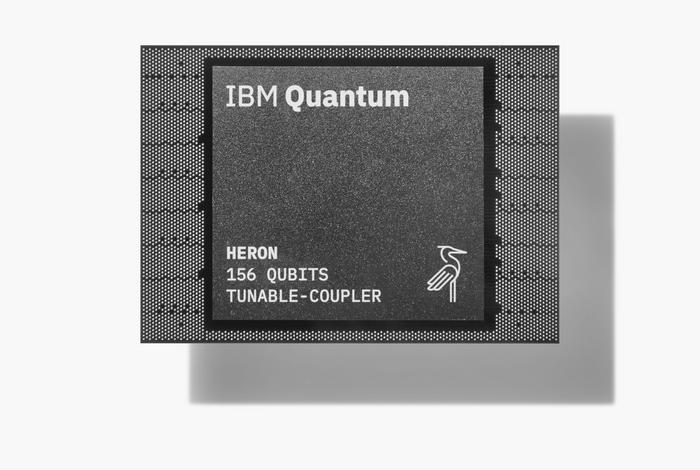
Today’s quantum hardware is notoriously noisy. Imagine trying to play a delicate violin next to a jet engine. To isolate and subtract hardware noise, Qedma deployed its revolutionary QESEM error-mitigation software on IBM’s 156-qubit Heron quantum processor. Qedma then performed independent validation with QESEM across quantum hardware platforms, including trapped-ion systems from Quantinuum. The team resolved the material’s behavior with percent-level accuracy without millions of qubits or fully error-corrected hardware.
“Proving true quantum advantage requires rigorous verification against the uppermost limits of classical computing,” said Hayk Tepanyan, BlueQubit co-founder and CTO. “By running leading-edge Pauli path simulations on our high-performance classical infrastructure, we pushed classical computing to its breaking point. When these advanced classical methods could no longer converge, the error-mitigated quantum system continued to deliver reliable results. This marks a pivotal shift. Quantum processors are outpacing classical computers.”
Error-mitigated quantum computing shifts the paradigms of material simulation by opening near-term opportunities to accelerate breakthroughs in a variety of advanced technologies.
For readers looking to go deeper, TQI’s recent coverage of IBM and Qedma’s error-mitigated quantum simulation results against classical benchmarks, IBM and Algorithmiq’s quantum computation verification framework, and Cleveland Clinic and IBM’s quantum machine learning framework for neoantigen immune response prediction provides useful context.