Quantinuum and RIKEN Expand Quantum Computing Partnership in Japan


Insider Brief
- Quantinuum and RIKEN have expanded their partnership following the upgrade of the Reimei quantum computer at RIKEN to Quantinuum‘s System Model H2, with plans to advance quantum-AI hybrid supercomputing in Japan.
- The partners will combine quantum computing, supercomputing and AI for research in electronics, energy and life sciences, while working with Japanese universities and suppliers toward a fault-tolerant quantum computer developed with Japanese industry.
- Quantinuum, RIKEN and SoftBank will also explore connecting quantum computers to AI data centres in Japan, with the aim of making hybrid quantum-AI computing services accessible to businesses.
PRESS RELEASE — Quantinuum (NASDAQ: QNT), a leading full-stack quantum computing company, and RIKEN, Japan’s leading national comprehensive research institute, today announced an expanded partnership to advance quantum-AI hybrid supercomputing in Japan. Following a significant upgrade to Quantinuum’s Reimei quantum computer at RIKEN, the partners will pursue more advanced scientific and industrial applications, work with Japanese universities and suppliers toward the development of a “Made with Japan” fault-tolerant quantum computer, and collaborate with SoftBank Corp. to explore the connection of quantum computer with AI data centers in Japan.
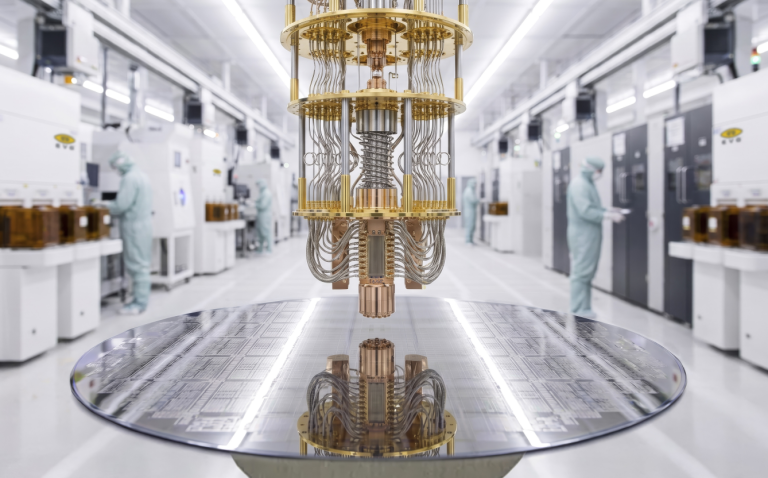
Quantinuum‘s quantum computer, Reimei, installed at RIKEN, has successfully completed its upgrade to System Model H2. Reimei is operated as part of the JHPC-quantum project, funded by NEDO. This upgrade further enhances the capabilities of the project’s quantum–HPC hybrid computing platform and enables researchers to investigate more complex quantum systems that are increasingly difficult to simulate using classical computing alone, broadening the scientific problems they can explore.
Quantinuum and RIKEN will use the upgraded platform to combine quantum computing, supercomputing and AI in support of use case development across electronics, energy and life sciences. Building on their years-long collaboration, the partners will also draw on their experience integrating and operating Reimei to inform the development of a fault-tolerant “Made with Japan” quantum computer.

“Japan’s quantum ambitions require advanced capabilities today and a sustained commitment to developing what comes next,” said Dr. Rajeeb Hazra, Quantinuum CEO. “The upgrade to Reimei expands what we can explore with RIKEN across electronics, energy and life sciences. Together, we are building on this work to develop a fault-tolerant quantum computer with Japanese universities and suppliers, while exploring with SoftBank how these capabilities can become accessible to industry through Japan’s AI data centers.”
Two research projects that have begun operations on Reimei before the public launch of its services illustrate how Quantinuum and RIKEN are leveraging the hybrid platforms upgraded capabilities to push the frontiers of scientific discovery:
- Quantum-AI for materials simulation: The partners are using RIKEN‘s JHPC-quantum GPU supercomputer, ROQUO, to train an AI model on Reimei-generated quantum data for magnetism simulations. Preliminary results suggest the model can make more accurate predictions than AI models trained on classical simulations alone and more precise predictions than the quantum computer itself. Understanding magnetism at the atomic level could inform the development of materials for next-generation technologies such as ultra-high-field MRI and smart power grids.
- Quantum-AI for biomolecular simulation: The partners are combining Reimei, RIKEN‘s Fugaku supercomputer, and NVIDIA’s evolutionary AI agent running on ROQUO to simulate a complex photoactive biomolecule, targeting unprecedented scale and detail. Better understanding of how biomolecules respond to light could inform the design of more efficient solar cells among other industrial opportunities that could arise from advances in biomolecular engineering.
This research supports RIKEN‘s AI for Science initiative and aligns with U.S.-Japan efforts to advance AI-driven discovery, including a planned $1 billion partnership under the U.S. Genesis Mission.
“With the upgraded Reimei quantum computer, we will be able to tackle more complex and larger-scale scientific problems that were difficult to address with the previous H1 system, further advancing quantum–HPC hybrid computing through our ongoing JHPC-quantum project,” said Dr. Mitsuhisa Sato, Division Director, Quantum-HPC Hybrid Platform Division, RIKEN Center for Computational Science (R-CCS). “Furthermore, the newly signed Memorandum of Understanding will pave the way for expanding our research into the use of quantum computing for AI for Science, a key initiative being promoted by RIKEN.”
The partners’ joint research and development toward a “Made with Japan” fault-tolerant quantum computer will involve Japanese universities and domestic components suppliers. This “Made with Japan” effort will combine Quantinuum‘s quantum technology with domestic research and manufacturing expertise, drawing on lessons from integrating and operating Reimei at RIKEN.
Under a separate agreement, Quantinuum, RIKEN and SoftBank will explore how quantum computing can be connected directly with AI data centers in Japan. The partners will assess infrastructure readiness and examine how connected systems could support commercial quantum-AI hybrid computing services, broadening access beyond the research community.
“Japan has established a strong foundation for hybrid quantum-HPC computing through the NEDO-supported JHPC-quantum project,” said Takenori Kobayashi, Vice President, Head of Product Research & Development Division at SoftBank Corp. “Our responsibility is to turn these achievements into industrial value. Together with RIKEN and Quantinuum, we aim to advance a Quantum AI Datacenter that connects quantum computing with AI and HPC, making these capabilities accessible to businesses across Japan.”
Learn more about the expanded joint Quantinuum–RIKEN research available here.
Research Support
This project is supported by New Energy and Industrial Technology Development Organization (NEDO), an organization under the jurisdiction of Japan’s Ministry of Economy, Trade and Industry (METI)’s “Research and Development of Quantum-Supercomputers Hybrid Platform for Exploration of Uncharted Computable Capabilities” (Project Leader: Mitsuhisa Sato) as part of the “Project for Research and Development of Enhanced Infrastructures for Post 5G Information and Communications Systems (JPNP20017).”

Keep track of everything going on in the Quantum Technology Market. In one place.
Topics

Mohib Ur Rehman
Covering quantum and emerging technologies, Mohib explores the intersection of technology, security, and society. His work also frequently examines surveillance infrastructure and the institutions shaping the digital world. In addition to his work at The Quantum Insider, he co-runs SK NEXUS, an independent technology publication that helps readers understand the technologies shaping their lives.

Stay Ahead of Quantum
Get the latest research, company news, and market intelligence every week.
MENTIONED IN THE ARTICLE

Quantinuum
Quantinuum builds full-stack quantum computing solutions for practical deployment. Leveraging proprietary enhancements to trapped-ion QCCD architecture, the company has launched multiple commercial hardware generations that deliver leading two-qubit gate fidelity and industry-topping accuracy.
→
RIKEN
RIKEN (short for Rikagaku Kenkyusho) is a National Research and Development Agency founded in 1917 as private scientific research foundation. Initially modeled after the Kaiser Wilhelm Society in Germany, it has evolved into a comprehensive, state-funded research institution covering a wide range of natural sciences.
→