


Insider Brief
- Chinese startup CAS Cold Atom Technology unveiled Hanyuan-2, a 200-qubit neutral atom quantum computer that the company describes as the world’s first dual-core quantum system.
- The system combines two independent neutral atom arrays that can operate in parallel or cooperate to support more stable logical qubits and improved scalability.
- While Western quantum companies are also pursuing modular and networked architectures, independent verification and technical benchmarks for the Chinese system have not yet been released.
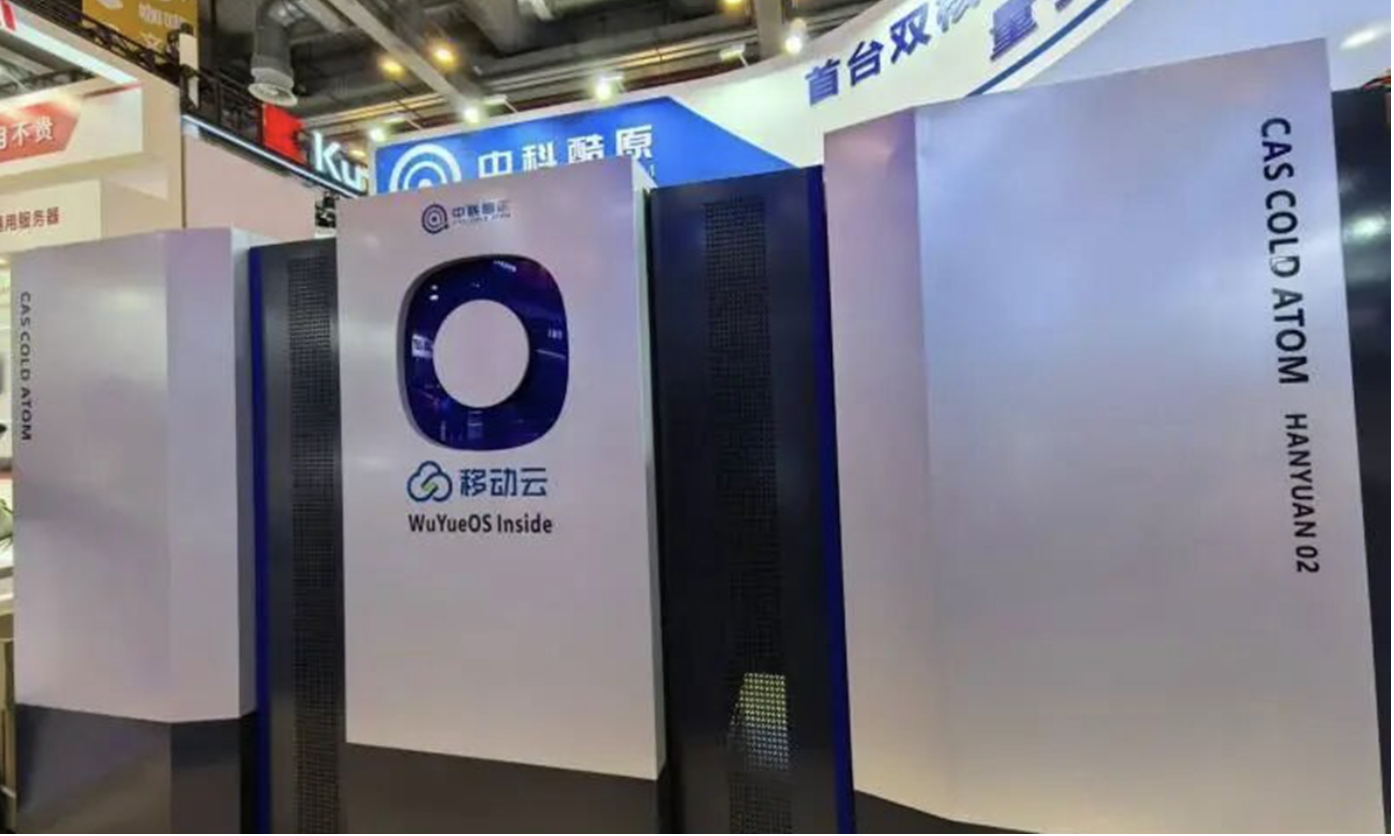
- Image: Science and Technology Daily
Chinese startup CAS Cold Atom Technology said it has built what it’s saying is the world’s first dual-core neutral atom quantum computer.
The claim comes as China pushed to compete in quantum computing, one of the most closely watched areas of advanced computing.
The announcement, reported by the Chinese state-backed newspaper Global Times and citing China’s Science and Technology Daily, said the new machine, called Hanyuan-2, uses two separate neutral atom quantum processing arrays working together in a single system. Both outlets are government-affiliated Chinese media organizations, meaning the claims have not yet been independently verified by outside researchers or peer-reviewed publications.

According to the report, the system was developed by Wuhan-based CAS Cold Atom Technology and contains 200 qubits built from two different isotopes of rubidium atoms — 100 rubidium-85 atoms and 100 rubidium-87 atoms.
Quantum computers use qubits, or quantum bits, to process information in ways that differ from traditional computers. Unlike conventional bits, which represent either a 0 or a 1, qubits can theoretically exist in multiple states simultaneously through a quantum phenomenon known as superposition. Researchers believe that property could eventually allow quantum systems to tackle problems in specific areas much faster than classical machines.
Ge Guiguo, identified in the report as a senior expert at the company, said the machine represents the first move from a “single core” to a “dual core” architecture in a quantum processor.
The company said the two quantum cores can either operate independently in parallel or work together in a “main core plus auxiliary core” configuration designed to create more stable logical qubits. Logical qubits are error-corrected units of quantum information intended to make quantum computers more reliable and scalable.
The report said the architecture is designed to address technical challenges common in single-core quantum systems, including interference between nearby qubits and limitations on scaling to larger processor sizes.
Neutral Atom Push
Neutral atom quantum computing has emerged as one of several competing approaches to building large-scale quantum computers. The method uses lasers to trap and manipulate individual atoms suspended in space.
The field has attracted increasing attention because neutral atom systems can potentially scale to large numbers of qubits while avoiding some of the cooling requirements associated with superconducting quantum computers.
Companies and research groups in the United States and Europe, including QuEra Computing and Pasqal, are also pursuing neutral atom architectures.
According to the Chinese report, the Hanyuan-2 system operates with total power consumption below 7 kilowatts and does not require the complex ultra-low-temperature refrigeration systems commonly associated with some quantum computing platforms. Instead, it uses a smaller laser cooling system and a cabinet-style integrated design intended for indoor deployment.
If accurate, those engineering choices could reduce infrastructure costs and simplify installation compared with systems that rely on dilution refrigerators operating near absolute zero.
Still, independent experts typically evaluate quantum hardware using benchmarks such as gate fidelity, error rates, coherence times, connectivity, and demonstrated computational performance. Those details were not disclosed in the reports.
Missing Benchmarks
The announcement also did not provide evidence of practical quantum advantage, a term used to describe cases where a quantum computer outperforms a classical system on a useful task.
Nor did the reports specify whether the machine has undergone external testing or published technical validation in a peer-reviewed scientific journal.
China has made quantum technology a strategic national priority over the past decade, investing heavily in quantum communication, sensing, and computing research through universities, state laboratories, and government-supported companies.
The country has previously announced advances in superconducting and photonic quantum systems, alongside efforts to build a broader domestic quantum ecosystem.
Modular Design?
As noted, the details are thin right now, but the design seems to be related to the push for modular quantum systems. Several Western quantum companies have focused on linking processors, scaling atom arrays, or building distributed systems rather than explicitly presenting their machines as “dual-core” quantum computers.
In the United States and Europe, companies including IBM Quantum, QuEra Computing, Pasqal, IonQ and Quantinuum have increasingly discussed modular quantum computing as the industry searches for ways to move beyond the limits of single processors.
The approaches, however, seem to be different.
IBM has focused heavily on modular superconducting systems — or quantum centric — connected through classical and quantum interconnects, arguing that future quantum computers may resemble data centers composed of multiple linked processors rather than a single giant chip.
Neutral atom companies such as QuEra and Pasqal have concentrated on scaling large arrays of atoms and exploring ways to connect separate modules while maintaining high control precision.
IonQ and Quantinuum, both leaders in trapped-ion quantum computing, have pursued architectures designed around networking, photonic connections and distributed processing between quantum modules.
The Chinese announcement appears narrower and more tightly integrated. According to state-backed reports, CAS Cold Atom Technology’s Hanyuan-2 places two complete neutral atom arrays inside a single cabinet-scale machine and allows them to operate either independently or cooperatively.
That makes the system look less like a network of separate quantum computers and more like a multi-core processor inside one unified device.