



Insider Brief
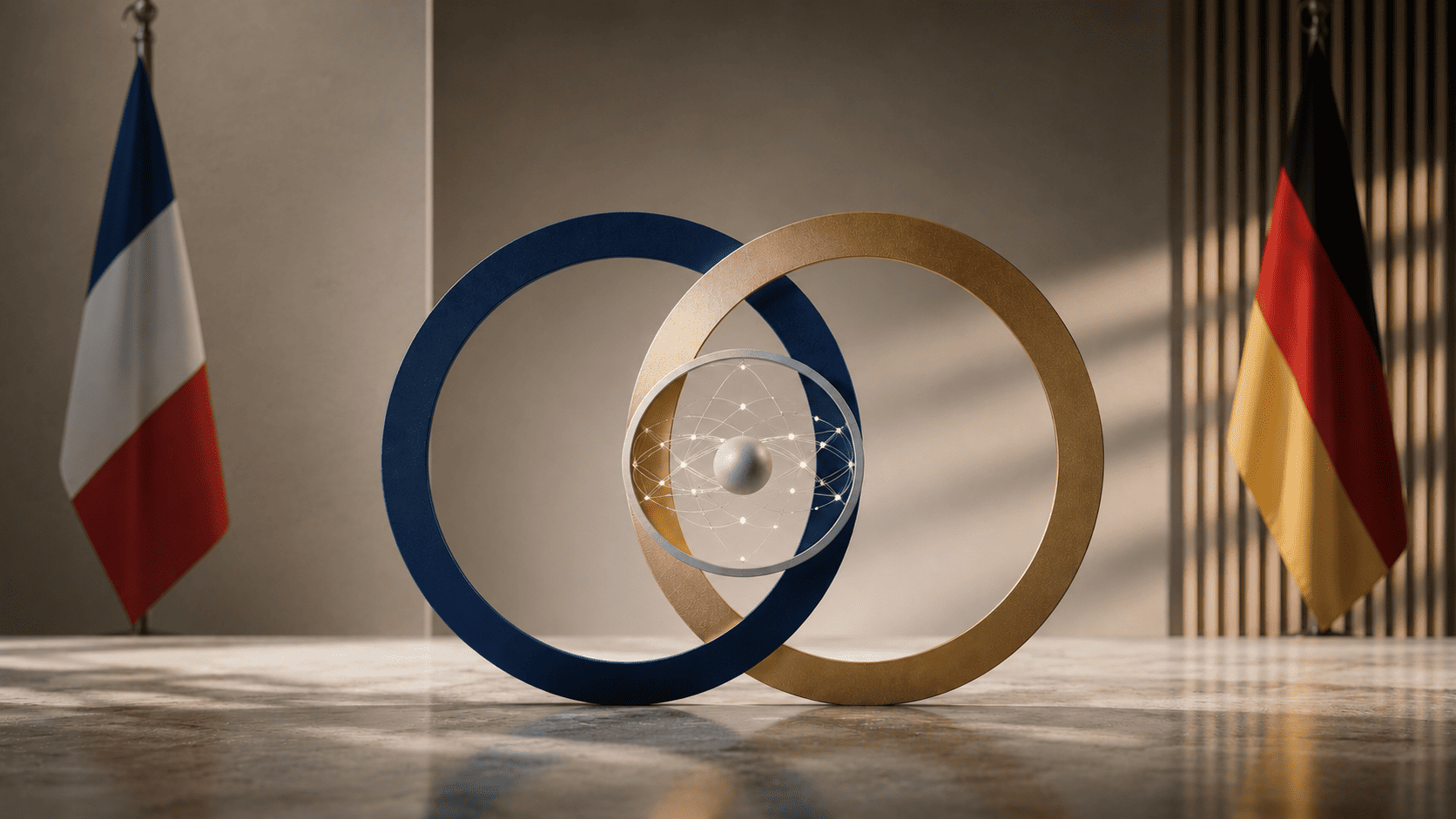
- French and German quantum organizations signed a declaration of intent to strengthen cross-border cooperation and accelerate the development of a competitive European quantum ecosystem.
- The agreement focuses on industrial quantum use cases, scalable adoption pathways, coordination between industry and policymakers, and promoting commercial examples of quantum deployment.
- The initiative reflects broader European efforts to strengthen technological sovereignty in quantum technologies amid increasing competition from the United States and China.
French and German quantum technology leaders are moving to tighten cross-border cooperation as Europe races to build a domestic industry capable of competing with U.S. and Chinese advances in the field, according to a news release.
More than 100 representatives from research institutions, startups, industrial firms, funding organizations, and government bodies gathered in Paris on Tuesday for a Franco-German quantum reception hosted by German Ambassador to France Stefan Steinlein, according to organizers. The event follows a broader Franco-German technology agenda agreed to in August 2025 and reflects growing concern in Europe over technological sovereignty in strategically important sectors such as quantum computing, networking, and sensing.
On the sidelines of the meeting, a coalition of research organizations and industry groups signed a declaration of intent aimed at increasing cooperation on quantum technology development and commercialization across Europe.

The signatories include CEA, Fraunhofer, CNRS, Inria, Le Lab Quantique, Quandela, QUTAC, and European Champions Alliance.
The agreement outlines four areas of cooperation, including developing industrial use cases, studying pathways for scaling quantum adoption in Europe, improving coordination between policymakers and industry, and highlighting commercial examples of quantum deployment.
The initiative comes as European governments increasingly frame quantum technology as strategic infrastructure rather than purely scientific research. Policymakers across the continent have argued that Europe risks becoming dependent on foreign quantum hardware and software providers unless regional ecosystems mature more quickly.
While Europe has produced several prominent quantum startups and research programs, the region has often struggled to translate academic strength into globally dominant commercial companies. U.S. firms have attracted much larger private funding rounds and benefit from deeper venture capital markets, while China has invested heavily through state-backed programs.
France and Germany have emerged as two of Europe’s largest public backers of quantum technology. France launched a national quantum strategy valued at roughly €1.8 billion in 2021, while Germany has committed billions of euros through federal and regional initiatives tied to quantum computing and advanced semiconductor technologies.
The declaration signed Tuesday does not create a formal joint venture or funding mechanism. Instead, organizers described it as a framework intended to accelerate collaboration between researchers, corporations, startups, and investors as Europe attempts to build a more unified quantum industry.




