

Insider Brief
- China’s new five-year policy blueprint prioritizes artificial intelligence and quantum computing as central technologies for economic growth, scientific leadership, and strategic competition.
- The plan calls for expanded investment in scalable quantum computers, the development of an integrated space-earth quantum communication network, and large computing infrastructure to support advanced AI systems.
- Officials also outlined broader science initiatives—including humanoid robotics, 6G networks, brain-machine interfaces, and nuclear fusion—while aiming to strengthen domestic innovation amid technology tensions with the United States.
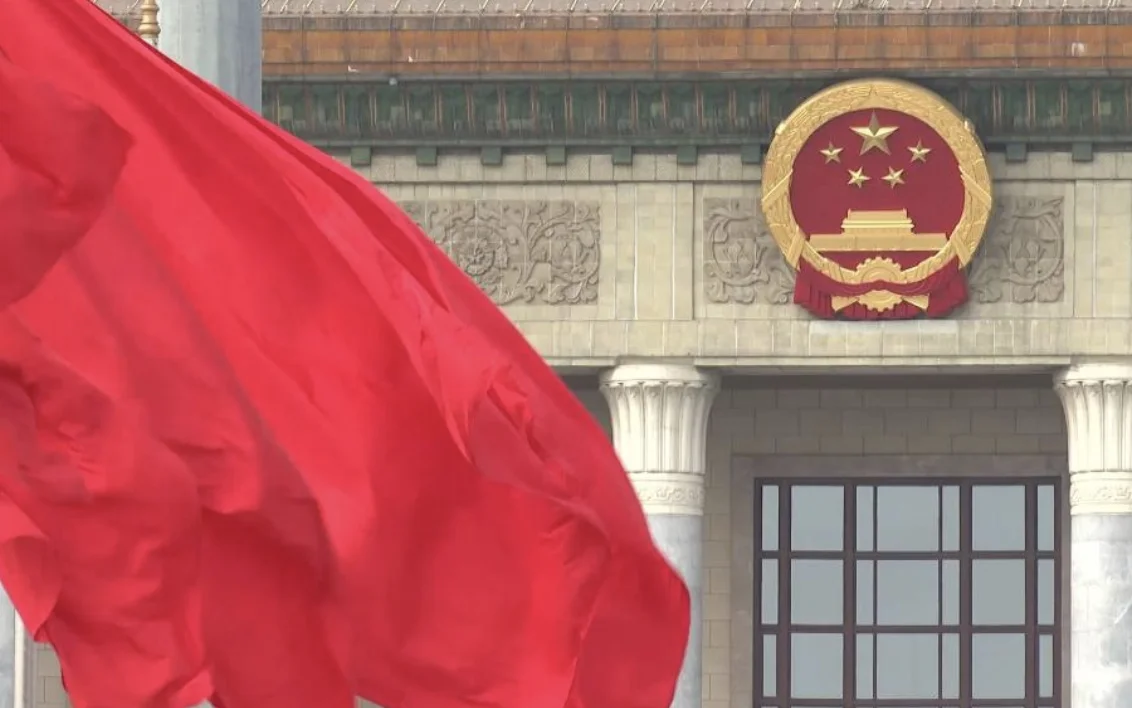
- Image: China’s news service
China has placed quantum technology and artificial intelligence (AI) at the center of its next five-year national development strategy, signaling a push to secure leadership in emerging computing and advanced science.
Analysts are labeling this a strong statement of both the potential of these technologies to promote national security and economic goals, but also China’s willingness to go it alone on frontier technologies.
According to Reuters, the policy blueprint released alongside the opening of the National People’s Congress lays out an aggressive plan to expand the use of AI across China’s economy while accelerating research in quantum computing and related frontier technologies. Beyond Beijing’s broader effort to compete with the United States in advanced technologies, the strategy addresses structural economic pressures, including labor shortages and an aging population.

The over-arching priority seems to be AI, according to Reuters. The five-year blueprint mentions AI more than 50 times and includes a sweeping “AI+ action plan” aimed at integrating the technology across industries, Reuters reported. The plan also identifies quantum computing, humanoid robots, 6G communications and brain-machine interfaces as priority areas for future investment.
Chinese officials described these technologies as part of what the government calls “new quality productive forces,” a term used to describe advanced industries expected to drive economic growth in the coming decades.
The strategy also calls for increased spending on basic research and a stronger pipeline of scientific talent, as Beijing seeks to strengthen its domestic innovation system. According to Reuters, the government aims to accelerate progress in foundational science while turning more discoveries into commercially viable technologies.
The plan calls for policymakers to expand AI adoption across sectors ranging from manufacturing and healthcare to logistics and robotics. The government intends to deploy AI agents capable of performing tasks with minimal human oversight and experiment with robots in industries facing labor shortages, according to Reuters.
China’s focus on AI reflects rapid progress by domestic developers in recent years. Reuters indicates that companies such as DeepSeek have emerged as important players in building advanced AI models, contributing to a broader push by Beijing to reduce reliance on foreign technologies.
To support that growth, the plan calls for the creation of “hyper-scale” computing clusters powered by large supplies of electricity. These data-center-style facilities are expected to provide the massive computing capacity required to train advanced AI models and process large volumes of data.
The government also intends to support open-source AI communities, a move aimed at encouraging broader participation in developing software tools and algorithms.
Reuters added that China plans to increase investment in scalable quantum computers and pursue the construction of an integrated space-earth quantum communication network.
China has already invested heavily in quantum communication networks and satellite-based experiments designed to test ultra-secure data transmission. Expanding those capabilities into a large-scale network linking space and ground systems would represent a significant technological milestone.
Beyond computing, the five-year plan outlines several other science initiatives tied to China’s long-term technology ambitions. Reuters reported that the blueprint calls for breakthroughs in nuclear fusion technology, the development of a reusable heavy-lift rocket, and progress toward building a lunar research station.
The strategy underscores Beijing’s broader goal of becoming a global leader in advanced science and engineering. According to Reuters, the government plans to accelerate work on “key core technologies” and achieve decisive progress in fields that underpin future industrial competitiveness.
The emphasis on domestic innovation comes amid continuing technology tensions between China and the United States. Export controls imposed by Washington on advanced semiconductor technology have limited Chinese access to some high-performance chips used in AI development. Beijing has responded with restrictions on certain critical minerals and rare earth materials used in manufacturing.
These geopolitical pressures have reinforced China’s determination to develop homegrown capabilities in computing, semiconductors, and other strategic technologies, according to Reuters.
China’s five-year plan is the government’s central economic and industrial roadmap, setting national priorities, funding targets and policy directions that guide development across sectors for the next five years.
Following its release at the National People’s Congress, ministries, provincial governments and state agencies will translate the blueprint into detailed implementation plans, funding programs and specific projects tied to the strategy’s technology and economic goals.