


Insider Brief
- China has released Origin Pilot, its first domestically developed quantum computer operating system, making it available for public download as part of a broader push to expand its quantum ecosystem.
- Developed by Hefei-based Origin Quantum, the system supports multiple hardware platforms and manages core functions such as task scheduling, hardware-software coordination, parallel execution and automatic qubit calibration.
- Officials describe the open-download model as a shift toward ecosystem building and industrial deployment, aligning quantum computing with China’s five-year plan priorities for future industries.
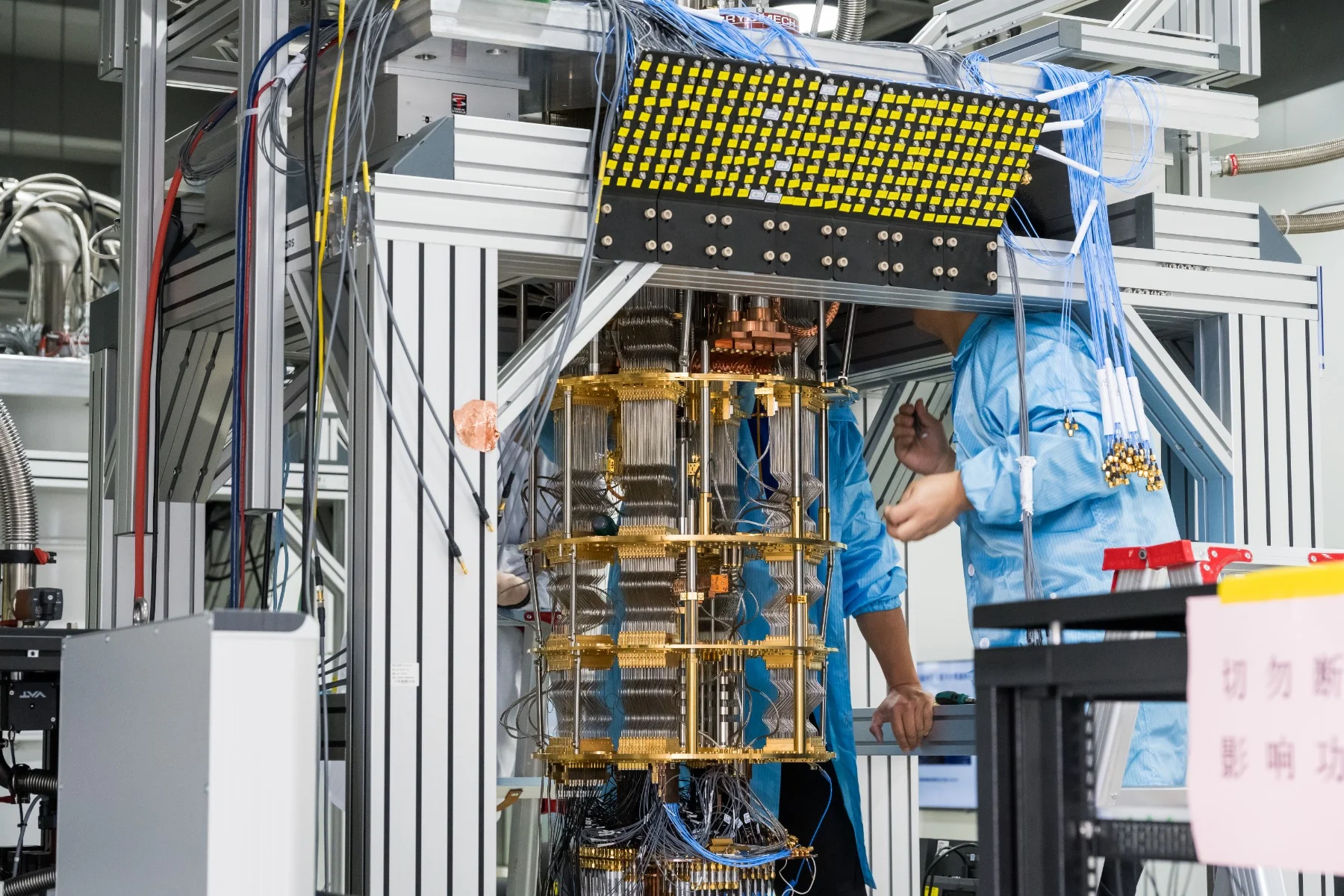
- Image: Anhui Quantum Computing Engineering Research Center
A Chinese company has released its first domestically developed quantum computer operating system for public download, a move that officials say is a step toward open development and broader industrial deployment.
The operating system, called Origin Pilot, was made available online this week, according to the Anhui Quantum Computing Engineering Research Center, as reported by the Global Times. Developed by Hefei-based Origin Quantum Computing Technology Co., the software underpins the company’s third-generation superconducting quantum computer, Origin Wukong, and is now open to external users.
Chinese researchers describe the release as both a technical milestone and a strategic step in the country’s effort to strengthen self-reliance in critical technologies, according to Global Times, a state-supported newspaper owned by People’s Daily, the official publication of the Chinese Communist Party.

Guo Guoping, chief scientist of Origin Quantum and director at the Anhui Quantum Computing Engineering Research Center, told the Global Times that a quantum operating system is the “soft heart” of the quantum computing ecosystem. He said making Origin Pilot available globally marks a shift from what he described as “closed-door tech innovation” toward open-source ecosystem development.
“This is a key step in advancing coordinated national development efforts and an important move to promote efficient flows of quantum innovation resources that can benefit global innovators,” Guo said, as reported by the Global Times.
Think of a quantum operating system as the Windows, macOS or Linux of classical computing. It manages hardware resources, schedules tasks and coordinates interactions between software and physical processors. In quantum computing, that coordination is more complex. Quantum bits, or qubits, are highly sensitive and require constant calibration and precise control to perform calculations.
According to the research center, Origin Pilot supports parallel execution of quantum tasks and automatic qubit calibration. These features are designed to improve system efficiency and stability, two of the most pressing technical challenges in the field.
Open Download, Broader Ecosystem
The center said the release represents the world’s first open-source quantum computer operating system available for public download. Globally, while companies such as IBM and Google provide quantum programming frameworks and cloud-based access to their machines, their underlying operating systems are not publicly downloadable for local deployment.
Dou Menghan, head of the research team, said users can download the system from the official website.
“Users can quickly integrate with quantum chips of multiple physical types and, using autonomous programming frameworks such as QPanda, execute quantum computing jobs across different physical quantum chips to support both research and commercialization needs,” Dou told the Global Times
Origin Pilot is described as an integrated quantum-classical-intelligent computing operating system. The developer says it is compatible with several major hardware approaches, including superconducting qubits, trapped ions and neutral atoms. Those represent the leading physical platforms in the global race to build scalable quantum machines.
By offering a unified programming interface and a standardized driver system, the software is intended to reduce fragmentation in quantum software development. The research center said this model lowers development barriers and enables research institutions, universities and companies to access a Chinese-developed quantum operating system.
From Lab to Industrial Phase
Origin Pilot was first launched in 2021 and has undergone multiple rounds of iteration and upgrades. It is currently deployed on the Origin Wukong series of quantum computers.
The broader context is China’s push into what policymakers describe as “industries of the future.” Xinhua News Agency has reported that quantum technology is among six strategic sectors highlighted in recommendations for the country’s 15th Five-Year Plan covering 2026 to 2030. The list also includes biomanufacturing, hydrogen and nuclear fusion power, brain-computer interfaces, embodied artificial intelligence and 6G communications.
Guo said quantum technology has been explicitly identified as a key future-oriented industry to be prioritized in the next five years. As a core component of that strategy, quantum computing is moving beyond laboratory research and into what he described as a phase of real-world deployment and industrialization.
Despite steady progress, quantum computers remain in an early stage. Today’s systems can perform certain specialized calculations but are not yet capable of replacing classical supercomputers for most tasks. Researchers worldwide continue to work on increasing qubit counts, reducing error rates and improving software stacks.
The release of a downloadable operating system does not resolve those challenges. But it may help standardize development tools and encourage a broader community of users and developers to experiment with quantum applications.