

Over the last decade or so, quantum computing has shifted from theory to global fascination, drawing interest from governments, investors, and tech giants alike. Although there’s some work to do before they are wholly useful, these machines promise to redefine what computers can do, from cracking encryption to powering breakthroughs in artificial intelligence and data science. Yet with such revolutionary potential comes a staggering price tag – but how expensive are they really?
This article breaks down the current costs of quantum computers and explains the factors that make them so costly to develop and operate.
What Are Quantum Computers and Why Are They So Valuable?
A quantum computer is a type of computer that uses quantum mechanical phenomena such as superposition and entanglement to perform calculations that are infeasible for classical computers, making it valuable for optimization, simulation, and cryptography-related workloads.
Unlike classical computers that rely on binary bits, they use quantum bits, or qubits, which can represent multiple states simultaneously – a phenomenon known as superposition. This ability allows quantum systems to process certain types of problems faster than traditional machines, offering capabilities once thought impossible.
Another defining trait of quantum computing is entanglement, a quantum phenomenon where two or more qubits become intrinsically linked so that the state of one instantly affects the other, no matter the distance between them. This interconnectedness enables quantum computers to process many calculations in parallel, giving them a speed and efficiency that classical architectures can’t match.
Today’s quantum computers are still in their infancy, operating in what researchers call the NISQ era (Noisy Intermediate-Scale Quantum). Major players like Google, IBM, and Microsoft, alongside a growing wave of startups, universities, and government labs, are racing to refine these early systems. Their goal: to unlock breakthroughs in fields like molecular simulation, optimization, materials science, and next-generation cryptography that could reshape entire industries.
What Types of Quantum Computers Exist?
As of 2025, quantum computing is no longer a single-architecture race – it’s a battle of modalities. Unlike the Silicon Age, which was defined by one dominant paradigm, the Quantum Age is unfolding across multiple competing technologies, each using a different kind of qubit. These modalities represent rival visions of how to control and scale quantum information – and no clear winner has yet emerged.
Currently, five primary qubit approaches lead the field, each with its own advantages, challenges, and industrial champions:
1. Superconducting Qubits
Superconducting quantum computers are the most established and widely used. They rely on tiny electrical circuits made of superconducting materials cooled to near absolute zero. These circuits generate and manipulate qubits with exceptional speed and precision.
Leaders: Google, IBM, Microsoft, Rigetti Computing, IQM, and Quantum Circuits, Inc.
2. Trapped Ions
Trapped-ion quantum computers use electrically charged atoms (ions) confined by electromagnetic fields. Laser pulses manipulate these ions to perform quantum logic operations with exceptional coherence times, making them remarkably stable though slower to execute gates than superconducting systems.
Leaders: IonQ, Quantinuum (from the merger of Honeywell Quantum Solutions and Cambridge Quantum Computing), Alpine Quantum Technologies, and eleQtron.
3. Photonic Qubits
Photonic quantum computers encode information in photons — particles of light — rather than matter. They are highly promising for scalability and room-temperature operation, though still face challenges in achieving reliable two-qubit gates and photon loss control.
Leaders: PsiQuantum, Xanadu, and ORCA Computing.
4. Neutral Atoms
Neutral-atom quantum computers use uncharged atoms suspended in a vacuum and arranged by tightly focused laser beams known as optical tweezers. Each atom serves as a qubit, and researchers have successfully demonstrated large-scale arrays and early quantum algorithm execution.
Leaders: ColdQuanta, QuEra, and Pasqal, Atom Computing.
5. Silicon spin
Silicon spin qubits use pairs of quantum dots to confine single electrons in semiconductor materials. These are attractive for their potential compatibility with existing silicon manufacturing infrastructure, offering a possible bridge between classical and quantum computing.
Leaders: Diraq, Intel, and Quantum Motion.
Other Emerging Modalities
Beyond these five, several experimental approaches are being explored, including electrons on helium, nitrogen-vacancy (N-V) centers in diamond, and silicon CMOS-based quantum architectures. Each seeks to solve persistent challenges such as decoherence, error correction, and scalability in its own way.
Each modality represents a distinct philosophy of quantum engineering – superconducting systems focus on speed and maturity, ion traps on stability, photonics on scalability, and silicon-based qubits on industrial integration. The outcome of this technological contest will shape the next era of computing, determining whether the Quantum Age will converge on one dominant model – or thrive as a multi-modal ecosystem.
| Quantum Modality | How It Works | Key Advantage | Main Limitation | Leading Companies |
|---|---|---|---|---|
| Superconducting Qubits | Electrical circuits cooled near absolute zero | Fast gate speeds and mature tooling | Requires extreme cryogenics | Google, IBM, Rigetti, IQM, Quantum Circuits |
| Trapped Ions | Charged atoms controlled by lasers | Long coherence times and stability | Slower gate execution | IonQ, Quantinuum, Alpine Quantum Technologies, eleQtron |
| Photonic Qubits | Photons carry quantum information | Room temperature operation and scalability | Photon loss and gate reliability | PsiQuantum, Xanadu, ORCA Computing |
| Neutral Atoms | Laser trapped atoms in optical tweezers | Laser-trapped atoms in optical tweezers | Large-scale qubit arrays | ColdQuanta, QuEra, Pasqal, Atom Computing |
| Silicon Spin Qubits | Electrons confined in semiconductors | Compatible with chip manufacturing | Complex control at scale | Early-stage algorithms |
Quantum Computer Prices in Autumn 2025
1. Two ways to pay
Buy the box (CapEx + TCO):
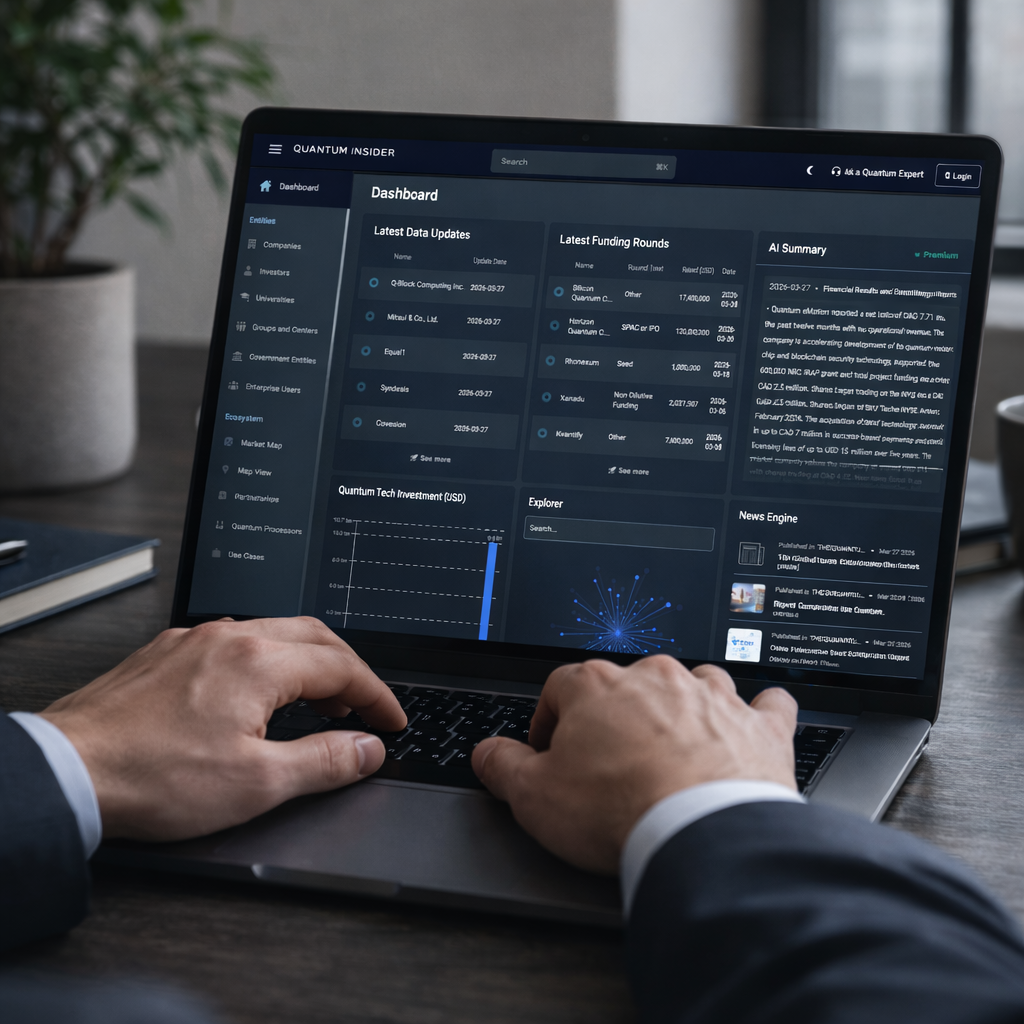
You can own the full quantum system – hardware, facility, cryogenics, controls, warranty/O&M, upgrade path. Pricing is almost always under NDA, but public procurements and vendor hints suggest multi-million-dollar totals per system, and when you include facility build-out and tooling you’re talking tens of millions. The Quantum Insider data provides details on QPU vendor sales in its market intelligence platform
Rent by the shot/hour (Quantum-as-a-Service, QaaS):
Most users in 2025 access quantum hardware via the cloud and pay by task/shot or by hour. Services like AWS Braket and Azure Quantum publish rate cards and make practical access possible without owning everything.
2. Published 2025 price points (cloud/QaaS)
Select examples only
- AWS Braket (gate-based devices): See the AWS Braket pricing page, which explains you pay a per-task fee plus a per-shot fee that varies by QPU. Source: Amazon Web Services, Inc
- Example: For a task on Rigetti Ankaa the example gives ~$0.0009 per shot. Source: Amazon Web Services, Inc.
- They also support batching (“program-sets”) so you pay only one task fee for multiple circuits, which can reduce cost by ~25%. Source: Amazon Web Services, Inc
- Azure Quantum also provides pricing directly on its website: See here
Note that you can get access to many vendors direct – for example at IonQ or IQM.
3. Ownership costs
- System modality & scale: Different types of quantum systems (trapped-ion, superconducting, neutral-atom, photonic) carry different cost stacks (lasers/optics, cryogenics, vacuum, shielding, packaging).
- Cryogenics: For superconducting or spin-qubit systems you often need dilution refrigerators from suppliers like Bluefors or Oxford Instruments; these are major CapEx and integration drivers.
- Controls & fan-out: Arbitrary-waveform generators, RF/microwave chains, photonics, DAC/ADC racks, cabling/wiring harnesses.
- Facilities/O&M: Vibration isolation, EM shielding, laser labs, clean-rooms, spares, calibration labor, uptime service agreements.
- Software stack & ECC: Compilers, orchestration, error mitigation/correction, integration into HPC/AI back-ends.
4. Price bands in 2025
- Education/desktop (NMR class): $5 k – $50 k devices exist for curricula and demos; not general-purpose quantum computers.
- Cloud/QaaS (pay-per-use): As listed above: ~$0.0009 – $0.03 per shot (gate-based QPUs) on AWS, ~$300 per QPU-hour (PASQAL) or ~$135k+/month subscriptions (Quantinuum) – we recommend checking latest docs for up to date info (this was updated in November 2025).
- On-prem research/enterprise systems: Multi-million-dollar for base systems; tens of millions with facility, integration, multi-year O&M and upgrade roadmap.
| Category | Typical Price Range | Primary Use Case |
|---|---|---|
| Educational and Desktop Systems (NMR) | $5,000 to $50,000 | Teaching, training, and demonstrations |
| Cloud Access (QaaS) | $0.0009 to $0.03 per shot or ~$300 per QPU hour | Research, experimentation, and development |
| On Prem Research and Enterprise Systems | Several million dollars | Advanced research and early commercial workloads |
| On-Prem Research and Enterprise Systems | Tens of millions of dollars | National laboratories and government programs |
Can You Actually Own a Quantum Computer?
Technically, yes – but in practice, almost no one does. As of 2025, quantum computers remain extraordinarily rare, expensive, and complex to produce. These systems operate under extreme conditions – some near absolute zero – and require intricate calibration and maintenance, putting them far beyond the reach of typical consumers or small businesses. Most functioning machines today are housed in the facilities of large corporations, universities, or national laboratories, where they are used for research and early-stage commercial testing.
For anyone hoping to use a quantum computer rather than own one, the most practical route is through cloud-based access. Major players such as IBM, Microsoft, Rigetti Computing, D-Wave, and Google now provide users with remote access to their quantum processors via specialized cloud platforms. These services let developers, startups, and researchers run quantum algorithms without needing to purchase or maintain the hardware themselves.
Pricing for this access varies widely depending on processing time and hardware tier – from just a few dollars for small test runs to several thousand dollars per hour for enterprise-grade workloads. In short, while personal ownership remains impractical, the quantum cloud has opened the door for nearly anyone to experiment with this emerging technology – renting the future instead of buying it outright.
Conclusion
In late 2025, the price of a quantum computer remains both a technical and economic frontier – a reflection of how young, complex, and ambitious the field still is. Whether measured in millions of dollars for full-scale hardware or thousands per hour for cloud access, quantum computing today sits at the intersection of science experiment and industrial revolution.
What separates this era from the dawn of the Silicon Age is not a single defining breakthrough, but a convergence of competing modalities, each racing to prove its path is the one that scales. The cost curve will inevitably fall – as engineering matures, qubit counts rise, and competition accelerates – but commercial ubiquity may still be years away.
Frequently Asked Questions
How much does it cost to buy a quantum computer in 2025?
Purchasing a complete quantum computer system typically costs multiple millions of dollars for the base hardware, with total ownership costs reaching tens of millions when including facility build-out, cryogenic systems, controls, maintenance, and upgrades. Exact pricing is usually under NDA, but public procurement records and vendor hints suggest enterprise systems start in the multi-million-dollar range. Educational desktop devices (like NMR-class systems) are available for $5,000-$50,000, though these aren’t general-purpose quantum computers.
Can individuals rent quantum computing time instead of buying?
Yes, cloud-based Quantum-as-a-Service (QaaS) platforms allow anyone to rent quantum computing time without owning hardware. AWS Braket charges approximately $0.0009-$0.03 per shot for gate-based quantum processors, while Azure Quantum and other providers offer similar pay-per-use models. Enterprise subscriptions can range from $135,000+ per month for dedicated access. This approach eliminates the need for facility infrastructure, cryogenics, and specialized maintenance.
What factors make quantum computers so expensive?
Quantum computers require extreme operating conditions and specialized components: dilution refrigerators to cool superconducting qubits to near absolute zero (costing hundreds of thousands), precision laser systems for ion trap and photonic systems, electromagnetic shielding, vibration isolation, complex control electronics (arbitrary-waveform generators, RF/microwave chains), cleanroom facilities, and continuous calibration by specialized personnel. Additionally, the software stack for error correction, compilation, and orchestration adds significant development costs.
Which quantum computing modality is most cost-effective?
Cost-effectiveness varies by use case rather than modality. Superconducting systems (Google, IBM, Rigetti) offer speed and maturity but require expensive cryogenics. Trapped-ion systems (IonQ, Quantinuum) provide stability with different infrastructure needs. Photonic approaches (PsiQuantum, Xanadu) promise room-temperature operation, potentially reducing cooling costs. Silicon spin qubits may eventually leverage existing semiconductor manufacturing, lowering production costs. Currently, cloud access from any modality offers the most cost-effective entry point for most users.
Are quantum computers getting cheaper over time?
Yes, the cost trajectory follows historical computing trends. As engineering matures, qubit counts increase, and competition intensifies, prices will decline. Cloud pricing has already democratized access, dropping entry costs from tens of millions (ownership) to dollars per experiment.
What’s included in the total cost of ownership for a quantum computer?
Total cost of ownership (TCO) extends far beyond the initial hardware purchase: the quantum processing unit itself, cryogenic refrigeration systems (dilution refrigerators from Bluefors or Oxford Instruments), control electronics and wiring infrastructure, facility modifications (vibration isolation, EM shielding, cleanrooms), software stack (compilers, error correction, orchestration tools), ongoing maintenance and calibration labor, spare parts inventory, service agreements for uptime guarantees, and periodic hardware upgrades as technology advances. These recurring costs can match or exceed initial capital expenditure over a system’s lifetime.
What cloud platforms offer quantum computer access?
Major cloud platforms providing quantum access include AWS Braket (offering Rigetti, IonQ, and other QPUs), Microsoft Azure Quantum (multiple hardware partners), IBM Quantum (superconducting systems), Google Cloud (quantum processors), and D-Wave Leap (quantum annealing). Individual vendors like IonQ, IQM, Rigetti, and Quantinuum also offer direct cloud access. Pricing models vary from per-shot fees ($0.0009-$0.03) to hourly rates ($300+ per QPU-hour) to monthly subscriptions ($135,000+), depending on the provider and access tier.