Los Alamos Forms Quantum Computing-Focused Research Center



Insider Brief
- Los Alamos National Laboratory has established a new Center for Quantum Computing to consolidate its quantum research capabilities across national security, algorithms, computer science, and workforce development.
- The center will bring together up to three dozen researchers and support ongoing collaborations tied to DOE, DARPA, NNSA, and state-level quantum initiatives.
- It will also host the Quantum Computing Summer School, a 10-week fellowship program training up to 25 undergraduate and graduate students annually.
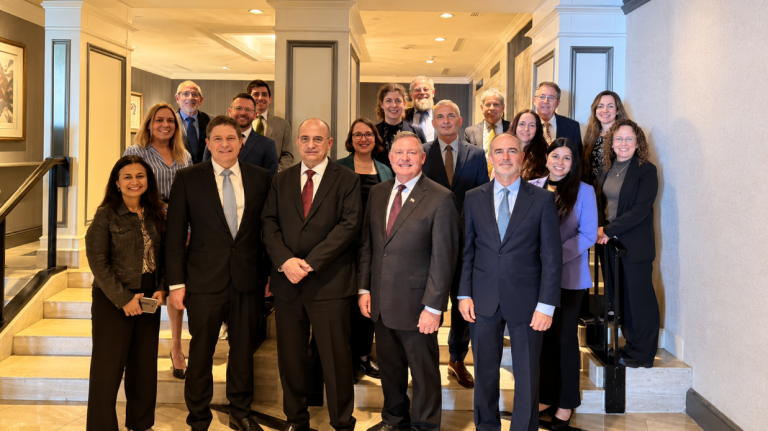
PRESS RELEASE — Los Alamos National Laboratory has formed the Center for Quantum Computing, which will bring together the Lab’s diverse quantum computing research capabilities. Headquartered in downtown Los Alamos, the Center for Quantum Computing will consolidate the Laboratory’s expertise in national security applications, quantum algorithms, quantum computer science and workforce development in a shared research space.
“This new center of excellence will bring together the Laboratory’s quantum computing research capabilities that support Department of Energy, Defense and New Mexico state initiatives to achieve a critical mass of expertise greater than the individual parts,” said Mark Chadwick, associate Laboratory director for Simulation, Computing and Theory. “This development highlights our commitment to supporting the next generation of U.S. scientific and technological innovation in quantum computing, especially as the technology can support key Los Alamos missions.”
The center will bring together as many as three dozen quantum researchers from across the Lab. The center’s formation occurs at a pivotal time for the development of quantum computing, as Lab researchers partner with private industry and on a number of state and federal quantum computing initiatives to bring this high-priority technology closer to fruition. Laboratory researchers may include those working with the DARPA Quantum Benchmarking Initiative, the DOE’s Quantum Science Center, the National Nuclear Security Administration Advanced Simulation and Computing program’s Beyond Moore’s Law project, and multiple Laboratory Directed Research and Development projects.

The center will also host the Quantum Computing Summer School, a 10-week fellowship program that connects quantum-interested undergraduate and graduate students with the theoretical foundations of quantum computation and the programming of commercial quantum computers. The Quantum Computing Summer School enrolls up to 25 students per year.
“I am thrilled to see these quantum computing teams coming together under one roof,” said Carleton Coffrin, quantum science coordinator for the Laboratory. “Each team is arguably world-leading in their specific domain expertise. An environment that fosters further collaboration and united effort will no doubt help our quantum computing teams achieve amazing things.”

Keep track of everything going on in the Quantum Technology Market. In one place.
Topics

Mohib Ur Rehman
Covering quantum and emerging technologies, Mohib explores the intersection of technology, security, and society. His work also frequently examines surveillance infrastructure and the institutions shaping the digital world. In addition to his work at The Quantum Insider, he co-runs SK NEXUS, an independent technology publication that helps readers understand the technologies shaping their lives.

Stay Ahead of Quantum
Get the latest research, company news, and market intelligence every week.
MENTIONED IN THE ARTICLE
Los Alamos National Laboratory
Los Alamos National Laboratory (LANL) is a U.S. national security laboratory in New Mexico. Founded in 1943 to develop the first atomic bombs during the Manhattan Project, it holds a significant role in aerospace, developing space-based sensors, instruments, and plutonium-238 heat sources for NASA missions, spanning over 60 years of space-based research.
→

U.S. Department of Energy (DOE)
The mission of the Department of Energy is to ensure America's security and prosperity by addressing its energy, environmental, and nuclear challenges through transformative science and technology solutions. In September, 2022, Research supported by ASCR demonstrated that classical machine learning algorithms can accurately predict ground state properties and classify quantum phases of matter using data generated from quantum experiments. In November, 2022, Research supported by Q-NEXT revealed that the performance of a sensor network is constrained by the intrinsic noise associated with the quantum states used in the network. In March, 2023, Research funded by DOE SC NP achieved the first experimental observation of entanglement between dissimilar particles, specifically positive and negative pions. In August, 2023, Research funded by DOE SC BER demonstrated strong preservation of entanglement in a two-photon absorption process involving organic molecules, offering a new approach for developing quantum light-based spectroscopy and microscopy.
→

Defense Advanced Research Projects Agency (DARPA)
The Defense Advanced Research Projects Agency (DARPA) is an independent research and development agency within the U.S. Department of Defense (DoD) established in 1958 to prevent and create strategic technological surprises for national security. Operating with a relatively small staff of program managers who are empowered to take high-risk, high-reward approaches, DARPA functions by funding cutting-edge research in academia, industry, and government laboratories rather than conducting research in-house. Its mission focuses on creating revolutionary technologies—such as the Internet (ARPANET), stealth technology, GPS, and mRNA vaccine platforms—that transition into practical military and civilian applications. DARPA programs are typically finite in duration and demand transformational breakthroughs rather than incremental improvements, positioning the U.S. at the forefront of technological innovation.
→

US Department of Energy
The United States Department of Energy is a cabinet-level department of the United States Government concerned with the United States' policies regarding energy and safety in handling nuclear material.
→