From Lab to Live: Inside the Practical Realities of Deploying Quantum Computing at Data Center Scale
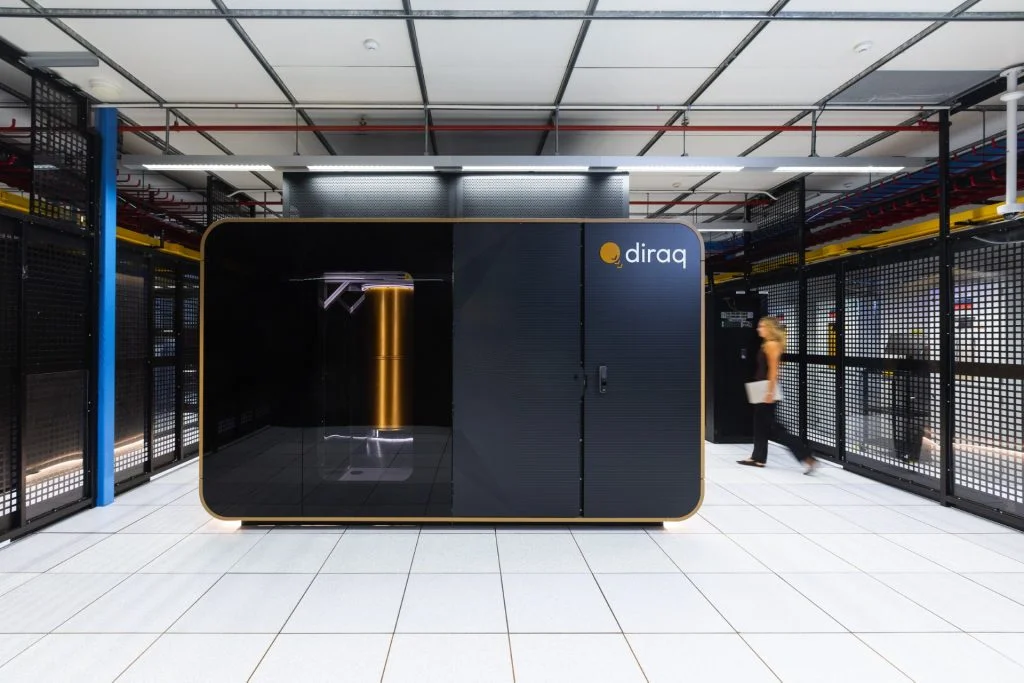


Behind Equinix and Diraq’s collaboration to bring a silicon spin quantum computer into a commercial data center … and what it actually takes to get there.
Insider Brief
- Equinix and Diraq have installed a silicon spin quantum computer inside an operational commercial data center in Sydney. Equinix supplies the power, cooling, physical security, connectivity and facility operations, and Diraq develops and runs the quantum system.
- Jarrod Nink, Equinix’s Managing Director for Australia, says moving quantum from research to production depends on four things: reliability, integration, operational visibility and scalability, describing the project as a chance to learn how quantum requirements may change as the technology matures.
- Petrina Steele, Equinix’s Global Lead for Emerging Technologies, says every quantum deployment is bespoke, stating the company’s goal as multi-modality quantum computing as a service. Diraq is Equinix’s first silicon spin platform, alongside superconducting, trapped-ion and photonic systems already in its ecosystem.
The recent headlines around Diraq and Equinix’s collaboration have focused on a milestone: a silicon spin quantum computer, installed inside an operational commercial data center in Sydney.
Running alongside the servers, the CPUs and GPUs that already power everyday digital infrastructure, it is a milestone that doesn’t just happen on announcement day. Rather, it is preceded by months of groundwork, from facility assessments and operating agreements to the quiet coordination between two teams who don’t normally speak the same technical language.
That is exactly where a story waits to be told, and it is one that Jarrod Nink, Equinix’s Managing Director for Australia, and Petrina Steele, Equinix’s Global Lead for Emerging Technologies are positioned to tell.

Two Kinds of Expertise, One Deployment
Overseeing Equinix’s business across the company’s 18 data centers in Australia—operations, sales and stakeholder management—puts Nink at a critical intersection where quantum hardware development meets the operational discipline of running facilities enterprises depend on every day. His role in this story is as a local voice who speaks to how Diraq’s system, with Equinix’s support, came together on the ground in Sydney, from installation through to deployment.
Nink describes the collaboration as a pairing of complementary strengths.
“Diraq is responsible for developing and operating the quantum technology itself, while Equinix provides the secure, resilient and highly connected digital infrastructure environment needed to host and support that technology.”
—Jarrod Nink, Equinix
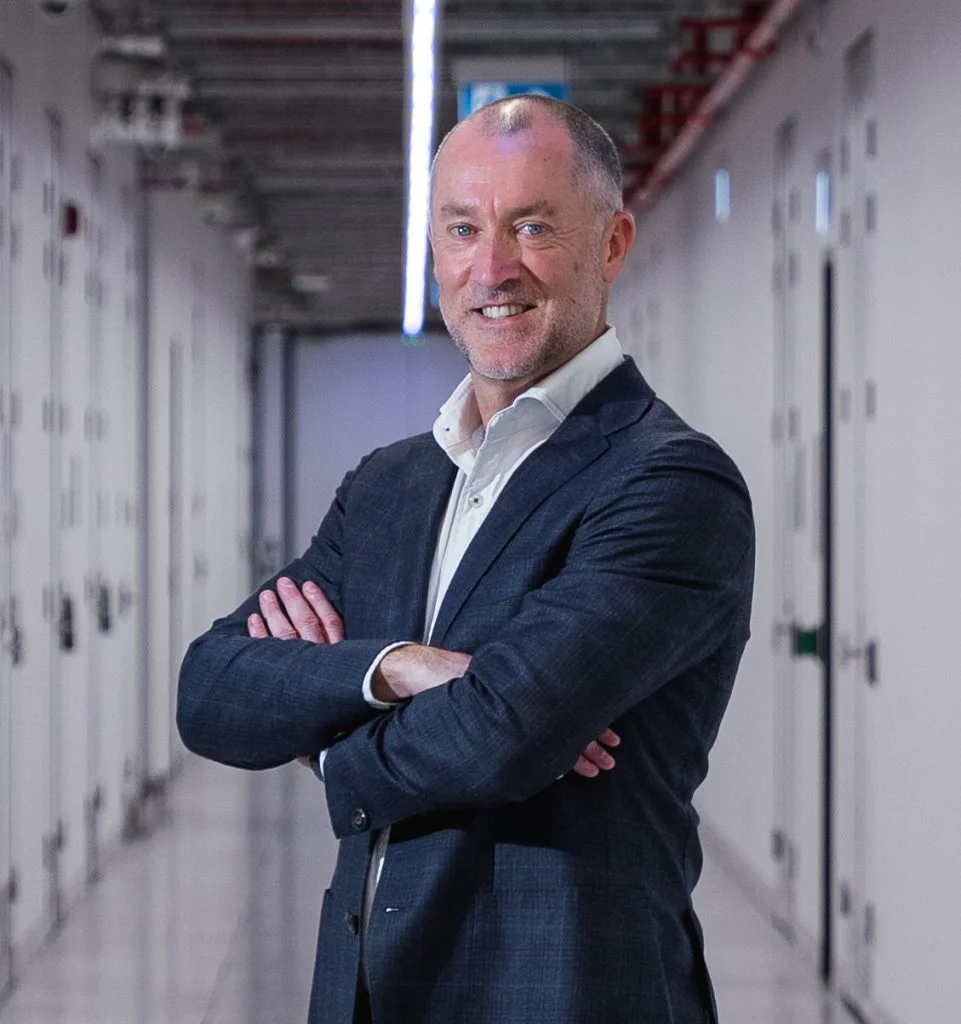
That division shapes everything downstream. Equinix’s role starts with the facility itself—power, cooling, physical security, connectivity and operational support. Diraq brings the quantum computing system, built on its silicon spin qubit technology, and the specialist expertise to operate and scale it. “Together,” Nink says, “we’re exploring what it takes to move quantum computing from the laboratory into a real-world commercial environment.”
Andrew Dzurak, Diraq’s founder and CEO, has framed the same partnership from the other side: as a step toward quantum computers becoming a standard part of data center infrastructure, working alongside—not apart from—the classical and AI systems already in place.
Long before any hardware arrived on-site, Equinix ran a detailed assessment of what the deployment would require. “As with any advanced computing deployment, we conducted a detailed assessment of the infrastructure requirements, including power availability, cooling capacity, space allocation, connectivity, physical security and operational support models,” Nink explains.
The goal wasn’t simply confirming the facility could handle a new kind of workload—it was making sure it could do so without loosening the standards of resilience Equinix customers already expect. “Just as importantly,” Nink adds, “we’re interested in understanding how these requirements may evolve as the technology matures and scales.”
That forward-looking piece is important: this deployment is as much a chance to learn what future systems will demand as it is about supporting this one.
The Pattern Behind Every New Technology
Drawing on his work on the Sydney deployment, Nink observes a familiar pattern. It is one that shows up whenever a new kind of computing moves from research into production and is characterized by four recurring themes: reliability, integration, operational visibility and scalability. “Research environments are designed for experimentation, while commercial environments require predictable, repeatable operations,” says Nink.
New technology needs to connect cleanly into existing applications, cloud environments, networks and data ecosystems. Customers expect the same monitoring, governance and security controls they’d get with any other infrastructure investment.
Scalability closes the loop—in Nink’s view, a technology becomes genuinely useful once it can be deployed and expanded within infrastructure that already exists, rather than requiring something purpose-built around it.That framework helps explain why Diraq’s approach fits naturally into Equinix’s environment. Diraq’s silicon-based approach has been designed with deployment and scale in mind, including how quantum systems can fit within existing data centers and computing infrastructure.
Nink treads carefully as we enter the realm of physics, “We’re not experts in the underlying quantum physics, so I would leave the technical comparison of modalities to Diraq.” But, from an infrastructure standpoint, he points to deployability as the standout quality. “As a data center operator, we’re interested in practical considerations such as footprint, operational requirements, integration and how technology fits within existing digital infrastructure environments,” he says.
There is a clear distinction here: systems built with commercial deployment have a real head start and integrate more naturally into ecosystems that already exist, instead of asking the ecosystem to adapt to them.
A Familiar Playbook, With New Pages
Equinix has recent, hard-won experience bringing demanding new workloads online with GPU clusters and AI infrastructure chief among them. Asked how onboarding a quantum system compares, Nink sees real continuity. “There are certainly similarities,” he says. “The industry has learned a great deal from supporting increasingly dense and specialized AI workloads, particularly around infrastructure readiness, resilience, cooling, connectivity and operational support.”
At the same time, quantum computing is earlier in its commercialization journey, and Nink treats this deployment as a genuine learning opportunity as much as a hosting arrangement. To him, projects like this provide valuable insight into the operational requirements, support models and ecosystem integrations that may be needed as quantum technologies evolve.
That same clarity carries into the day-to-day operating model. Accountability is clearly split: Equinix owns the data center environment—power, cooling, physical security, connectivity, facility operations—while Diraq owns the quantum system and the expertise to run it. Layered across both sides are the tools that keep any advanced deployment running smoothly: remote monitoring, defined operating procedures, and clear paths for addressing anything that needs attention.
Security follows the same logic of rigor applied to something new and remains fundamental to every deployment within an Equinix facility. But, this time around, hosting emerging technology brings its own added focus— protecting intellectual property, managing access controls, keeping governance clearly defined.
Overall, the underlying principles don’t change: strong physical security, controlled access, and operational discipline. What’s new is applying that discipline to a technology still defining its own norms.
Where the Real Work Happens
Ask Nink what stands out most from the ground level, and he doesn’t point to a single dramatic fix—he points to the working sessions. “What stands out most is the collaboration between teams with very different areas of expertise,” he says.
Equinix’s facilities and operations teams are used to supporting sophisticated digital infrastructure; Diraq’s teams work at the leading edge of quantum hardware. Bringing those two vocabularies together, session by session, is where innovation moves from theory into operational reality.
For the people doing that work, the core of the job hasn’t shifted: reliability, resilience, security and operational excellence remain the mandate. But, what has expanded is the range of technologies on-site teams now get to work with. Nink frames it as an opportunity for growth, and one that lets teams deepen their expertise, work across new disciplines and develop a broader understanding of next-generation computing environments.
Adaptability and continuous learning, in his telling, are becoming core skills in their own right as data center infrastructure diversifies.
A Connected Future
Zooming out, we can see that this deployment fits neatly into a strategy Equinix has been building for years: an interconnection-first approach that links the cloud, AI, and classical computing. Equinix believes the future of digital infrastructure will be built on a combination of cloud, AI, classical computing and quantum computing. Instead of operating on isolated islands, Equinix speaks to a vision where quantum systems will connect to applications, data sources, cloud platforms and research ecosystems just like everything else.
It is on this stage that Steele, Nink’s counterpart, widens the lens to what Equinix is seeing as quantum computing steps out of the labs and into real-world infrastructure. Her voice in this collaboration runs in parallel with Nink’s, albeit providing a global perspective in assessing the wider quantum landscape.

There, Steele acknowledges a consistent pattern as the technology expands out of the laboratory arena: it is arriving in many forms at once, and no two deployments look alike.
“Every quantum system brings its own requirements, from power and cooling to footprint, integration and operations,” she says. “Each deployment is bespoke, so we sit down with each provider to understand the nuances together before anything goes into the data center.”
In Sydney, that principle has played out in the joint working sessions Nink describes, where Equinix’s facilities teams and Diraq’s teams worked through the details of the installation side by side. It is within this framework that Nink also recognizes the greater question that looms overhead.
“One of the biggest challenges facing the industry is not simply whether quantum computing can work, but how it can be deployed, connected, managed and accessed within real-world operating environments,” he says.
Steele also points to two priorities that shape how Equinix approaches quantum. The goal is quantum computing as a service (QCaaS), where customers access quantum capability through connected infrastructure they already use instead of owning and operating the hardware themselves. Access across multiple modalities matters just as much.
Diraq is Equinix’s first silicon spin platform, joining the superconducting, trapped-ion, and photonic modalities already in the Equinix ecosystem. No single qubit approach is likely to suit every workload, so giving customers the choice of approach all from one connected environment is central to Equinix’s proposition.
Equinix recently introduced Fabric One, an intent-based networking service where customers describe the outcome they need and Equinix composes the network to deliver it. It is expected to enter beta later this year, with general availability planned for 2027, initially in North America. The principle of simple, on-demand, any-to-any access across providers suits a multi-modality quantum future, where customers shouldn’t need a bespoke connection for every type of hardware.
“Quantum will only matter to enterprises if they can reach it easily and choose the right technology for the job. Bringing Diraq’s silicon spin platform into Sydney gives us a local foothold in a global ecosystem,” says Steele. “Customers here connect into the same fabric of quantum, AI and cloud that Equinix operates worldwide, and customers worldwide can reach what’s being built here.”
It is an initiative that Equinix and Diraq, through their collaboration, has demonstrated to be viable and important. The project now stands as a concrete step toward proving that quantum hardware can run alongside the AI, cloud and high-performance computing systems enterprises already rely on, inside infrastructure that already exists. Nink sees that proof in the Sydney installation itself, while Steele sees a model for the collaborative approach every future deployment will need, since no two will look alike.

Keep track of everything going on in the Quantum Technology Market. In one place.
Topics

Resonance
The Quantum Insider is the leading online resource dedicated exclusively to Quantum Computing. You can contact us at [email protected].

Stay Ahead of Quantum
Get the latest research, company news, and market intelligence every week.
MENTIONED IN THE ARTICLE