From First-Timers to PhDs: 1,000+ Builders Take on Quantum at the Qollab × IonQ Hackathon


Insider Brief
- The Qollab × IonQ Quantum Hackathon drew more than 1,000 builders across 37 countries and 22 university sites, running 211 teams through 327 projects over 48 hours in October.
- 57% of participants had under a year of quantum experience, and 30% of builders on placed teams had none at all — yet still shipped working Qiskit projects run on IonQ’s cloud.
- All projects are open source (MIT license), published on Qollab, and stay live for about a year — with winners earning compute credits and a year of mentorship from IonQ engineers.
Last month, more than 1,000 students, researchers and professionals in 37 countries spent a weekend writing quantum software, competing at 22 university sites from Finland to Argentina. Some of the best work came from people who had never written a line of quantum code.

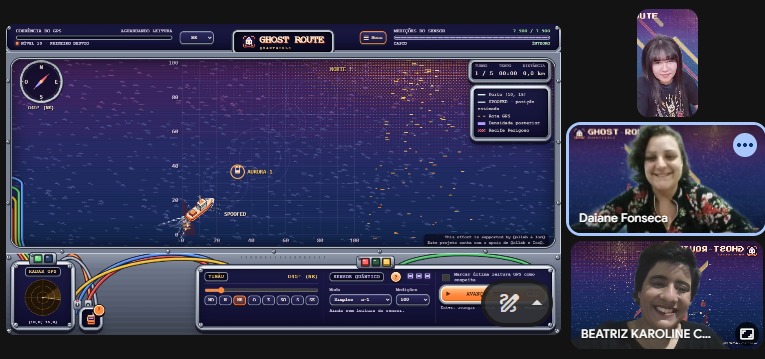
An avionics engineer in Argentina taught himself from online courses and took first place at his site. Four Carnegie Mellon students who had never touched quantum computing built a puzzle game that teaches it, and took second on their campus. Three builders in Brazil, from nursing, finance and marketing, made a pixel-art rescue game about trusting quantum sensors over spoofed GPS. They won the hackathon’s Portugal site.
These weren’t outliers at the Qollab × IonQ Quantum Hackathon, held October 9 to 11. They were the point of the event.
Over 48 hours, 211 teams entered 327 projects across three themes: Quantum Impact (real-world problems), Quantum Unlocked (making quantum easier to learn) and Quantum Playground (creative and artistic work). Every project was built in Qiskit, run on IonQ’s cloud and published on Qollab, where it remains live and open for anyone to fork.
And 57% of builders came in with less than a year of quantum experience. For an industry worried about its future workforce, that’s good news. The curiosity is there, and with open tools and AI coding assistants, you no longer need a physics degree to act on it.
Empowering newcomers to ship
Among builders on placed teams, 30% had no quantum experience at all before the weekend (only about one in ten event participants actually works in quantum).
“What surprised me most wasn’t the signups. It was how many first-timers shipped real projects,” said Kenzo Fong, founder of Qollab. “Every one of them is now someone who can work in quantum, and they bring ideas the field hasn’t seen before.”
He credits that to the people around them. “Give someone a clear goal, a team and a mentor who’s done it before, and they can do remarkable work in a weekend,” he said. “Nobody built alone. A nurse and a finance student on the same team, a professor in Argentina keeping a video call open all weekend, strangers building on each other’s code. That’s what made quantum feel less daunting.”
That’s the bet behind Qollab, which aims to be the Hugging Face of quantum: a place where developers discover, share and run quantum code. “We’re inviting people into the quantum ecosystem,” Fong said. “It’s open source. Anyone can get started. You don’t need a ton of experience, and you can learn from each other.”
Tutorials, open-source projects and builder stories all live on the platform, free for anyone to use and build on. The hackathon was designed to test that model at scale.
Who built what during the hackathon
The sheer variety of projects is exciting enough on its own, covering everything from quantum education to sensing to art and music, pushing the creative boundaries on what quantum can accomplish. Reading about the teams brings it to an entirely new — and awe-inspiring — level.
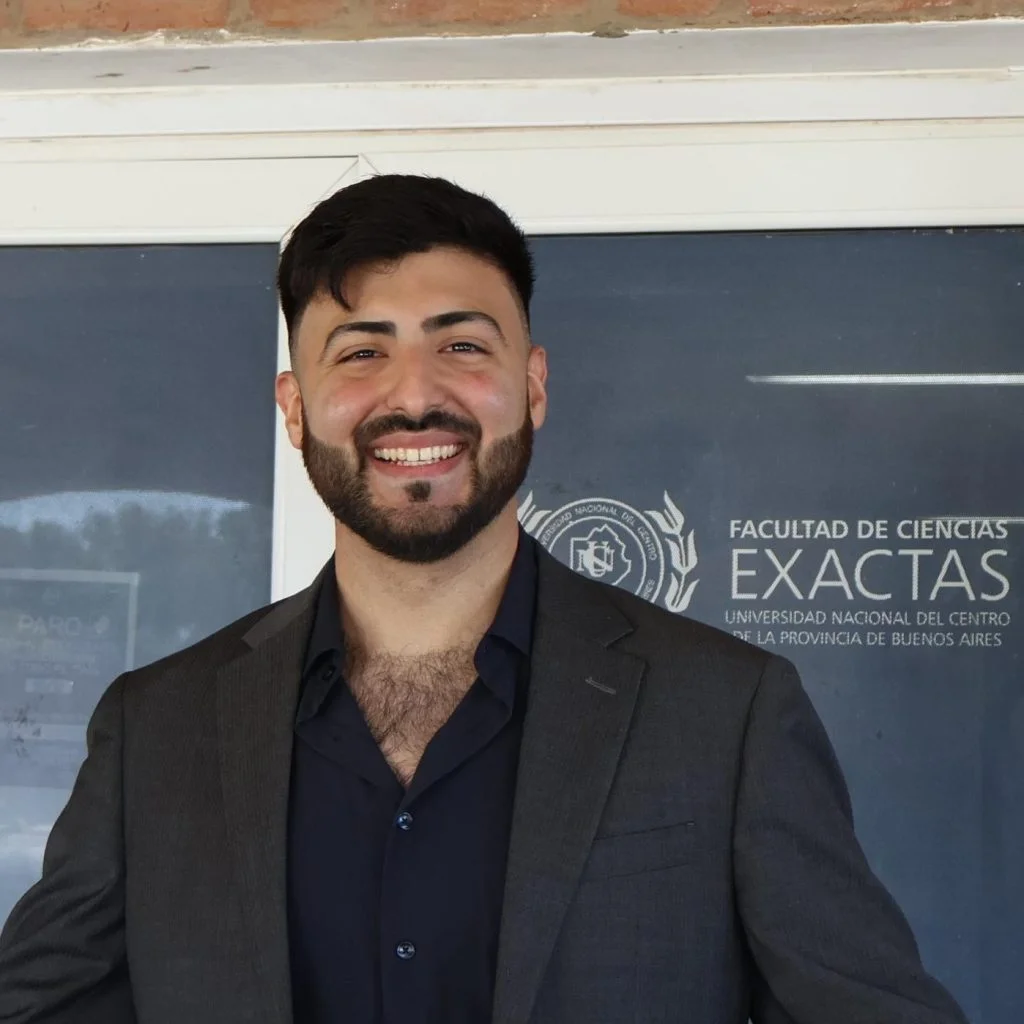
- From avionics to quantum lessons. Memory Wall, the first-place project at Universidad Nacional del Centro de la Provincia de Buenos Aires (UNICEN) in Argentina, came from a solo avionics engineer with no quantum background. He learned from Qollab’s courses, then built browser-based lessons on a practical question: when can a laptop stand in for a quantum computer? (Learn more)
- Learning quantum by building it. At Carnegie Mellon, four students with no quantum experience took second place with Quantum Foundry, a puzzle game where players learn quantum computing by assembling it piece by piece. (Learn more.)
- Keeping satellites from colliding. At ACENET in Atlantic Canada, two University of New Brunswick students built Q-Avoid, which uses a quantum algorithm to estimate the odds of a satellite collision. Tested on 365 real warnings from the European Space Agency, it raised correct dodge-or-don’t decisions from 88% to 98%. Tushita Govindaraj had no quantum experience before the weekend. “I thought quantum computing was something only physicists with lab access could work on,” she said. “Now I see it’s more like a very specialised tool.” (Learn more.)
- A quantum card in a national game. Three first-year students at UNICEN — two in engineering, one in medicine — shared third place with Qriollo, which adds a quantum card to Truco, Argentina’s best-loved card game. (Learn more.)
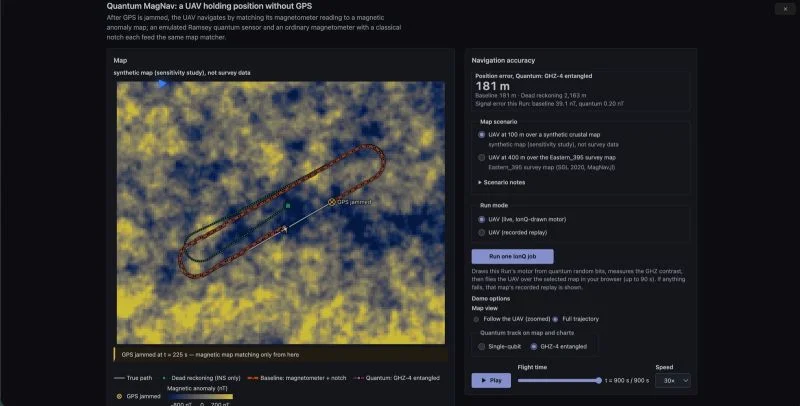
- Navigating when GPS fails. Quantum MagNav won UCLA’s location and the global Best Documentation award. The team built drone navigation for GPS-jammed environments using an emulated quantum magnetic sensor. (Learn more.)
- Beats from gates. At NYU Tandon, first place went to Quantum Beats Studio, where users make music with quantum gates and every mix is a Qiskit circuit. (Learn more.)
- Video game history, quantum lessons. Universidad del Valle’s Motus aberrans project won the global Most Novel/Creative award with a pixel-art game that teaches quantum computing through video game history and the team’s home city of Cali, Colombia. (Learn more.)
- A team that came to win. QuantGirls, three builders in Brazil from nursing, finance, marketing and data backgrounds, won the Portugal location (Minho, Porto and Coimbra) with Ghost Route. The pixel-art rescue game asks players to trust quantum sensors over spoofed GPS. In a field that is still fairly male-dominated the all-women, international team didn’t just take part; they placed. (Learn more.)
The music and art projects build on earlier work already on the platform. “Those fields are actually surprisingly more connected than you’d originally think,” Fong said. Intersections like arts and tech, biology and tech, or finance and tech “put things outside of a lab setting or a very academic setting and into something that people could observe and get excited about.”
Chad Sakac, SVP of Quantum Field Engineering at IonQ feels the excitement as well. “Some made games that are fun to play, but at the same time teach some important principles of quantum mechanics and quantum computing. That means they were not only learning themselves, but helping others learn – which is what open communities and hackathons are all about. Thankful that IonQ could play our part and support.I also want to shout out the Field Engineers and support folks that supported Qollab in the effort.”
Regions punching well above their weight
The hackathon ran across 22 locations, including some first-time hosts.
Dr. Martín Vázquez directs INTIA, the UNICEN institute for advanced computing research. He and Lucas Leiva are both professors in the Department of Computing and Systems and work in LabSET, the Tandil Embedded Systems Laboratory, which lists quantum computing among its research lines. In 2025 they taught Fundamentos de la Computación Cuántica, an undergraduate elective that also counts as a postgraduate course.
When Qollab first approached UNICEN in Argentina, Vázquez was a bit unsure at first.
“He told me UNICEN had never jumped into an event like this, and they were excited to try,” recalled Nicolaas Spijker, Head of Community & Content,of Qollab, describing his first conversation with Vázquez. Many hackathons, he noted, centre on large quantum programs and big sponsors.
Nonetheless, UNICEN leaned into the work ahead. Worried that 48 hours wouldn’t be enough for newcomers, the organizers ran two training tracks beforehand, one of them for students with no quantum experience. Teams came from beyond UNICEN, too, including UTN’s Salta Team and FIUBA Cuántica. Teams could build on the Tandil campus or join remotely. The node team kept a Google Meet room open for them through the weekend.
The hard work paid off: out of 23 registered teams, 13 entered 19 projects. That’s a submission rate of more than half, against roughly a third across all locations.
“We believe this event will have a significant national reach, involving several universities across Argentina,” said Leiva.
For the Qollab team, the shift was in how participants saw themselves. “Very often you mention quantum to people and they think it’s an inaccessible thing,” said Spijker. “For them, that week was very much: ‘Oh, this is stuff we can build with. This is stuff we are invited to build with.’”
UNICEN wasn’t the only first-time host to outperform. In Fredericton, New Brunswick Canada, Muhammad “Muz” Muzammil had started as ACENET’s first quantum lead only weeks before the event. The hackathon became his first project, and a way to pull together Atlantic Canada’s growing quantum community.
He succeeded beyond his wildest dreams: forty-five teams from across the region registered and 26 projects were submitted, the most of any location in North America and second worldwide. (Canada as a whole delivered one in five projects at the hackathon.)
“As the numbers poured in, I couldn’t believe it,” Muz explained. “But on Qollab’s website, they give you very good starter instructions. There’s a nice tutorial to follow along. They made the whole idea of coding up a quantum circuit accessible. So that probably helped reduce the intimidation factor and get those numbers up. We had submissions from all four Atlantic provinces — a team from PEI took home the node’s Quantum Unlocked Theme Award, which recognizes projects that explain established concepts with particular clarity.”
The wide range of projects showcased the one-two punch of skills and creativity delivered by this region:
- A quantum murder mystery that focuses on repairing a sabotaged Bell-state preparation and comparing trained quantum policies against optimal classical strategies.
- A drag-and-drop builder for quantum circuits, including missions and a sandbox.
- Applying quantum machine learning to voice disorder screening.
- Exact synthesis of dyadic quantum unitaries using the Amy-Glaudell-Ross algorithm.
- Quantum amplitude estimation for satellite collision risk.
Muz even delivered his own project, making sure to recuse himself from the judging process, of course. “We were able to access IonQ’s hardware through Qollab’s website, which was an incredible opportunity. When you know that your code is running on actual quantum hardware, that’s a profound feeling. And bringing this to the masses and to the students, the science students and engineering students, and introducing them firsthand to concepts like errors and noise … it’s amazing.”
The global podium
After local judging at all 22 locations, a global panel picked the top three from the local winners.
- First: Quantrain. A team of four at Aalto University in Finland built a metro puzzle game where the train is a particle of light and every map is a working quantum circuit. One judge said he’d buy it in a store. See the project.
- Second: SABRE-Q. Rajat Shetty, building solo at the I-HUB Quantum Technology Foundation in India, simulated the quantum chemistry behind a technique that makes drug molecules show up more clearly in MRI scans. His results showed that the simpler models used today get it wrong. See the project.
- Third: Optogenetic Quantum Brain. A four-person team from the Córdoba node, with members from universities in Chile and Argentina, modeled how a signal travels through the nervous system of a tiny worm, C. elegans. That worm is the only animal whose full neural wiring has been mapped. See the project.
The top three receive cash, quantum compute credits and a year of one-on-one sessions with IonQ engineers.
The hackathon carries on
“For those that are curious about quantum computing, the insight that people who like to code can hack at an idea and produce something cool in 48 hours is inspirational. The fact that all the code is now opensource, with solid documentation and all machine readable means that it’s a foundation that others can build on and make their own. Whenever humanity has invented a new tool – in this case quantum computers – the real magic isn’t the tool itself, but what unexpected things other humans create using the tool.”
— Chad Sakac, SVP, Quantum Field Engineering, IonQ
Do the projects disappear when the clock runs out? Far from it. All are open source under an MIT license, and participants agreed to keep them live on Qollab for about a year.
Several winning teams are already continuing their work. Global and local prizes included quantum compute credits so teams can move from the simulator to real hardware, and Qollab launched a grants program just before the event that offers hardware credits for any project on the platform.
Dr. Zheng Cui, VP of Field Engineering at IonQ, couldn’t be happier with the event and its potential “ Qollab and this hackathon have made quantum computing accessible to so many, and IonQ is delighted and proud to be a part of it,” he said. “It’s an incredibly worthwhile — and super fun! — event that undoubtedly will change how people view and approach quantum. The projects were deeply impressive; congratulations to all the teams and thank you for participating.”
Fong, who previously worked on building out the Android ecosystem at Google, sees the archive itself as the lasting value. “Just having examples of work that you can access easily and search for in a centralized way, that you can just immediately reuse, just gives people some inspiration,” he said. That applies to newcomers, he added, but also to experienced developers who “may have stuck a little bit in how they approach things.”
Spijker describes the aim as making quantum “click” for people. “It might be that they see a project about quantum applied to biology, but then in their field of physics, something clicks,” he said. “Maybe I can continue building this out for something that’s directly connected to what I do.”
Qollab expects to run the hackathon again, with more news later this year. After all, Qollab’s mission isn’t yet accomplished. Quantum still carries a reputation that you need a PhD, a couple of postdocs and a lot of money just to get started, even though that’s no longer true.
“You don’t need to be a physicist anymore. You need curiosity and a problem you care about,” Fong says. “The question isn’t whether you can write quantum code. It’s what quantum could unlock in your field, whether that’s medicine, climate or music. We’ve only just gotten started.”
All hackathon projects and builder stories are available at qollab.xyz/explore/hackathon-2026.

Keep track of everything going on in the Quantum Technology Market. In one place.
Topics
Resonance
The Quantum Insider is the leading online resource dedicated exclusively to Quantum Computing. You can contact us at [email protected].

Stay Ahead of Quantum
Get the latest research, company news, and market intelligence every week.
MENTIONED IN THE ARTICLE