Majorana qubits explained: The Quantum Kid goes inside Microsoft’s quantum lab

Katia Moskvitch


Insider brief
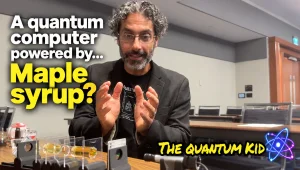
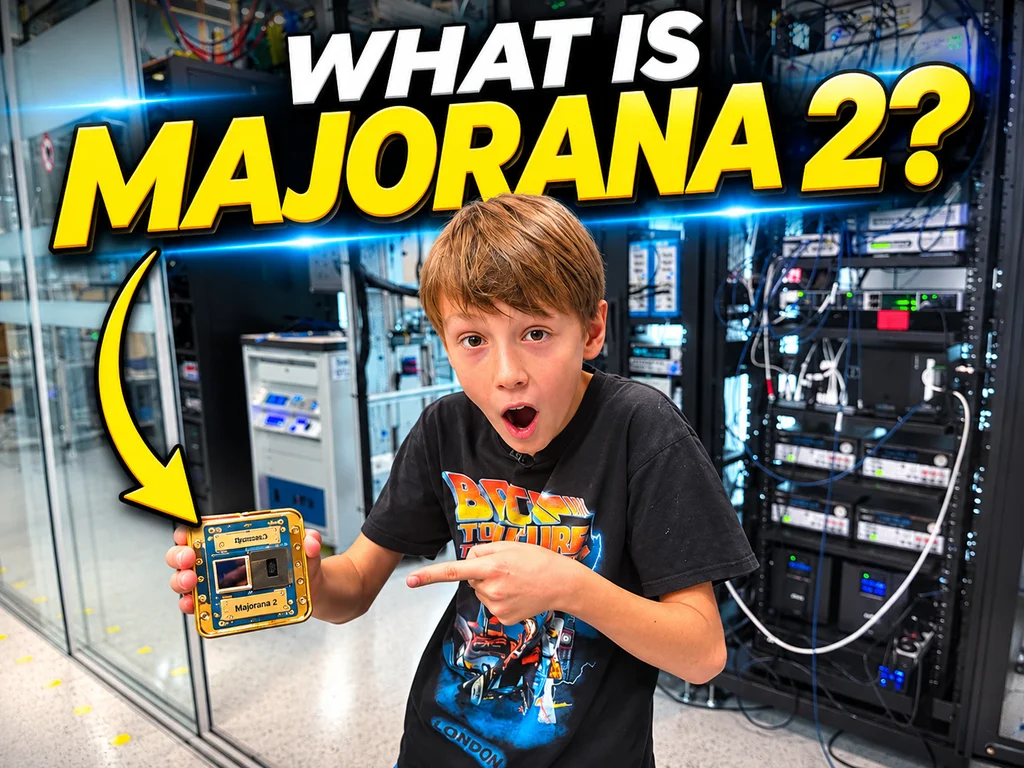
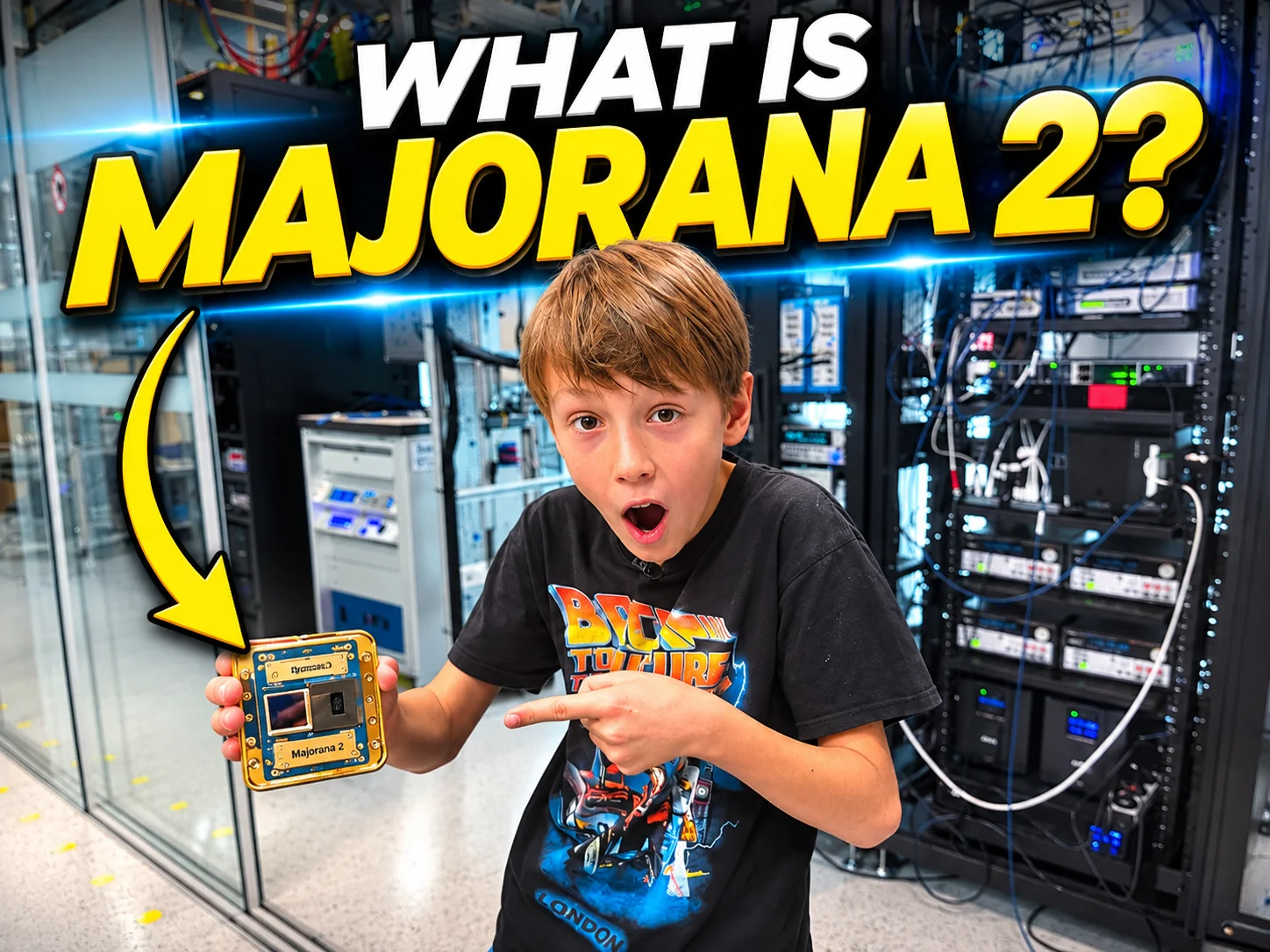
- The Quantum Kid, produced by Tesseract Quantum, has released a new episode filmed inside Microsoft’s quantum lab in Lyngby, Denmark, produced in collaboration with Microsoft.
- Lauri Sainiemi, Vice President of Fabrication at Microsoft Quantum, takes 10-year-old Kai through the full process of making a Majorana chip, from atom-by-atom materials growth to the clean room and the cryostats.
- The episode explains Microsoft’s bet on topological qubits, an approach designed to protect quantum information from errors at the hardware level.
- The Quantum Kid has more than 120,000 subscribers on YouTube and is a partner of The Quantum Insider.
What happens when you zip a 10-year-old into a full clean room suit and walk him into one of the most advanced quantum labs in Europe?
In the newest episode of The Quantum Kid, Kai gets to find out. He spent a day at Microsoft’s quantum lab in Lyngby, just outside Copenhagen. It’s Microsoft’s largest quantum site, and the place where the heart of its Majorana chips is made. The question he went to answer is a big one: how do you build a qubit that protects itself from errors?
A particle, a mystery and a qubit
The story starts in 1937, when Italian physicist Ettore Majorana predicted a particle that is its own antiparticle. A year later, he boarded a ferry from Palermo to Naples and vanished. What happened to him is still a mystery.
Nearly a century on, his name is at the centre of Microsoft’s quantum computing strategy. Microsoft is trying to build topological qubits using Majorana zero modes: exotic quantum states that should appear at the ends of special superconducting nanowires.

The idea is that a topological qubit stores quantum information spread out across the wire, rather than in one spot. That should make it much harder for a small disturbance to destroy it. Most quantum computers today fight a constant battle against noise and will rely on error correction to catch mistakes after they happen. Microsoft wants qubits that are far less prone to errors in the first place.
Three labs, one chip
Kai’s guide was Lauri Sainiemi, Vice President of Fabrication at Microsoft Quantum. He took Kai through every stage of making a Majorana chip.
The materials lab. It all starts with molecular beam epitaxy machines, which grow the chip’s base material one layer of atoms at a time inside an ultra-high vacuum. They combine a semiconductor with a superconductor to build the layered material Microsoft calls a topoconductor.
The clean room. Next, in full overalls, Kai saw how that material is patterned into tiny nanowire devices on the chip. Since the lab’s expansion in 2025, Lyngby can fabricate the full core of Microsoft’s Majorana chips.
The cryostat lab. Finally, the finished chips go into the gold “chandelier” fridges. These cool them to almost absolute zero, colder than outer space, which is where the quantum effects the qubits rely on appear and where the team tests whether the devices work.
[A quote from Lauri, e.g. what he told Kai about why the materials have to be so perfect]
Where Microsoft’s bet stands
The visit comes at an important moment for Microsoft’s topological programme. In June 2026, the company unveiled Majorana 2, its second-generation chip. Microsoft says it improves qubit reliability 1,000-fold over Majorana 1, with parity lifetimes averaging around 20 seconds, thanks to a new lead-based material stack. It has also brought forward its target for a scalable quantum computer to 2029.
It remains one of the boldest and most closely watched approaches in the field, and physicists continue to debate how to confirm that the devices are truly topological. That is exactly what makes a look inside the lab so interesting: this is the place where the claims are turned into hardware, one layer of atoms at a time.
Explained like you’re 10
Most people will never set foot in a quantum fabrication lab. Through Kai’s questions, they can see how it works: why the materials have to be perfect, why the chips need to be so cold, and why a physicist’s nearly 90-year-old prediction matters to one of the world’s biggest tech companies.
The episode was produced in collaboration with Microsoft and filmed by Bifrost Productions. If you’d like to get featured in The Quantum Kid, get in touch with Katia Moskvitch on Linkedin.
Watch the full episode: Inside Microsoft’s quantum lab: The hunt for Majorana qubits
The Quantum Kid is a YouTube channel and video podcast where Kai asks the world’s top scientists and tech leaders to explain quantum technology to him. Guests have included Nobel laureates Steven Chu and John Martinis, and quantum pioneers Peter Shor, John Preskill and Scott Aaronson. The show is produced by Tesseract Quantum, a Swiss educational non-profit and partner of The Quantum Insider.

Keep track of everything going on in the Quantum Technology Market. In one place.
Topics
Katia Moskvitch

Stay Ahead of Quantum
Get the latest research, company news, and market intelligence every week.
MENTIONED IN THE ARTICLE