IQM Introduces Upgrade Programme for Halocene Quantum Systems


Insider Brief
- IQM has announced an upgrade programme for its Halocene error-correction product line, giving customers a path from today’s 150-qubit systems to systems with more than 1,000 qubits.
- Customers can run hybrid quantum-classical workloads alongside existing AI and HPC infrastructure and upgrade to newer Halocene systems without downtime.
- The programme includes HPC integration services with each upgrade and builds on IQM‘s previous deployments at organisations including VTT, the Leibniz Supercomputing Centre and the LUMI AI Factory.
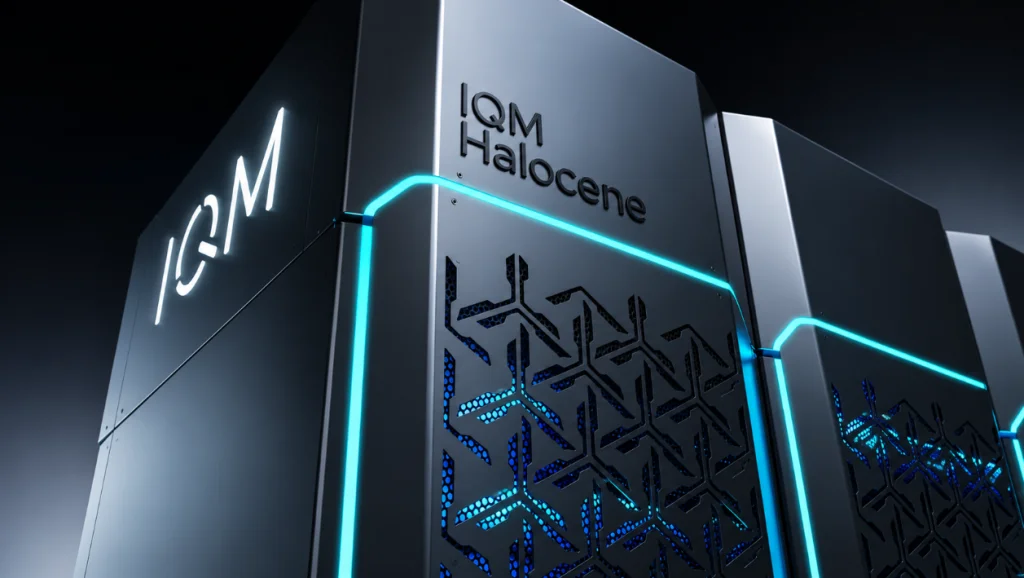
PRESS RELEASE — IQM Quantum Computers (Nasdaq: IQMX), a global leader in integrated quantum computing, today announced an upgrade program for IQM Halocene, its error-correction product line, that gives customers a path from the 150-qubit system of today to the over 1,000-qubit system of the future. Customers can run hybrid workloads today alongside their AI and HPC systems and upgrade to each new Halocene system without downtime as they move toward fault-tolerant quantum computing. IQM’s HPC integration service is included with every upgrade.
IQM introduced Halocene in November 2025, starting with a 150-qubit system, and the LUMI AI Factory, coordinated by CSC – IT Center for Science, has since chosen it for LUMI-IQ which will be connected to the upcoming LUMI-AI supercomputer.
Accelerating integration with AI-based applications

The most valuable near-term uses of quantum computing will be hybrid, with quantum processors working alongside the CPUs and GPUs that power AI and simulation. Because Halocene connects directly to a center’s existing infrastructure, schedulers and GPU platforms, it accelerates integration with AI-based applications, so researchers and companies can run hybrid workloads today while building toward error-corrected computing.
More value from every upgrade, without downtime
When a customer upgrades, IQM installs the new Halocene system while the current one keeps running, and removes the previous system once the new one is in service. IQM’s HPC integration service connects the new system to the center’s existing infrastructure, schedulers and GPU platforms. Because Halocene systems share common infrastructure, error-correction methods and software across generations, the investment in each system carries forward to the next, giving customers a more cost-effective path to each upgrade.
Lowering the risk of starting early
A common concern for organizations adopting quantum computing is that a system bought today will be outpaced within a few years. IQM’s customer history shows a different pattern. VTT has moved through successive IQM systems since 2021, from 5 qubits to a 53-qubit system coupled with the LUMI supercomputer.
The Leibniz Supercomputing Centre (LRZ) has integrated four IQM systems into its supercomputing infrastructure. In each case, software, workflows and skills were carried forward from one system to the next.
“Integrating quantum computers into our supercomputing environment has shown us that the real value lies in continuity. Each IQM system we have added has built on the integration, software and expertise we developed with the previous one, so our users keep working while the technology moves forward. An upgrade path designed around that continuity is what supercomputing centers need on the way to fault-tolerant quantum computing,” said Dr. Tobias Guggemos, Quantum Technologies Team Lead, LRZ.
Halocene extends that pattern. Organizations can start with a 150-qubit system, build their teams and intellectual property, and move toward fault-tolerant quantum computing on the same platform. Systems are installed on site, which keeps them under the customer’s control for security and data residency.
Experience no one else has
IQM has sold more on-premises quantum computers than any other manufacturer and has completed 10 integrations with supercomputing systems since 2021, more than any other company. Halocene is built on an open and modular error-correction stack, so customers can experiment, develop their own methods and avoid lock-in. IQM’s integration work also draws on its collaboration with NVIDIA, including on NVQLink for scalable quantum error correction.
“Solving the physics is only half the challenge. The other half is making quantum computing work commercially, inside the infrastructure organizations already run,” said Dr. Jan Goetz, Co-Founder and CEO of IQM. “With Halocene now upgradable to over 1,000 qubits, our customers can start today, run hybrid workloads alongside their AI and HPC systems, and move to each new system without downtime. No one has integrated or upgraded more quantum computers than IQM, and that experience is what makes this path to fault tolerance work.”
IQM is presenting Halocene and the upgrade program at SC26 in Chicago, November 15-20, at booth #1243.

Keep track of everything going on in the Quantum Technology Market. In one place.

Mohib Ur Rehman
Covering quantum and emerging technologies, Mohib explores the intersection of technology, security, and society. His work also frequently examines surveillance infrastructure and the institutions shaping the digital world. In addition to his work at The Quantum Insider, he co-runs SK NEXUS, an independent technology publication that helps readers understand the technologies shaping their lives.

Stay Ahead of Quantum
Get the latest research, company news, and market intelligence every week.
MENTIONED IN THE ARTICLE