How Many Qubits Would it Take to Simulate a Holographic Universe?


Insider brief
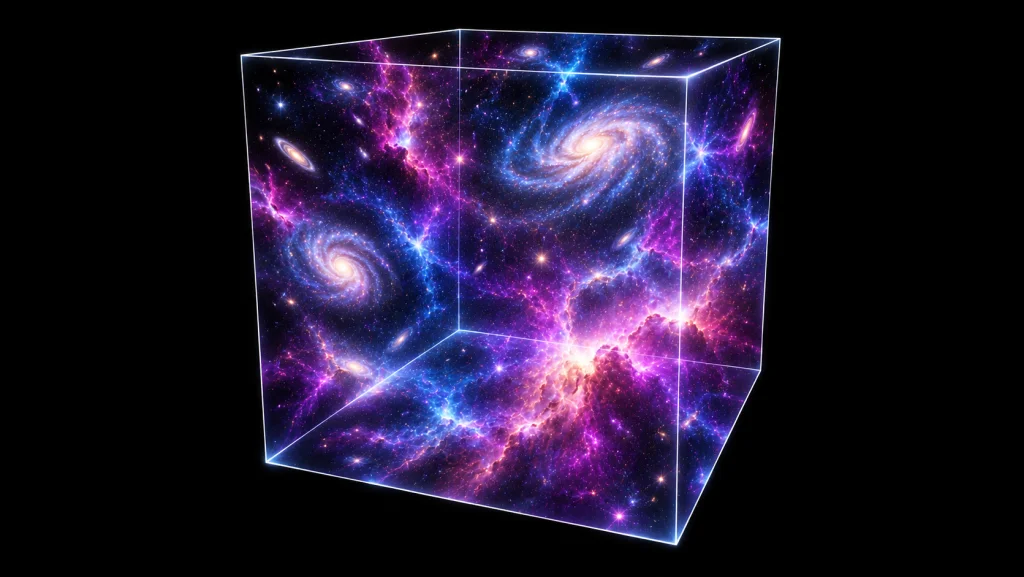
- In the latest episode of The Quantum Kid, theoretical physicist Juan Maldacena of the Institute for Advanced Study explains the holographic principle. This is the idea that everything inside a region of space, gravity included, can be described by information on its boundary.
- Maldacena estimates how many qubits a quantum computer would need to simulate a holographic universe. The qubits would have to be stable and near-perfect, closer to error-corrected logical qubits than today’s noisy physical ones.
- The episode also visits Microsoft’s quantum lab in Copenhagen. There, Dr Lauri Sainiemi discusses Majoranas and Microsoft’s topological qubit approach to building more stable qubits.
- Maldacena’s 1997 paper, which first set out the holographic duality, remains the most cited paper in the history of high-energy physics.
Quantum computing roadmaps usually talk about drug discovery, materials and optimisation. One of the most influential theoretical physicists alive has a different application in mind: simulating a universe.
In the latest episode of The Quantum Kid, Prof. Juan Maldacena of the Institute for Advanced Study in Princeton explains the holographic principle. This is the idea that everything happening inside a region of space, gravity included, can be fully described by information on its boundary. His 1997 paper turned that idea into a concrete mathematical model and remains the most cited paper in the history of high-energy physics.
What makes holography relevant to the quantum industry is that it ties gravity to quantum information. If the two are deeply connected, a powerful enough quantum computer could simulate a holographic universe and let physicists study quantum gravity, one of the biggest open problems in science, in the lab.

Maldacena puts a surprisingly specific number on what that would take. The catch here is in the qualifier: the qubits would need to be stable and near-perfect. In industry terms, that means something much closer to error-corrected logical qubits than the noisy physical qubits in today’s machines.
The hardware question
That is why in the episode the 10-year-old co-host, Kai, travels to Microsoft’s quantum lab in Copenhagen. Microsoft has bet on topological qubits built on Majoranas, an approach designed to make qubits more robust to noise from the start. Dr Lauri Sainiemi explains to Kai how it works and why building more stable qubits is so hard.
The show pulls together fundamental physics and quantum hardware: on the theory side, a concrete target for qubit counts, and on the engineering side, one of the most ambitious attempts to reach it.
Watch the episode: https://www.youtube.com/watch?v=tEeKc5Zogd4

Keep track of everything going on in the Quantum Technology Market. In one place.
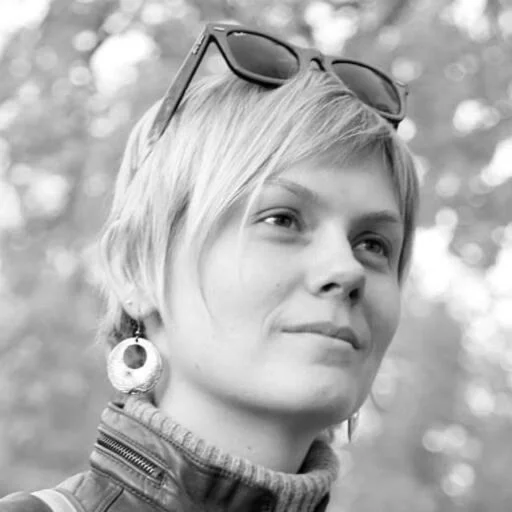
Katia Moskvitch

Stay Ahead of Quantum
Get the latest research, company news, and market intelligence every week.
MENTIONED IN THE ARTICLE