

Insider Brief
- Researchers from KRISS, GIST and Kongju National University identified the source of a beat signal in topological insulator nanowires as the overlap of quantum oscillations from topological surface and ordinary electron states.
- The team found that oscillations from the topological surface state and a two-dimensional electron gas beneath the surface have slightly different periods because their electron paths enclose different areas around the nanowire.
- The researchers used machine learning, theoretical calculations and a separate nanowire device to distinguish the oscillation components, with the study published in Nano Letters.
A South Korean research team has identified the cause of the “beat” signal observed in topological insulator nanowires, a problem that had been an obstacle to interpreting quantum signals for years, the Seoul Economic Daily reported.
Researchers from the Korea Research Institute of Standards and Science (KRISS), the Gwangju Institute of Science and Technology (GIST), and Kongju National University confirmed that the beat arises when quantum oscillations produced by the topological electron state on the surface and the ordinary electron state beneath it overlap.
How the Beat Was Found
A topological insulator is a quantum material that conducts electricity poorly inside but hosts a special electron state on its surface. When shaped into a thin nanowire and exposed to a magnetic field, surface electrons traveling different paths around the circumference interfere with each other, causing conductivity to change at regular intervals. This effect is known as the Aharonov-Bohm (AB) oscillation.

In real topological insulators, effects such as doping can create a thin layer just beneath the surface where electrons also flow. Whether this layer participates in AB oscillations alongside the topological surface state had been unclear, according to the Seoul Economic Daily.
The researchers discovered the beat while testing whether AB oscillations also appear in thermoelectric phenomena in a bismuth selenide (Bi₂Se₃) nanowire doped with antimony (Sb). A beat occurs when oscillations with slightly different periods overlap, producing a signal whose strength varies periodically. This became the clue pointing to an additional, unexpected oscillation component. Reanalyzing existing electrical conduction data, the team confirmed the same beat had been present in earlier results.
What Causes the Beat
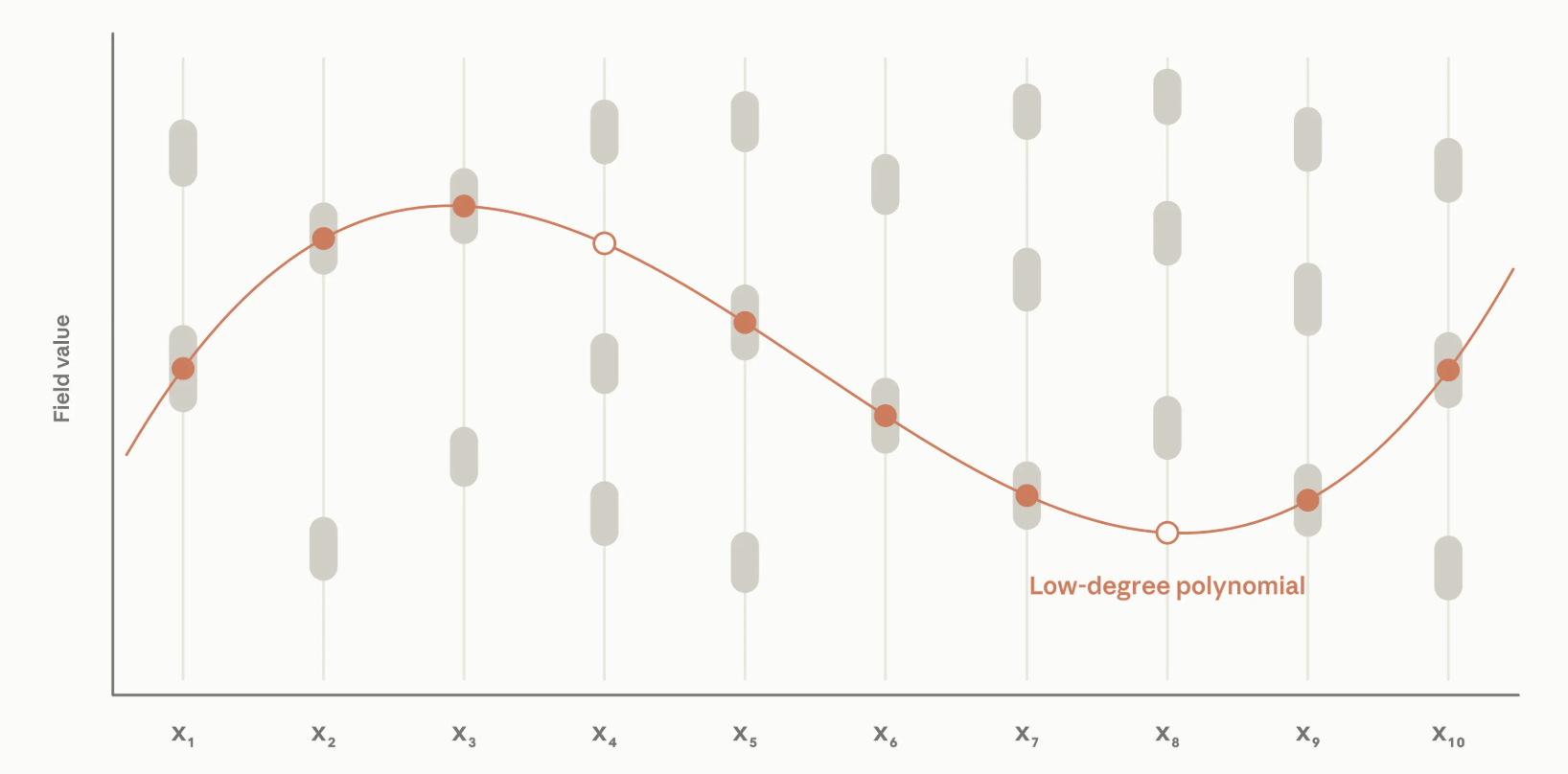
After years of analysis, the researchers concluded that the beat appears when oscillation components from the topological surface state (TSS) and a two-dimensional electron gas (2DEG), an ordinary electron layer beneath the surface, overlap. The electron paths through the two conduction states enclose slightly different areas around the nanowire, producing oscillations of different periods that superimpose to create the beat, the publication reported.
A team led by Professor Song Tae-geun of Kongju National University used machine learning to separate oscillation components that had appeared clustered together in earlier analyses. Each frequency remained distinct even as the beat pattern changed with gate voltage. Theoretical calculations reproduced the observed characteristics, and the phenomenon was verified in a separate nanowire device.
Significance and Publication
The study demonstrates that ordinary electron states can participate in AB quantum interference, a signal that had previously been used as a key indicator for confirming topological surface states.
Bae Myung-ho, a principal research scientist at KRISS, said the work shows that electrons can move between topological states and ordinary electron states and still produce quantum interference. Choi Sang-jun, a professor at GIST, said the principles for understanding and controlling interference between different electron states could be applied to designing topological quantum devices.
The research was published in July in Nano Letters, Volume 26, Issue 29, and was selected as the cover article for that issue, the outlet reported.