
Congress Moves Quantum Reauthorization Bill to Key Committee Stage


Insider Brief
- A House committee is holding a markup on April 29 for the National Quantum Initiative Reauthorization Act (H.R. 8462), advancing legislation to update and extend the U.S. quantum strategy.
- The bill would build on the National Quantum Initiative Act by strengthening federal coordination, accelerating commercialization, and expanding workforce and international partnerships.
- Committee approval would move the legislation toward a full House vote, marking a key step in shaping future U.S. quantum policy and funding priorities.
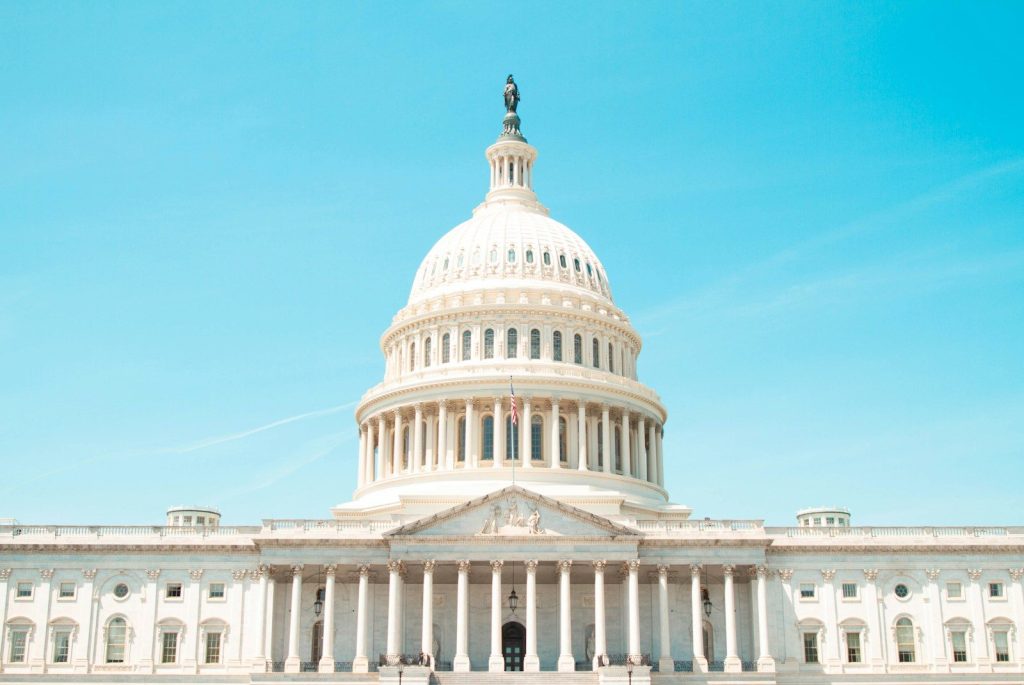
- Image: Photo by Caleb Perez on Unsplash
U.S. House Committee on Science, Space, and Technology is set to review legislation that would extend and update the U.S. government’s quantum technology strategy, marking a procedural step that could shape federal investment and coordination in the sector.
Lawmakers scheduled a full committee markup on April 29 for the National Quantum Initiative Reauthorization Act (H.R. 8462), a bill that would renew and expand the framework established under the National Quantum Initiative Act.
A markup is a formal session in which committee members debate a bill, propose amendments, and vote on whether to advance it to the full House. While markup sessions rarely draw public attention, they often serve as the point where legislative priorities are negotiated and funding directions clarified, which makes this stage a key indicator of how Congress intends to shape the next phase of U.S. quantum policy.

The reauthorization bill seeks to update the 2018 law, which created a coordinated federal program for quantum research across agencies including the Department of Energy, National Science Foundation, and National Institute of Standards and Technology. That original framework aimed to maintain U.S. leadership in quantum computing, sensing, and communications by aligning research funding and establishing national research centers.
According to a summary of the legislation, H.R. 8462 would place greater emphasis on transitioning quantum technologies from laboratory research into commercial and operational use. The bill also calls for expanded workforce development programs, increased collaboration with allied nations, and measures to strengthen the domestic quantum supply chain.
The timing reflects growing pressure in Washington to accelerate deployment of quantum capabilities amid rising global competition, particularly from China and the European Union, both of which have increased public investment in the field.
Industry groups and policymakers have increasingly pointed to gaps between U.S. research leadership and commercialization outcomes, especially in areas such as manufacturing, standards, and talent pipelines. The proposed updates are intended to address those gaps by linking federal research efforts more directly to industry adoption.
If approved by the committee, the bill would proceed to a vote in the full House. A companion effort in the Senate would be required before any final legislation could be sent to the president.

Keep track of everything going on in the Quantum Technology Market. In one place.

Matt Swayne
With a several-decades long background in journalism and communications, Matt Swayne has worked as a science communicator for an R1 university for more than 12 years, specializing in translating high tech and deep tech for the general audience. He has served as a writer, editor and analyst at The Quantum Insider since its inception. In addition to his service as a science communicator, Matt also develops courses to improve the media and communications skills of scientists and has taught courses.
[email protected]

Stay Ahead of Quantum
Get the latest research, company news, and market intelligence every week.
MENTIONED IN THE ARTICLE

US Department of Energy
The United States Department of Energy is a cabinet-level department of the United States Government concerned with the United States' policies regarding energy and safety in handling nuclear material.
→
National Institute of Standards and Technology
The National Institute of Standards and Technology is a physical sciences laboratory and non-regulatory agency of the United States Department of Commerce.
→