

Insider Brief
- The National Quantum Algorithm Center (NQAC) at IQMP announced five Grand Challenges awards to support quantum algorithm development for real-world applications.
- The program funds postdoctoral researchers working in collaboration with industry, academia, and quantum companies across sectors like energy, chemistry, and materials.
- The initiative aims to accelerate practical quantum use cases and strengthen collaboration within the Illinois quantum ecosystem.
PRESS RELEASE — Today, the National Quantum Algorithm Center (NQAC) at the Illinois Quantum and Microelectronics Park (IQMP) announced five awards in the Grand Challenges program, an initiative designed to advance quantum applications development in critical areas where quantum computing can address society’s most pressing problems. These funds will support post-doctoral researchers working on quantum algorithm R&D in close collaboration with IQMP quantum companies and industrial partners. These awards are funded through the generosity of P33, Northwestern University, and the Discovery Partners Institute (DPI) at University of Illinois Urbana-Champaign.
“Our 2026 Grand Challenges awardees are already doing groundbreaking work in quantum applications – an impact that will only grow in collaboration with the top scientists, companies, and industry leaders assembling at the Illinois Quantum and Microelectronics Park,” said Governor JB Pritzker. “We are well on our way to becoming the undisputed hub of the quantum world, and I look forward to seeing how these innovators shape the future and unleash the potential of this transformational new technology.”
First announced in October 2025, the Grand Challenges program supports postdoctoral researchers developing industry-relevant quantum applications while fostering collaboration among universities, national laboratories, and industry partners. Each selected team represents a three-way collaboration across academia, quantum companies, and industry end users, creating a pathway to translate quantum discoveries into real-world solutions.

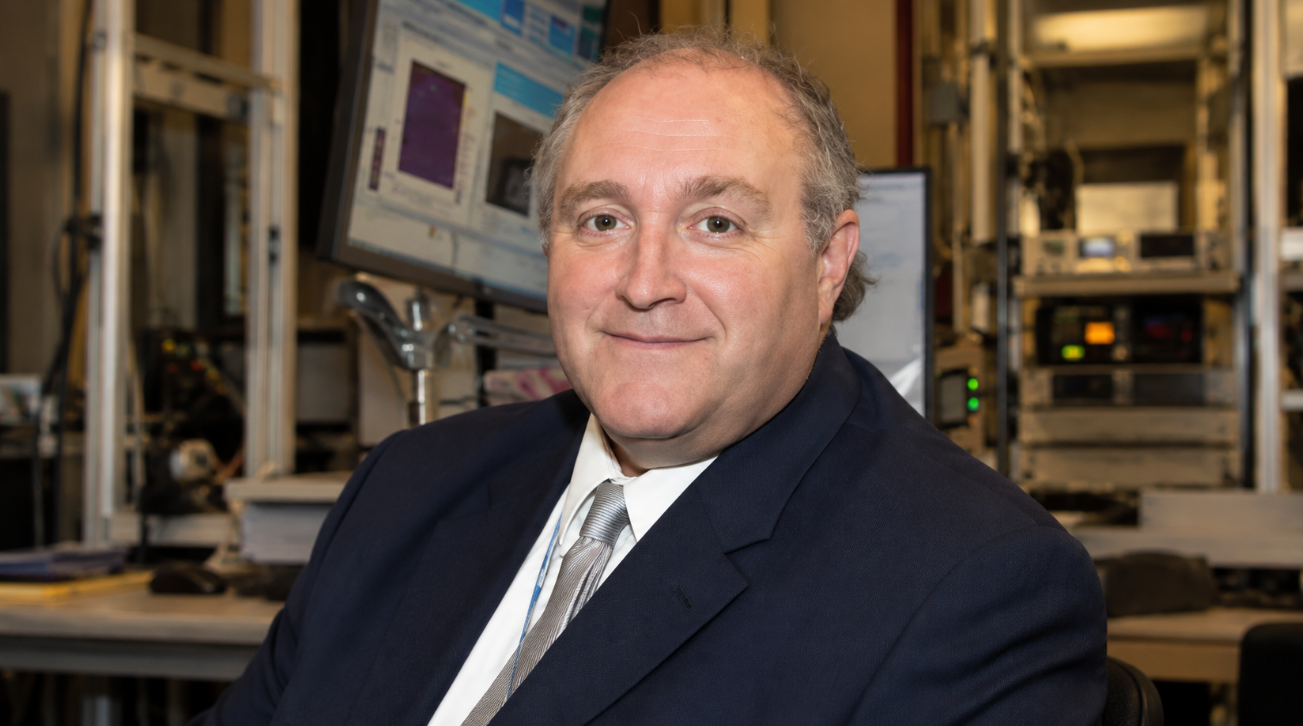
“The Illinois Quantum and Microelectronics Park is bringing together partners across academia and industry to accelerate the scale-up of quantum computing, and our National Quantum Algorithm Center will advance the algorithms that will unlock the solutions to our most challenging problems,” said Harley Johnson, Executive Director and CEO of IQMP. “I look forward to seeing how the Grand Challenges awardees partner with industry to translate quantum computing into real-world impact across sectors like health, energy, and materials.”
The 2026 Grand Challenges awardees are:
- Quantum Algorithms for Strongly Correlated Metalloporphyrins in Electrocatalysis (Professor Laura Gagliardi at University of Chicago, PsiQuantum, ULRI) – Chemical reactions known as electrocatalysis underpin key clean-energy technologies, including green hydrogen production, CO₂ utilization, and fuel-cell operation. This project develops a proof-of-concept for fault-tolerant quantum computing workflows to these types of chemical reactions to support clean-energy development and other use cases.
- Warm-starting QAOA with SQD (Professor Patrick Draper at University of Illinois Urbana-Champaign, IBM, EPRI) – The complexity of modern power systems is growing rapidly, and utilities must solve increasingly large-scale computational problems in order to address grid decentralization, integration of renewables, and stringent reliability constraints. This project aims to assess whether and how existing quantum algorithms can deliver practical advantage on real-world energy grid problems, and to produce advances in algorithm design so that quantum techniques can offer tangible benefit for energy grid applications.
- Benchmarking Quantum Computing Algorithms for Quantum Chemistry on Industrially Relevant Molecules (Professor Clark at University of Illinois Urbana-Champaign, qBraid, BP) – Quantum algorithms have strong potential to simulate chemicals and chemical reactions for clean fuels development, yet practical performance, accuracy, and resource requirements of these algorithms vary widely. This project will develop the technology, workflow and stack to document and benchmark various approaches for simulating quantum chemistry, with a focus on molecules relevant for the fuels sector (e.g., methane, ethanol, ethylene, acetaldehyde, methanol). It will produce an open knowledge graph and a public dataset to accelerate community learning and industrial translation.
- A Hamiltonian Simulation Compiler for Drug Design and Materials Discovery (Professors Nikos Hardavellas and Roberto dos Reis at Northwestern University, IBM, Abbvie) – This project focuses on democratizing access to quantum systems for simulating molecular interactions relevant for drug discovery and materials design. By developing computational tools that allow scientists from research domains outside of quantum computing to work with quantum computers more easily, this project will help accelerate the use of quantum applications for developing new drugs and improved materials.
- Industrially Relevant Quantum Algorithms for the Energy Sector (Professor Fred Chong at University of Chicago, Infleqtion, Constellation, EPRI) – The energy sector has high potential to use and adopt quantum computing applications for a range of use cases. For example, modern nuclear reactors rely on fuel-assembly designs that must simultaneously satisfy dozens of tightly coupled physics, thermal-hydraulic, and operational constraints, which could be addressed using quantum optimization algorithms. This project will focus on R&D to support industry adoption of quantum computing use cases in the energy sector.
“Grand Challenges brings together the full quantum ecosystem, including academic researchers, leading quantum companies, and industry end-users, to accelerate the development of real-world applications,” said Brad Henderson, CEO of P33. “These awardees represent exactly the kind of collaboration needed to drive innovation and further cement Illinois’ position as the global destination for quantum. From optimizing power grids to accelerating drug discovery and advancing clean energy solutions, these projects demonstrate the real-world impact quantum applications can deliver across industries.”
Grand Challenges builds on growing momentum for Illinois’ quantum ecosystem as construction at the IQMP continues. By pairing postdoctoral researchers with industry partners across sectors such as energy, pharmaceuticals, and materials science, the program enables hands-on experience developing quantum algorithms that could address complex, real-world challenges .
“We’re especially proud that two of this year’s Grand Challenges awards are led by University of Illinois Urbana-Champaign faculty, underscoring the depth of talent and leadership coming from Illinois,” said Gene Robinson, Executive Director and CEO of Discovery Partners Institute. “As University of Illinois’ strategic investment in Chicago for AI, Discovery Partners Institute is thrilled to support researchers and cross-sector collaboration in AI and quantum, building the foundation for future breakthroughs right here in Illinois.”
Launched in July 2025, the NQAC is a membership organization at the IQMP that brings together industry end-users, quantum companies, academia, national labs, and partners to advance quantum algorithms and applications that generate value for companies and to society.
“Northwestern is proud to support research that brings together disciplines and partners to tackle complex challenges,” said Eric Perreault, Vice President for Research at Northwestern University. “Programs like Grand Challenges are critical to advancing innovation and expanding the real-world applications of quantum technologies.”
The IQMP, which broke ground in Fall 2025, is a 128-acre development that provides infrastructure and resources to support the development and commercialization of quantum technologies, hardware, software and applications.