
Insider Brief
- Pasqal hosted its “Pasqal Thoughts 2026” event in Paris, focusing on the transition of quantum computing from research to real-world applications.
- The event highlighted industry use cases across finance, energy, and telecommunications, alongside progress in scaling quantum systems and HPC integration.
- Discussions emphasized hybrid quantum-classical systems, global collaboration, and ecosystem development to support practical deployment.
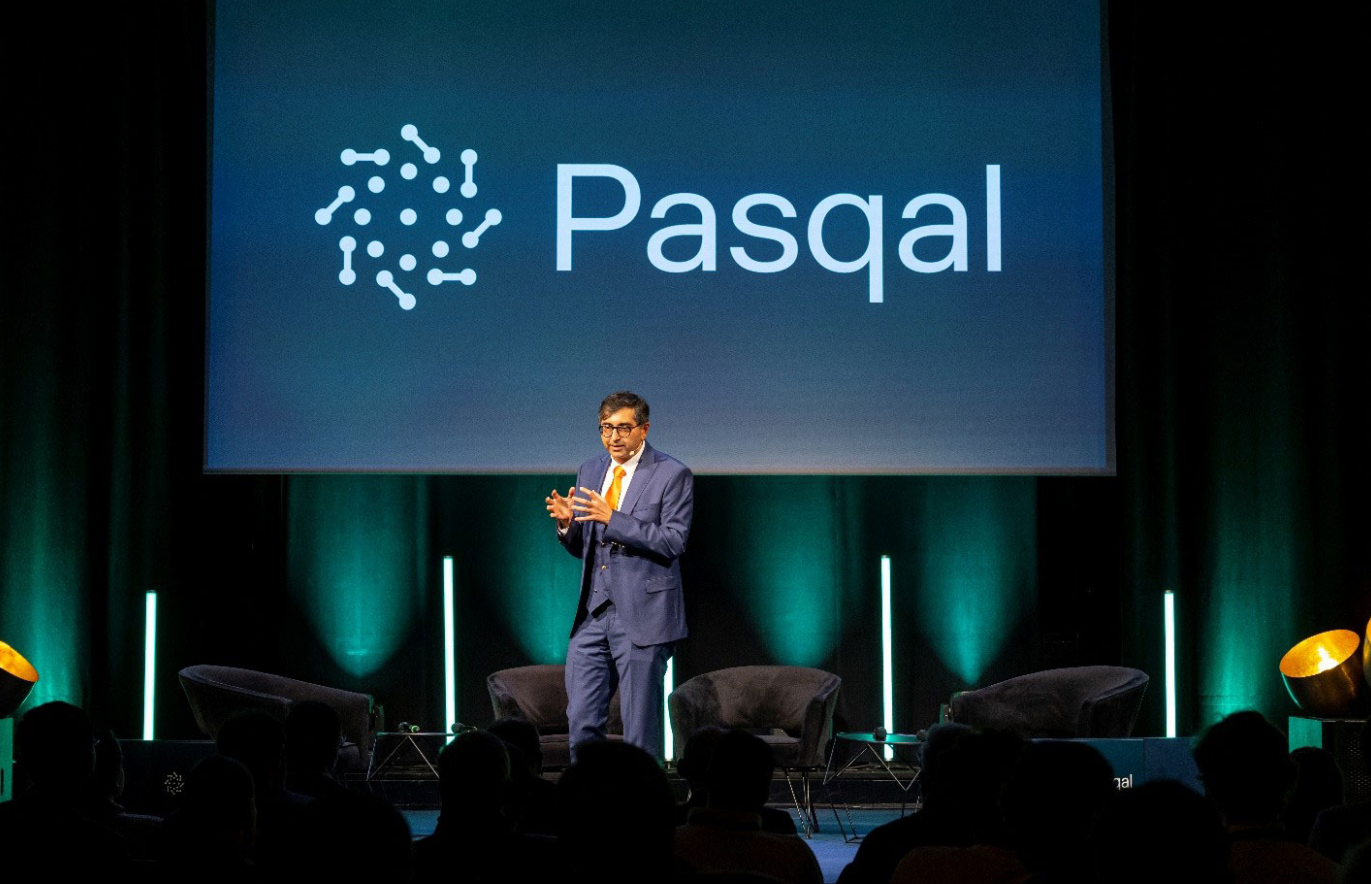
PRESS RELEASE — Pasqal, a leader in neutral‑atom quantum computing, hosted its flagship event Pasqal Thoughts 2026 on World Quantum Day at Le Cercle d’Aumale in Paris. The half‑day event brought together more than 150 participants representing industry, academia, government, and finance from more than 10 countries to explore the rapid evolution of quantum computing from a research-focused technology to an operational component of modern high‑performance computing (HPC) environments. Pasqal recently announced plans to go public through a business combination with Bleichroeder Acquisition Corp. II (Nasdaq: BBCQ).
“The conversations at Pasqal Thoughts 2026 make one thing unequivocally clear: quantum computing is no longer a technology of the distant future; it is becoming an operational tool for solving real business, industrial, and scientific challenges today,” said Wasiq Bokhari, CEO of Pasqal. “As we work alongside supercomputing centers, global enterprises, and research institutions, we are building the foundation for large‑scale, practical quantum computing that we believe will transform entire sectors over the coming decade.”
Sessions from Pasqal Thoughts 2026 can be viewed on YouTube.

Pasqal showcased its end-to-end full-stack platform and the tangible impact already being delivered to customers. Key sessions highlighted breakthrough 2025 achievements like logical qubit demonstrations and accelerated roadmap delivery, scaling towards 1000 qubits and mapping a clear path towards fault-tolerant quantum computing.
Industry use cases underscored the accelerating momentum of the technology. Financial institutions, including Crédit Agricole CIB shared perspectives on quantum approaches for portfolio optimization, derivatives pricing, and fraud detection. Leaders from Thales, EDF, and Links Foundation discussed active experiments in satellites constellation mission planning, energy systems optimization, and telecommunications resources allocation, illustrating how quantum computing is moving closer to practical, real-world applications.
“Partnering with Pasqal has shown us that quantum computing is already relevant to concrete financial use cases, from credit-risk monitoring to portfolio optimization,” said Pierre Dulon, Global Head of the Technology Sector at Crédit Agricole CIB. “It is exciting to see how their team and technology are helping turn these complex challenges into practical opportunities for the industry.”
A major focus of the event was the growing integration of Pasqal’s neutral-atom quantum processors into established supercomputing infrastructures. The European HPC centers GENCI and CINECA highlighted their ongoing efforts to integrate Pasqal systems into classical HPC workflows through the High-Performance Computer and Quantum Simulator (HPCQS) hybrid project, co-funded by the European HPC Joint Undertaking and, for CINECA, by Italy’s Ministry of University and Research.
As part of this hybrid workflow discussion, Paco Martin of IBM detailed progress on the Quantum Resource Management Interface (QRMI), designed to orchestrate quantum resources from multiple quantum architectures, alongside classical clusters and AI accelerators within widely used environments such as SLURM in what the company refers to as a quantum-centric supercomputing environment.
The convergence of quantum computing and artificial intelligence was also featured prominently at the event. NVIDIA joined discussions exploring how emerging hybrid quantum‑classical architectures can unlock new approaches to complex computational challenges.
The program further highlighted the importance of global collaboration, with organizations including P33 Chicago, Los Alamos National Laboratory and Institut quantique at Université de Sherbrooke emphasizing cross-border coordination between hardware developers, software providers, and domain experts. PINQ² stressed the importance of ecosystem collaboration across government, academia, and industry, and its role in supporting hybrid algorithm development and user adoption services for Canada’s quantum ecosystem.