

Insider Brief
- Three Playground Global portfolio companies—PsiQuantum, Ideon Technologies, and NVision—are applying quantum technologies to solve real-world problems in computing, mineral exploration, and medical imaging.
- PsiQuantum is building a fault-tolerant photonic quantum computer designed to scale to a million qubits using standard semiconductor processes and data center architecture.
- Ideon and NVision are using quantum sensing to image the Earth’s subsurface with cosmic muons and detect metabolic activity in cancer cells, respectively, enabling breakthroughs in mining efficiency and early disease diagnosis.
- Image: Playground Global
Three companies — PsiQuantum, Ideon Technologies, and NVision — say they are pushing quantum science into practical use, reshaping how humans detect disease, locate critical minerals, and design materials.
At Playground Global’s Next-Gen Compute event during Deep Tech Week San Francisco, the three portfolio companies company laid out a vision grounded not in academic research but in solving real-world problems. Their work, discussed in a series of fireside chat-type “Quantum Talks,” signals a broader shift underway in quantum technology, as the field pivots from promise to application, according to a blog post by Playground.
The One Million Qubit Goal
PsiQuantum, based in Palo Alto, has staked its future on a clear goal, claiming it will build the first fault-tolerant quantum computer that can outperform classical systems on problems of real consequence. While other companies tout quantum supremacy with devices around 100 qubits, PsiQuantum argues those systems are too limited, comparing them to calculators in a world that needs programmable computers.

According to the post, the company believes it will take at least a million error-corrected qubits to solve high-impact problems in chemistry, materials science and pharmaceuticals. These are domains where classical computing hits hard limits. These problems are computationally intense because they involve quantum-level interactions that resist shortcuts or approximations. Classical computers, even with AI assistance, cannot simulate quantum systems in full fidelity. A quantum computer, designed from the ground up to manipulate entangled particles, can, according to the PsiQuantum team.
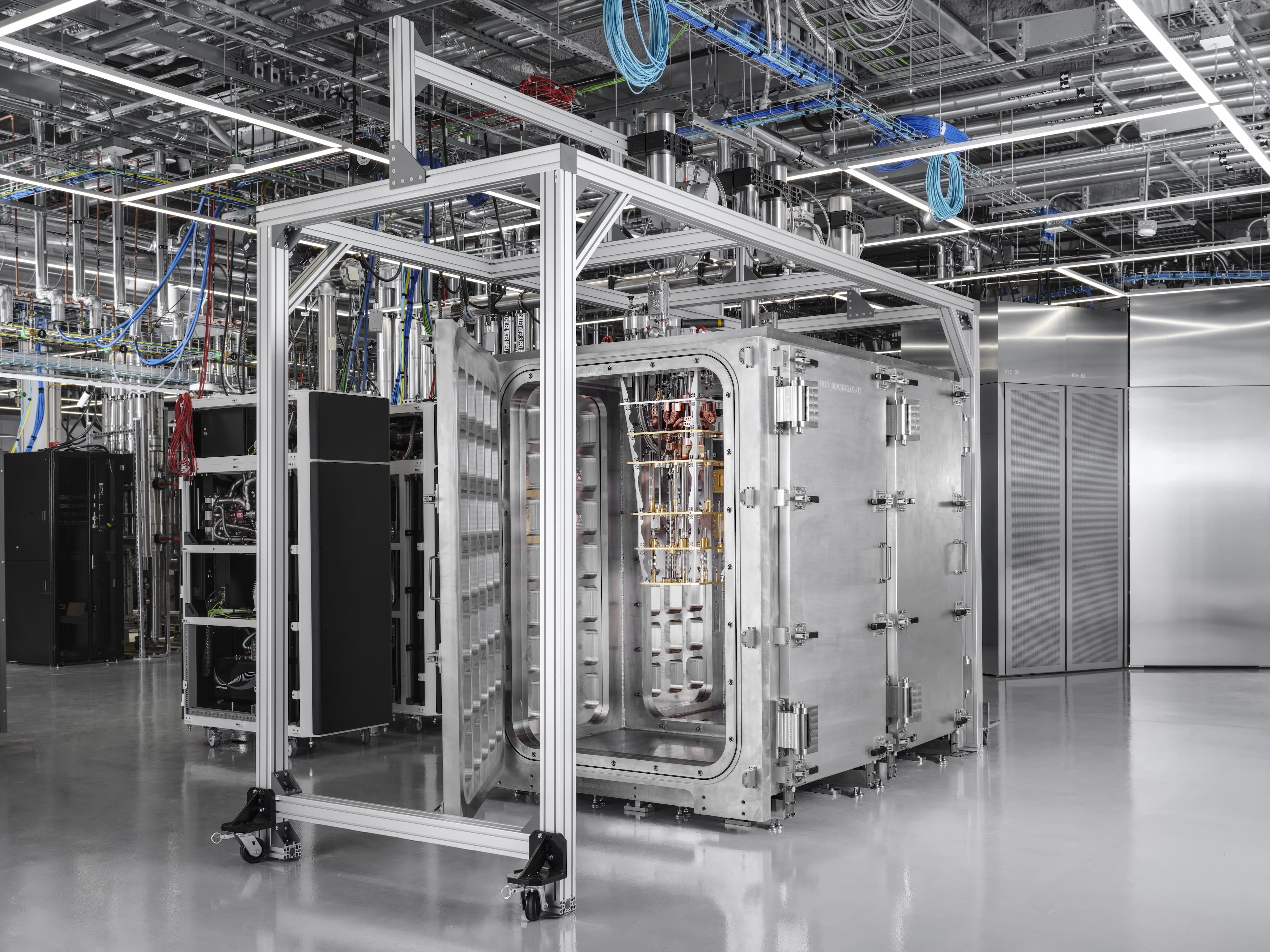
PsiQuantum’s solution is to build its system using photons — or, particles of light — as qubits. Unlike other quantum bits that suffer from interference and noise as systems scale, photons don’t naturally interact with one another, making them more suitable for large systems. PsiQuantum leverages standard silicon fabrication and partners with Global Foundries to produce the photonic chips at commercial scale. The system’s design connects these chips through optical fiber, and the resulting machine will look like a data center with hundreds of cabinets cooled by a cryogenic plant using liquid helium.
As the Playground post outlines, the company has already manufactured thousands of wafers and millions of components. This scale signals PsiQuantum’s belief that quantum computing isn’t just a physics problem — it’s a systems engineering challenge. Success, they argue, will come from treating quantum computers not as lab prototypes, but as data center infrastructure.
Cosmic Rays for Critical Minerals
Ideon Technologies, based in Canada, is applying quantum sensing to one of the most overlooked blind spots in modern infrastructure: the subsurface of the Earth. The company’s platform, REVEAL, uses naturally occurring cosmic rays — high-energy particles from outer space — to image the interior of the planet in three dimensions.
These rays produce subatomic particles called muons when they strike Earth’s atmosphere. Muons can travel deep into rock, and their trajectories shift depending on the density of the material they pass through. By placing muon detectors underground, Ideon creates CT-scan-like images of vast geological formations.
According to the blog post, Ideon’s main market today is mining. The global supply of critical metals like copper, lithium, and cobalt faces a $12 trillion shortfall by 2050. Yet mining operations still rely on sparse borehole data and low-resolution scans, often making billion-dollar drilling decisions with limited information. Ideon’s sensors offer higher-resolution views that can reduce the guesswork, enabling more targeted, efficient, and environmentally responsible extraction.
Unlike traditional geophysical techniques, Ideon’s approach is passive, non-invasive, and scalable. The muons arrive continuously from space — no external radiation or drilling is needed to gather data. By improving imaging underground, Ideon aims to lower the economic and environmental cost of securing the raw materials needed for the clean energy transition.
Making Metabolism Visible
While PsiQuantum tackles quantum computing and Ideon reimagines exploration, Germany-based NVision is using quantum science to look inward—into the human body. Its Polaris system enables metabolic imaging by boosting the magnetic resonance signal of specific molecules used in MRI scans.
Traditional MRI machines image water molecules to reveal anatomy, but they can’t capture the metabolic processes that distinguish healthy tissue from disease. Cancer cells, for instance, metabolize sugars differently than healthy ones, a phenomenon first observed in 1925. This metabolic difference can be a signal for early diagnosis, but the signals are too weak for standard MRI systems to detect.
NVision solves this using a quantum phenomenon called dynamic nuclear polarization. By aligning the nuclear spins of sugar molecules before they enter the body, Polaris boosts the magnetic signal by a factor of 100,000. A small amount of polarized sugar generates as strong a signal as liters of water.
According to the Playground post, this makes it possible to overlay real-time metabolic data onto anatomical MRI scans, offering insight into cancer biology at a much earlier stage than current methods allow. Applications include early detection of pancreatic cancer, monitoring of prostate cancer progression and near-instant feedback on whether a treatment is working in weeks or months before visible tumor changes occur.
Unlike PET scanners, which use radioactive tracers, Polaris works with MRI machines already installed in hospitals. The system can be retrofitted onto existing infrastructure, opening access to a global installed base far larger than PET. Beyond cancer, NVision believes the technology could transform how clinicians study metabolic diseases, including Alzheimer’s.
Common Thread: Quantum for Utility
Despite working in vastly different domains, the companies featured at the Playground event share a common approach: solving specific, pressing problems using the unique advantages of quantum science. According to the blog post, the event illustrated that quantum is no longer confined to research papers and university labs—it is becoming a toolset for industry.
Playground, which backs deep tech startups at the earliest stages, has repeatedly emphasized that quantum computing and sensing will only succeed when embedded into real systems, solving problems that matter.
The post indicates these companies are heading in that direction. Rather than waiting for a general-purpose quantum computer to arrive, companies are tailoring quantum technologies to applications where no classical alternative exists.
The Playground team writes: “Together, their stories underscore a common theme: a fundamental redesigning of how we acquire and process information is beginning to reveal solutions to some of humanity’s most pressing challenges.”