



Insider Brief
- WISER and Fraunhofer ITWM studied the use of quantum machine learning for anomaly detection in industrial manufacturing systems.
- The collaboration evaluated Quantum Neural Networks for tasks such as pneumatic leak detection and rotating machinery fault analysis using industrial sensor data.
- The research explored how near-term quantum AI methods could support predictive maintenance and process optimization in industrial environments.
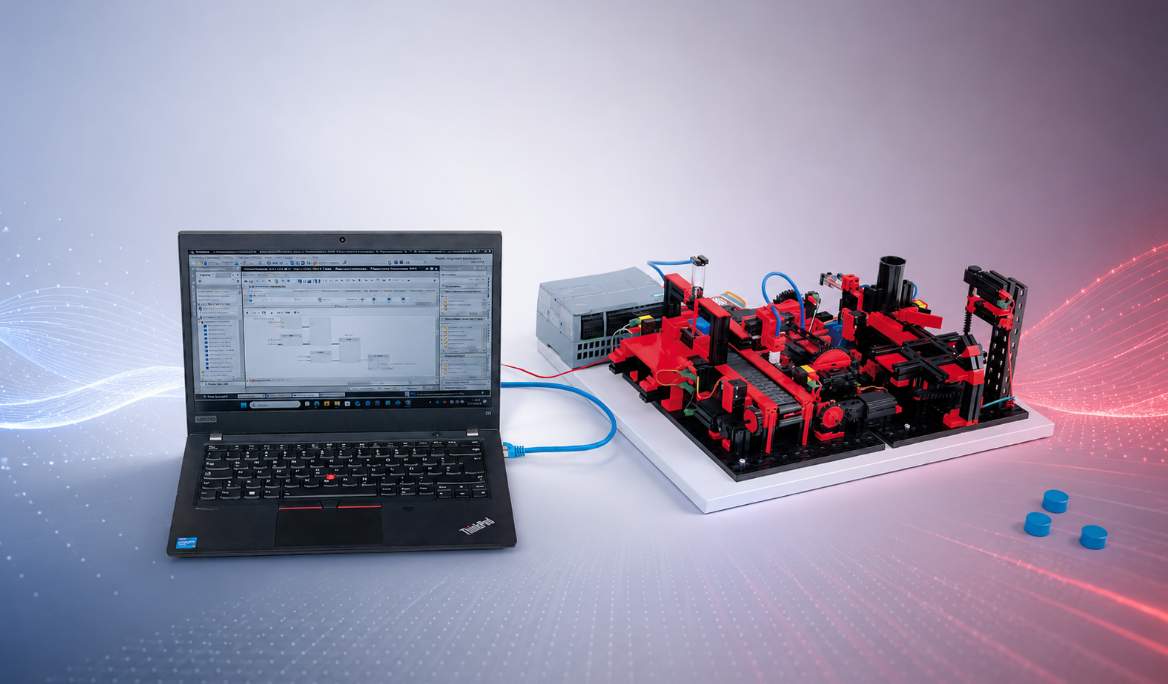
PRESS RELEASE — At its core, the collaboration explored how emerging quantum computing methods can support anomaly detection in manufacturing, a critical task for identifying faults in complex production systems. By analyzing sensor data from industrial equipment, such approaches aim to detect irregularities at an early stage, helping to reduce downtime, improve quality control, and increase overall efficiency. The study focused on practical scenarios such as identifying pneumatic leaks and detecting faults in rotating machinery, illustrating how quantum-enhanced models could complement existing data-driven solutions in industry.
Building on this application perspective, the team conducted a systematic evaluation of Quantum Neural Networks (QNNs), a class of machine learning models designed for near-term quantum hardware. The results show that QNNs can achieve competitive performance, including 87.77 percent accuracy in pneumatic leak detection and strong ROC-AUC performance on NASA bearing fault datasets. The study further analyzes key design choices such as data encoding strategies, highlighting binary and exponential encodings as effective trade-offs between model expressivity and trainability. The full technical details are available in the corresponding arXiv publication.
»Quantum Neural Networks (QNNs), holds promise for integrating quantum principles into machine learning. However, a critical gap exists in understanding the practical limitations of QNNs regarding trainability and approximation capabilities. Our work provides a roadmap for selecting ansatzes that balance expressivity across both synthetic and real-world datasets, while using limited qubit count to address any noise issues.« said Vardaan Sahgal from WISER.

Bringing Quantum Machine Learning into Industrial Practice
Data-driven methods, including quantum-inspired and quantum-native approaches, offer new opportunities for predictive maintenance and process optimization across sectors such as aerospace, automotive, energy, and industrial automation.
»This work demonstrates how quantum machine learning can be applied to real industrial problems today, while highlighting its potential to improve the quality of decision support in complex production environments as quantum hardware continues to evolve,« said Dr. Pascal Halffmann from Fraunhofer ITWM.
This partnership reflects WISER’s mission to accelerate applied innovation through its Solutions Launchpad by connecting emerging technologies with real-world challenges. Combined with Fraunhofer ITWM’s expertise in industrial mathematics, the collaboration provides a structured pathway to evaluate early-stage quantum technologies and translate them into relevant industrial use cases.