Jülich Research Center Partners with ARQUE Systems to Advance Scalable Semiconductor Quantum Computers


Insider Brief:
- The Jülich Research Center has partnered with ARQUE Systems to integrate a 5-qubit semiconductor-based quantum computer into the JUNIQ platform at the Jülich Supercomputing Centre, with future scalability to hundreds of qubits.
- ARQUE Systems uses innovative semiconductor qubits based on transistor-like structures to capture single electrons and leverage their spin for computation, collaborating with Helmholtz Nano Facility and Infineon Dresden to develop scalable designs.
- ARQUE Systems’ patented processor architecture enables qubit movement along shuttle paths on-chip, facilitating the integration of millions of qubits and control electronics within a compact design for advanced quantum computing capabilities.
- Image Credit: Forschungszentrum Jülich
- Editor’s Note: The following has been translated from German to English using ChatGPT.
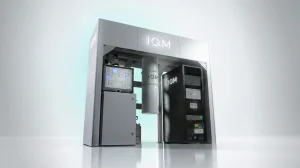
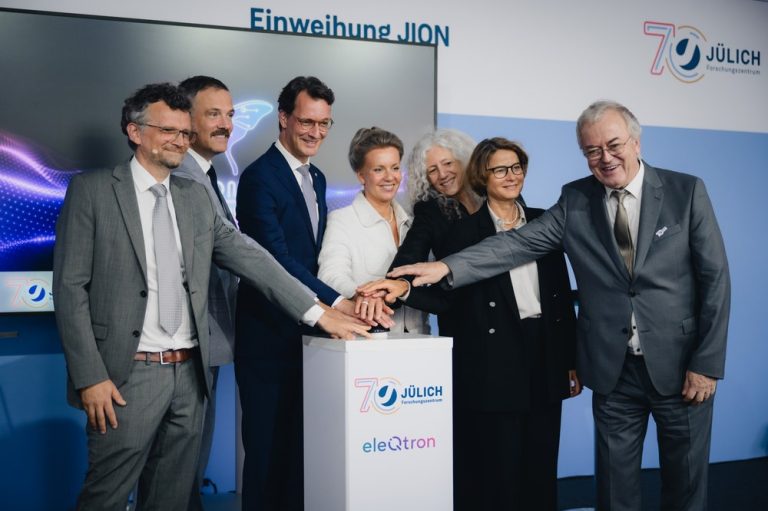
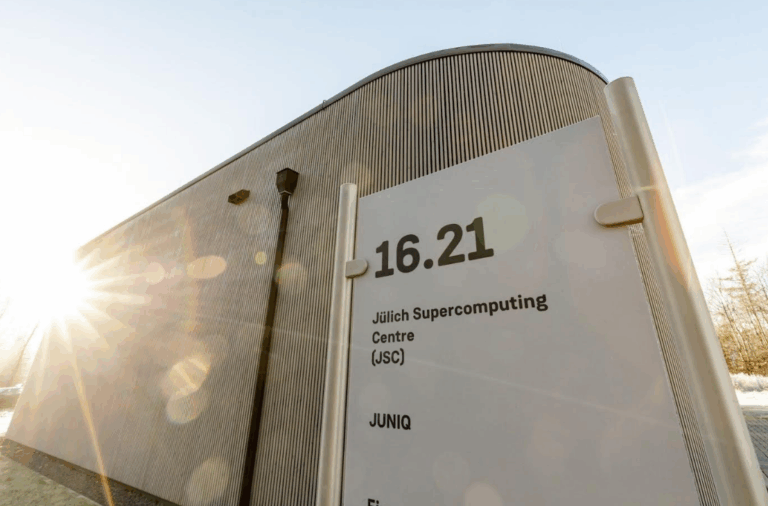
PRESS RELEASE –The Jülich Research Center has entered into a significant development partnership with ARQUE Systems. As part of this collaboration, a patented quantum computer with a 5-qubit quantum processor will be integrated into the JUNIQ (Jülich Unified Infrastructure for Quantum Computing) research platform of the Jülich Supercomputing Centre (JSC) next year. The semiconductor-based quantum computer is already designed to scale up to hundreds of qubits in the future.
Current quantum chips are extremely sensitive to environmental influences, making it difficult to construct stable and error-free quantum computers. Error correction requires millions of qubits, as thousands of physical qubits are needed to create a few logical, error-free units. However, scaling from the current 1,000 qubits to one million is an extremely challenging task.
ARQUE Systems’ Solution
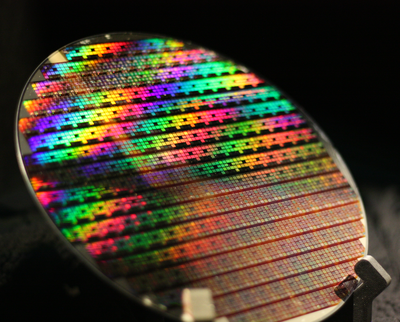
ARQUE Systems uses semiconductor qubits based on transistor-like structures. Instead of traditional switches, they capture single electrons, utilizing their spin as quantum computing units. This technology is closely related to existing semiconductor manufacturing methods. To develop scalable structures and qubits, ARQUE Systems collaborates with the Helmholtz Nano Facility at FZJ and Infineon Dresden.

A key advantage of semiconductor qubits lies in their small size and the ability to integrate classical control electronics with qubit units on a semiconductor chip within a tile of about 100 µm². The chip can then be constructed with millions of such tiles, though this requires connectivity between the tiles. ARQUE Systems addresses this challenge by enabling the movement of qubits on the chip. Electrons are transported along so-called shuttle paths, like a conveyor belt, over several micrometers without losing the information encoded in their spin. Based on this principle, ARQUE employs a unique and patented processor architecture published in the renowned journal Nature Communications. This technology allows for the potential integration of millions of qubits on a single square-centimeter chip, including the necessary infrastructure such as connections and control electronics.
About JUNIQ
The Jülich Unified Infrastructure for Quantum Computing (JUNIQ) provides academia and industry with access to state-of-the-art quantum computers. Integrating these systems into the modular HPC environment of the JSC also enables hybrid quantum-HPC applications. Combining quantum systems and supercomputers allows for leveraging the strengths of both technologies and exploring the potential of quantum computers for practical applications today. Quantum computing is expected to have significant impacts on optimizing industrial processes such as logistics, transportation systems, and process engineering, as well as in cryptography. It also has versatile applications in fundamental sciences, including physics, chemistry, biology, medicine, and materials research. Additionally, the technology opens up new perspectives in machine learning and artificial intelligence.
About ARQUE Systems GmbH
ARQUE Systems GmbH is a spin-off of Forschungszentrum Jülich and RWTH Aachen University and a leading developer of spin-based semiconductor quantum computers, as well as a pioneer in quantum processors. With a comprehensive patent strategy covering more than 20 innovations, from components to systemic units, ARQUE drives technological innovation. Its interdisciplinary team of experts in quantum physics, materials science, engineering, and management combines scientific excellence with entrepreneurial expertise. Through strong national and international partnerships, ARQUE successfully transforms visionary research into market-ready technologies and business models.

Keep track of everything going on in the Quantum Technology Market. In one place.
Topics

Cierra Choucair
Cierra Choucair is a journalist and data analyst at The Quantum Insider, where she covers quantum computing and emerging technologies. With a background that blends scientific analysis, public communication, and product storytelling, she bridges technical complexity and industry insight across research, startups, and policy. She is the author of The Daily Qubit, a widely read newsletter spotlighting quantum research, use cases, and industry trends.

Stay Ahead of Quantum
Get the latest research, company news, and market intelligence every week.
MENTIONED IN THE ARTICLE

Jülich Supercomputing Centre (JSC)
The Jülich Supercomputing Centre (JSC) is a research center located in Jülich, Germany, that provides leading-edge supercomputer resources, IT tools, methods, and know-how. The center has approximately 250 experts working on all aspects of supercomputing and simulation. The JSC is part of the John von Neumann Institute for Computing (NIC) and the Gauss Centre for Supercomputing (GCS). The JSC is also home to the Jülich Unified Infrastructure for Quantum Computing (JUNIQ), which is a uniform quantum computing Platform as a Service (QC-PaaS) that offers European users support and access to quantum computer emulators and quantum computing technologies of different types and levels of technological maturity. JUNIQ will integrate quantum computers in the form of quantum-classical hybrid computing systems into the modular HPC environment of the Jülich Supercomputing Centre. They operate a quantum annealer with more than 5,000 qubits as part of JUNIQ, making them the first site in Europe to operate a latest-generation system by the Canadian manufacturer D-Wave. The JSC collaborates with renowned hardware and software vendors like IBM, Intel, NVIDIA, and ParTec to meet the challenges that arise from the development of exaflop.
→

Infineon
Infineon is a is a German semiconductor manufacturer founded in 1999. Infineon is contributing its expertise in microelectronics and industrial manufacturing as well as its experience in application relating to future quantum computers.
→

Forschungszentrum Jülich
Forschungszentrum Jülich (FZJ) is one of the largest interdisciplinary research institutions in Europe, focusing on energy, information, and bioeconomy. Located in Jülich, North Rhine-Westphalia, it employs approximately 7,250 staff members, including many international researchers. FZJ operates advanced scientific infrastructures, such as supercomputers and particle accelerators, and conducts research aimed at addressing major societal challenges, including climate change and sustainable resource management. As a member of the Helmholtz Association, it collaborates with over 200 partners globally, fostering innovation in various fields through interdisciplinary approaches and cutting-edge technologies.
→