RTX Develops DARPA-Backed Quantum Photonic Sensors for Defense and Commercial Use



Insider Brief:
- RTX’s BBN Technologies is developing a compact, low-power photonic sensor under DARPA‘s INSPIRED program, using quantum states of squeezed light to achieve over ten times the precision of conventional sensors for defense and commercial applications like LiDAR, biosensing, and communications.
- The BBN-led team, collaborating with Xanadu Quantum, the University of Maryland, and Raytheon’s Advanced Technology business, is designing a prototype chip-scale detector that minimizes photon noise by suppressing quantum fluctuations, pushing detection sensitivity 16 dB below the shot noise limit.
- The sensor, leveraging advances in photonic integrated circuits and quantum measurement devices, is intended to provide accurate detection across a wide frequency range (100 MHz to 10 GHz), enabling applications such as autonomous navigation, mapping, and obstacle detection.
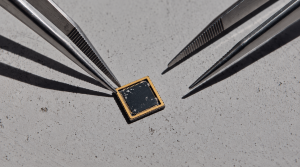
- Image Credit: RTX BBN Technologies
PRESS RELEASE — RTX’s BBN Technologies is developing next-generation, compact, low-power, deployable photonic sensors that will provide users with better awareness of environmental elements critical to their missions with greater than ten-times the precision of current sensors. This new capability will have widespread defense and commercial applicability, disrupting fields such as LiDAR, fiber-based sensing, biosensing, system and network monitoring, navigation and communications.
As part of DARPA’s Intensity Squeezed Photonic Integration with Revolutionary Detection (INSPIRED) program, the BBN-led team will deliver a prototype photonic chip that uses exotic quantum states of squeezed light to achieve its goals.
The successful delivery of this custom-designed prototype requires the team to push detection sensitivity 16 dB below the fundamental “shot noise” limit, which imposes a strict bound on the sensitivity of conventional sensors that are not equipped to take advantage of the unique quantum properties of light.

“Light is a powerful tool that finds widespread use in sensors like LiDAR (Light Detection and Ranging) for mapping, autonomous navigation, and more,” said Dr. Mo Soltani, BBN principal investigator on the effort. “But today’s sensors are limited by the randomness inherent in the way light fluctuates. Imagine that you have a light source, and you’re counting the photons arriving at a detector every second. Because of the quantum nature of light, the number of photons you count each second will vary, even if your source is perfectly stable.” This variation in detection, known as shot noise, limits how precisely a sensor can use light to probe its surroundings.
To overcome this problem, the team’s chip-scale detector will use quantum mechanics to fine tune the light it generates. “Our device minimizes the photon noise by ‘squeezing’ the light source—suppressing certain kinds of quantum fluctuations while augmenting others,” said Dr. Michael Grace, a quantum information scientist at BBN involved in the project. “This lets us focus on extracting the information embedded in a specific photonic property of interest without being limited by shot noise.”
Using squeezed light to increase the precision of photon measurements has been proven in meter-scale laboratory experiments and kilometer-scale gravitational wave facilities. The team will use its expertise in photonic integrated circuits and quantum measurement devices to achieve the design and fabrication innovations required to transfer squeezed light capabilities to a fieldable, millimeter-scale detector for detection across a wide frequency range within 100 MHz to 10 GHz.
In addition, BBN will use its proficiency in systems integration to manage a team that includes leading quantum and photonic experts from Xanadu Quantum, the University of Maryland (Prof. Saikat Guha), and Raytheon’s Advanced Technology business. The team brings robust capabilities in quantum sensor design, squeezing and sub-shot noise detection, quantum photonic testing and chip packaging, and rapid prototyping of compact RF-synthesizer modules.
“Improving the accuracy, sensitivity, resolution and efficiency of fielded sensors makes them more effective in a wide range of applications, from mapping and surveying to autonomous navigation and obstacle detection,” said Soltani. “All of that translates to better information to use in decision-making.”
Work on this contract is being performed in Cambridge, Massachusetts; San Diego, California; College Park, Maryland; and Toronto, Canada.
About RTX BBN Technologies
Founded in 1948, RTX BBN Technologies provides advanced technology research and development with a focus on national security priorities. From the ARPANET to the first email, through the first metro network protected by quantum cryptography, BBN consistently transitions advanced research to produce innovative solutions for its customers. BBN takes risks and challenges conventions to create solutions in analytics and machine intelligence, networks and sensors, intelligent software and systems, and physical sciences.
About RTX
With more than 185,000 global employees, RTX pushes the limits of technology and science to redefine how we connect and protect our world. Through industry-leading businesses – Collins Aerospace, Pratt & Whitney, and Raytheon – we are advancing aviation, engineering integrated defense systems for operational success, and developing next-generation technology solutions and manufacturing to help global customers address their most critical challenges. The company, with 2023 sales of $69 billion, is headquartered in Arlington, Virginia.

Keep track of everything going on in the Quantum Technology Market. In one place.
Topics

Cierra Choucair
Cierra Choucair is a journalist and data analyst at The Quantum Insider, where she covers quantum computing and emerging technologies. With a background that blends scientific analysis, public communication, and product storytelling, she bridges technical complexity and industry insight across research, startups, and policy. She is the author of The Daily Qubit, a widely read newsletter spotlighting quantum research, use cases, and industry trends.

Stay Ahead of Quantum
Get the latest research, company news, and market intelligence every week.
MENTIONED IN THE ARTICLE

Defense Advanced Research Projects Agency (DARPA)
The Defense Advanced Research Projects Agency (DARPA) is an independent research and development agency within the U.S. Department of Defense (DoD) established in 1958 to prevent and create strategic technological surprises for national security. Operating with a relatively small staff of program managers who are empowered to take high-risk, high-reward approaches, DARPA functions by funding cutting-edge research in academia, industry, and government laboratories rather than conducting research in-house. Its mission focuses on creating revolutionary technologies—such as the Internet (ARPANET), stealth technology, GPS, and mRNA vaccine platforms—that transition into practical military and civilian applications. DARPA programs are typically finite in duration and demand transformational breakthroughs rather than incremental improvements, positioning the U.S. at the forefront of technological innovation.
→

Xanadu
Xanadu is a Canadian photonic quantum computing company founded in 2016 that is building fault tolerant systems utilizing light. The company collaborates with defense and hardware partners like AMD and Lockheed Martin to accelerate computational fluid dynamics simulations and train an aerospace engineering workforce.
→

University of Maryland
The University of Maryland, College Park, situated in Maryland, is a public research university. Established in 1856, it holds the position of being the main campus of the University System of Maryland. It also holds the distinction of being the biggest university in both the state and the Washington metropolitan area.
→