


The Quantum Daily launches Quantum Computing as a Service project
The Quantum Daily (TQD), the leading provider of information and data on the quantum technology market, is delighted to the announce the kick-off of its project covering the Quantum Computing as a Service market – QCaaS for short.
As a first step TQD will maintain a live page which covers the various players that provide access to quantum computing in the cloud. This is available here.
Where can you use real quantum computers?

Quantum Computers (QCs) are still in development stage and do not offer users commercial advantages versus using traditional classical computing power. Nonetheless, stakeholders in the quantum technology industry see significant promise for future usage.
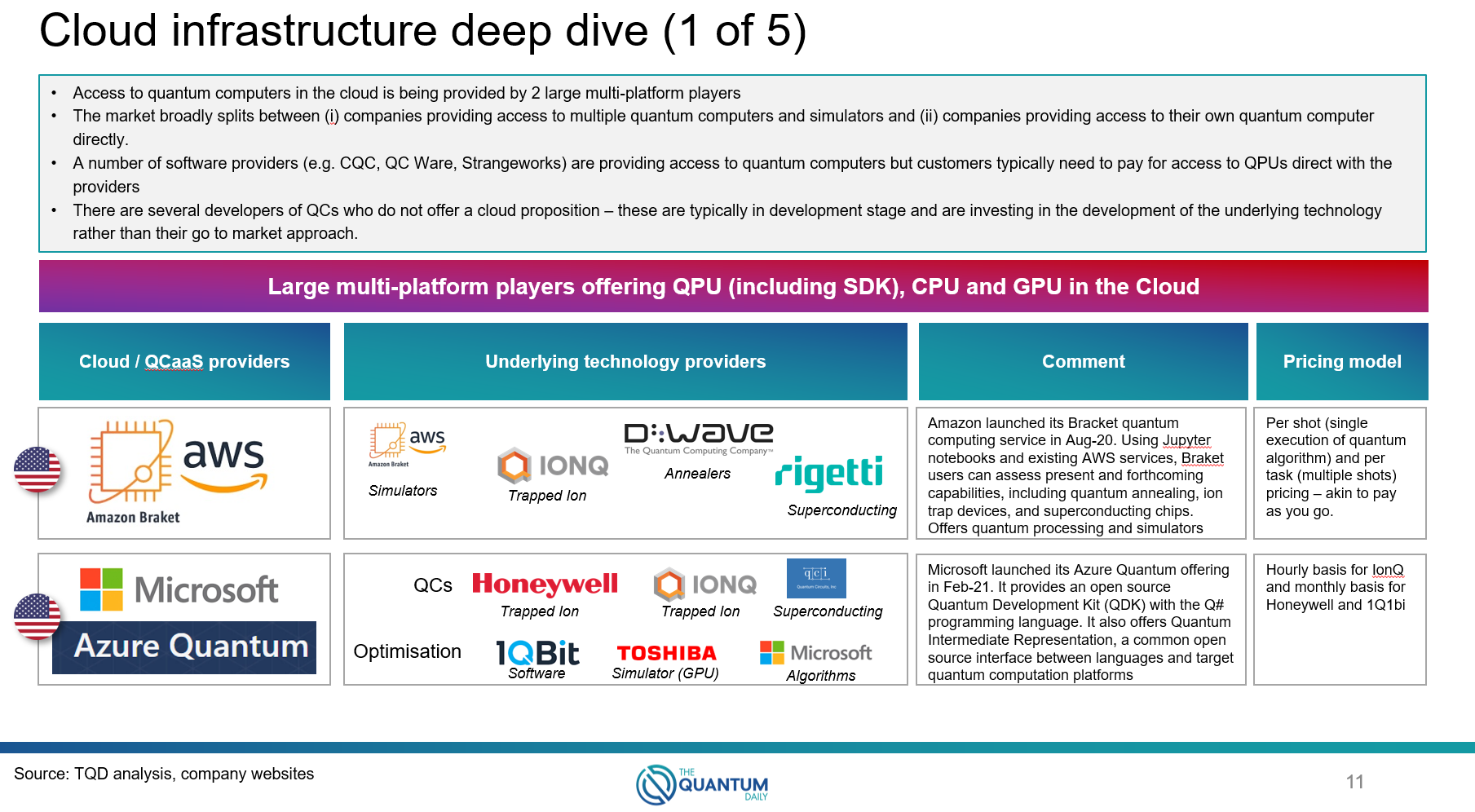
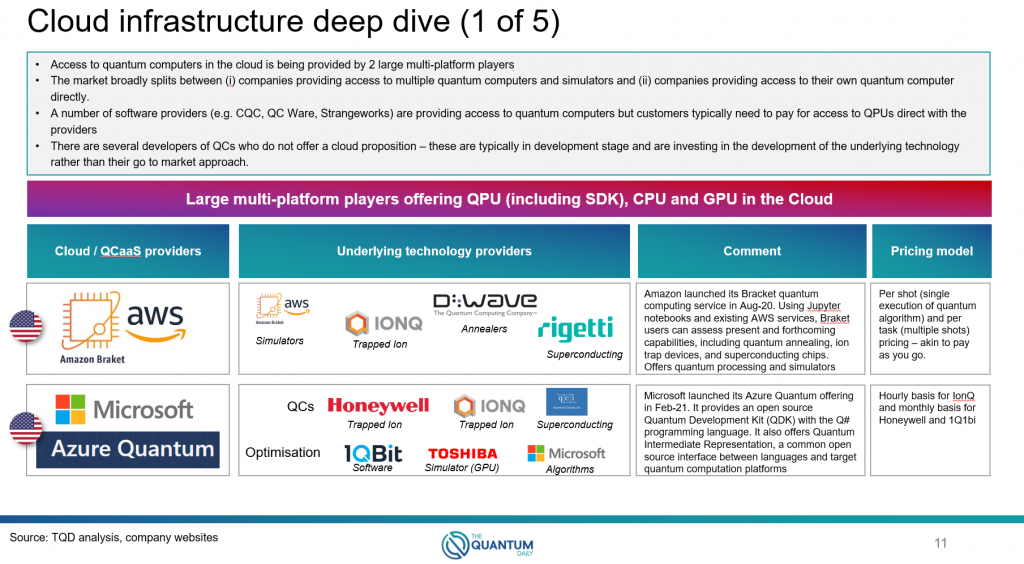
The large, existing US-based classical cloud computing players such as Microsoft Azure and Amazon AWS already offer paid access to multiple quantum computers which sits beside their CPU and GPU offerings – we have termed these multi-platform players. These players are providing access to quantum computers which leverage trapped ion and superconducting qubits, as well as providing access to quantum annealers and simulators.
There are a number of other QC developers who are offering their computer directly in the cloud, for example Xanadu, Alibaba, IBM and Honeywell to name a few. QC developers without a cloud proposition are quickly looking to offer one – Oxford Quantum Circuits are currently hiring to deliver this.
These companies are addressing the demand from corporations and academic institutions to start experimenting with utilising quantum technology so they are well positioned for when the technology may be able to confer commercial advantage. Manufacturers of QC devices using other qubit implementation methods (e.g. PsiQuantum – Photonics) are still in development stage, focussing on the development of the hardware before offering access.
Why the cloud?
QCs are large, expensive and delicate pieces of equipment which need to be maintained in certain conditions to operate effectively. Contrary to the classical computers – which benefited from relatively rapid chip miniaturisation – many experts see QCs as unlikely to resemble the small devices we use today (such as laptops and phones).
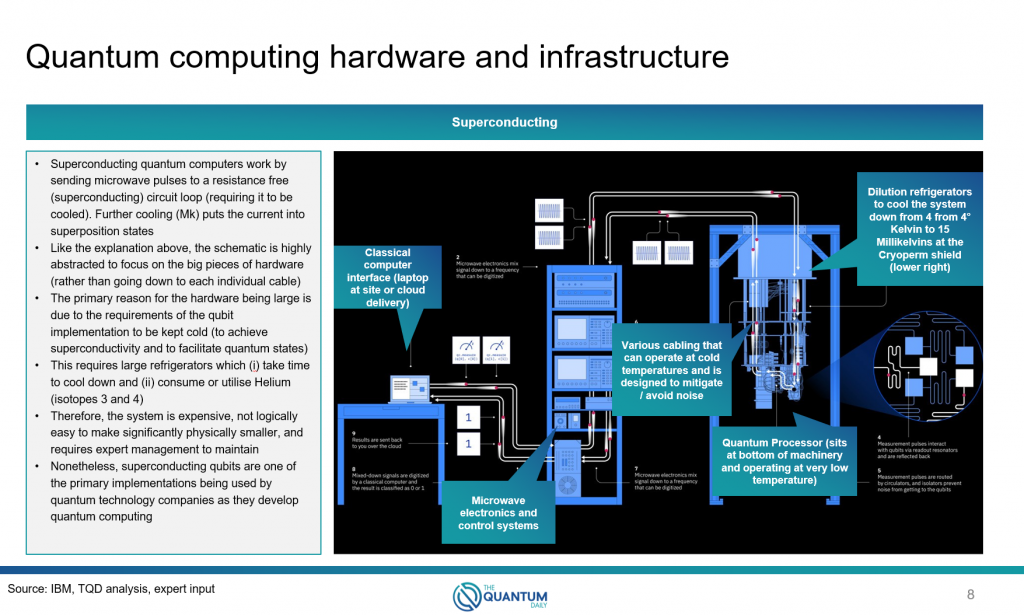
This, combined with a market highly familiar with cloud delivery, has meant that QC is expected to be delivered primarily in the cloud as part of a managed service. Customers are expected to access QCs via their classical computers within a browser interface, similar to a current experience on classical cloud computing providers today.
Whilst there are players working with other substrates (e.g. Quantum Brilliance are specifically aiming to deliver a rack-based QC using diamonds), QC experts forecast that we are a long way off from end-customers procuring their own quantum computers.
How much does it cost?
There are several initiatives that allow users to experiment with using quantum computers. IBM Quantum has made a strong name for itself by providing a suite of tools that allows users to interact with quantum computers for free. However, it and other hardware companies do not widely disclose the pricing of access to their commercial offerings. Microsoft Azure gives information on hourly pricing on its website, indicating access to Honeywell’s Ion Trap system costs $5,000 per hour.
This article represents an initial kick off for TQD’s work in Quantum Computing as a Service. We will be publishing on this topic more in the coming months. The specialist consulting team at TQD have prepared a full market research document to support this project. Please contact us at hello@thequantuminsider.com for more information.
For more market insights, check out our latest quantum computing news here.