

Insider Brief
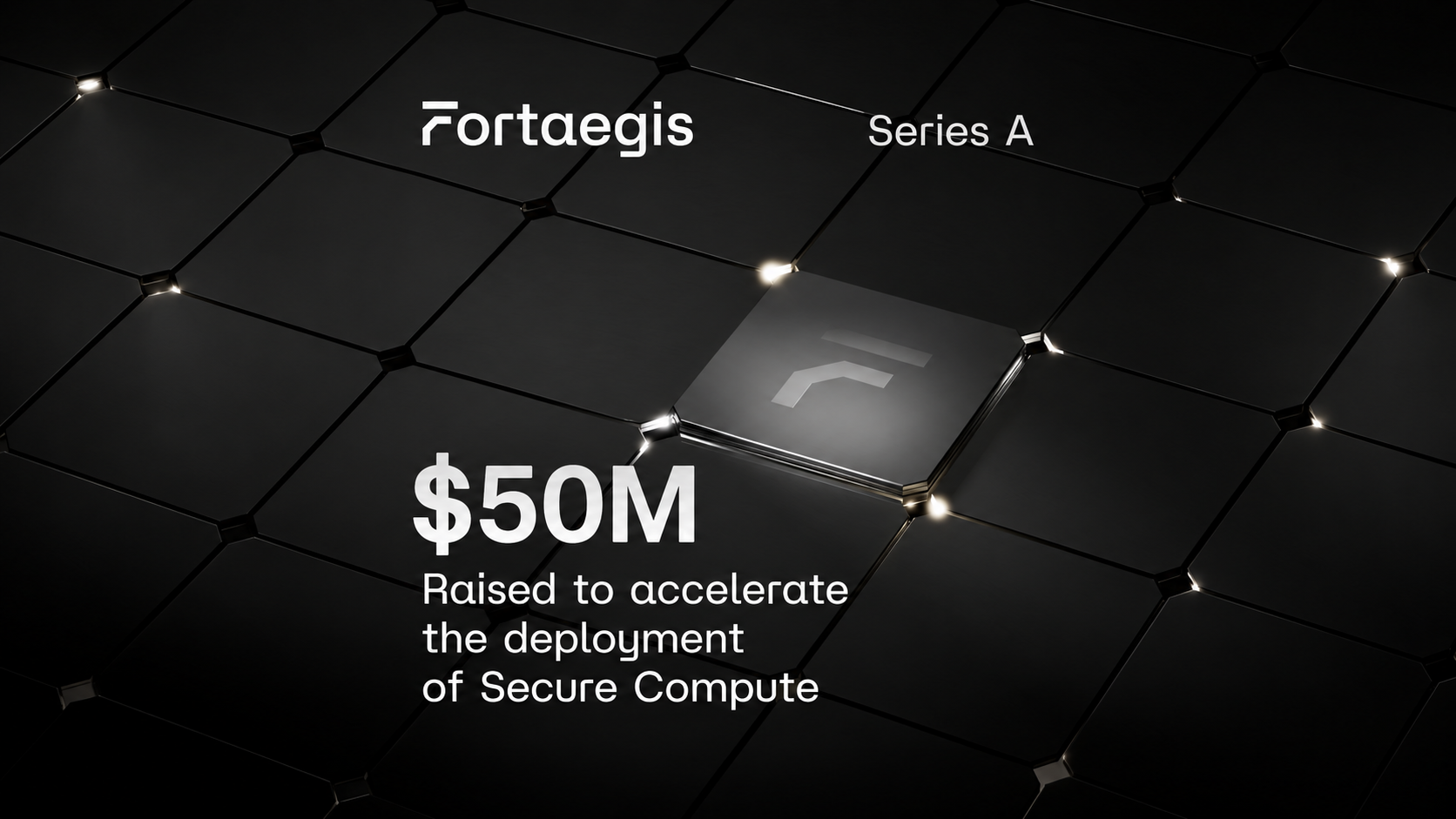
- Fortaegis raised an oversubscribed $50 million Series A to commercialize its chip-based security technology for AI, defense, telecommunications and autonomous systems.
- The company uses the unique physical properties of silicon chips to generate changing encryption keys that are not stored on devices.
- Fortaegis plans to begin commercial manufacturing in 2027 while expanding FPGA production and developing application-specific chips.
Dutch startup Fortaegis has raised $50 million to move its chip-based security technology into commercial production, targeting networks that connect AI systems, defense equipment, satellites and autonomous machines.
The oversubscribed Series A was led by Singapore-based Serendipity Capital, according to the company. Other participants included TEL Venture Capital, the corporate venture arm of Japanese chip-equipment maker Tokyo Electron, and investors connected to manufacturing, defense, quantum computing and critical infrastructure.
Fortaegis plans to use the funding to begin commercial manufacturing in 2027, the Financial Times reported. The company said the investment would support production and deployment of its field-programmable gate array products across the U.S., Europe, Singapore and Japan. Field-programmable gate arrays, or FPGAs, are chips that can be configured for specific tasks after they have been manufactured.

The funding will also support Fortaegis’s development of application-specific integrated circuits, or ASICs. Unlike FPGAs, ASICs are designed and manufactured for a particular function, potentially offering better performance and efficiency at large production volumes.
Founded in October 2023, the Amsterdam-based company has expanded across Europe, the U.S. and Asia. It says it is working with more than 25 companies and governments in semiconductor manufacturing, defense, AI infrastructure, telecommunications and other critical industries.
Fortaegis founder and CEO Boudewijn Wijnands told the FT that the company is working with governments in the U.S., U.K., Japan, Singapore, Germany, France and the Netherlands.
“The security and prosperity of the West and its allies increasingly depend on who controls the foundations of compute. AI and quantum are making that question more urgent. Fortaegis was founded on the conviction that security cannot remain something we add on top of digital systems — it must become part of the foundations of compute itself. This investment allows us to accelerate that mission globally,” Wijnands said in a company announcement.
Ilyas Khan, chair and founding shareholder of Fortaegis, said the architecture could become a widely used security layer as AI and quantum technologies develop.
“The concept of using nature’s intrinsically intractable security system that is carried within silicon has finally been turned into a reality,” Khan, who is also founder of quantum-computing company Quantinuum, told The Quantum Insider. “Fortaegis’ technology will become foundational across multiple industries and multiple platforms. In this respect it is exactly the game changer that will help AI push on to the next generation of models that can be used more securely and safely as well as providing western infrastructure from attack. I am proud to have been a founding shareholder of Fortaegis, and very proud to be Chairman and supporting Boudewijn, the founder, and his brilliant team. Make no mistake this is not simply another tech development. This is a breakthrough that will affect a great many industries.”
Turning Chip Variations Into Security Keys
Fortaegis’s technology relies on tiny physical variations that occur naturally during silicon chip manufacturing. These variations give each chip a distinctive digital fingerprint, even when multiple chips share the same design.
The company extracts information from that fingerprint to generate and frequently change encryption keys. These keys are used to encrypt and decrypt information moving through a computer system or network.
Fortaegis says the keys are not permanently stored on a device, making them harder for an attacker to locate and steal. The architecture places security functions directly in hardware and extends them through firmware, cryptography and software.
The company calls the resulting system the Fortaegis Silicon Platform. It is designed to manage identity, security rules and communications across networks containing potentially millions of connected devices or autonomous AI agents.
Fortaegis says the same architecture can be deployed through server-mounted equipment, ruggedized systems for harsh environments, compact edge devices or technology embedded directly into silicon. Edge devices process information close to where it is collected instead of sending everything to a remote data center.
The company has filed 17 patents and is preparing another 14 applications, according to its announcement.
Chris Miller, a Fortaegis U.S. board member and the author of “Chip War,” connected the technology to the growing international competition over semiconductors, AI and computing infrastructure.
“Computing infrastructure is the central arena of geopolitical and economic competition today. As AI advances and quantum computing takes off, security and control of computing foundations are essential. Fortaegis is addressing that challenge at the architectural level,” Miller said in the news release.
Quantum-Safe Claims Require Further Scrutiny
Fortaegis describes its architecture as quantum-safe, meaning it is intended to protect information against attacks involving future quantum computers.
Cryptographic systems commonly used today rely on mathematical problems that are extremely difficult for conventional computers to solve. A sufficiently powerful quantum computer could eventually solve some of those problems much faster, potentially exposing encrypted data.
Wijnands told the FT that Fortaegis’s technology avoids this weakness because its encryption keys are created from physical variations in silicon rather than generated solely through a fixed mathematical process.
While broader technical assessments will be needed, the FT reported that national laboratories in several countries have validated the technology.
TNO, the Netherlands Organisation for Applied Scientific Research, has tested the architecture and is also participating in the Series A investor group. Marc Zegveld, head of the TNO team that conducted the tests, told the FT that researchers used aggressive hacking techniques but were unable to penetrate the integrated system.
The company said customer-funded development projects are beginning to advance from technical testing into product qualification and commercial deployment.
Testing Faster Connections
Fortaegis also says its architecture can improve network performance. Wijnands told the FT that external tests found communications using its system were 200 times faster than current cryptographic protocols used to protect data transmitted over the internet. The company said that result was observed in internal and customer testing.
Fortaegis is working with TNO on several projects, including an effort to create optically connected networks involving tens of thousands of drones. Optical communications use light to transmit information and can provide faster connections while reducing vulnerability to radio-frequency jamming.
Kees Buijsrogge, TNO’s head of space and scientific instrumentation, told the FT that the project aims to overcome communications barriers that currently limit the size of drone swarms. Wijnands said Fortaegis has contracts with more than one country related to large drone networks.
The company has also engaged with NATO and participated in exercises intended to integrate emerging technologies into military systems. Potential applications include authenticating information from battlefield sensors before it is distributed across connected military platforms.
Fortaegis is also working with Dutch chip-equipment maker ASML and Eindhoven University of Technology to develop a security framework for autonomous AI systems. Such systems can make and carry out decisions with limited human involvement, raising questions about whether their identities, instructions and data can be trusted.
The company is also in discussions with U.S. cloud-computing companies and AI laboratories, according to the FT.
From Testing to Manufacturing
Fortaegis said customer programs increasingly are moving from engineering and validation into production qualification. The company intends to use the new capital to expand its engineering and commercial teams as well as develop its manufacturing operations.
Prodrive Technologies, a Dutch company that develops and manufactures electronics and other advanced systems, is participating in the funding round and supporting the company’s move toward production.
“Secure Compute will become increasingly important across many industries. Fortaegis has developed a strong foundational technology, and we are committed to supporting its transition to scalable production and deployment,” Prodrive founder and Chief Technology Officer Peter Janssen said.
Other investors include TNO, NP-Hard Ventures, NovaCapital, Access Ventures and Coalition Capital. Individual participants include Khan; Ian Fujiyama, head of global aerospace, defense and government at Carlyle; and Oxford University historian Peter Frankopan.
Serendipity Capital CEO Robert Jesudason said the firm invested because it expects demand for security built directly into computing hardware to grow with the adoption of AI and quantum technologies.
In the Fortaegis announcement, Jesudason offered a broader explanation of the investment.
“The most consequential deep-tech companies do more than improve an existing category — they create a new layer of infrastructure,” Jesudason said in the statement. “We invested in Fortaegis because it is building exactly that: an architecture spanning silicon, hardware and software for a security challenge that becomes more important as AI, autonomy and quantum computing scale. We believe Secure Compute will own the foundational layer across both commercial and national-security infrastructure.”
The funding gives Fortaegis the capital to begin proving that its technology can move beyond demonstrations and specialized government projects. Its broader prospects will depend on independent security assessments, manufacturing costs and whether chipmakers and equipment suppliers are willing to incorporate the architecture into commercial products.