Texas Quantum Strategy Takes Shape at UT Dallas Summit


Insider Brief
- Texas’ quantum ecosystem is moving from coordination toward execution, with new state policy, infrastructure projects and industry collaboration taking shape across the state.
- Texas A&M is seeking $38 million for its Quantum Spur initiative, while the newly announced Occam Foundry near Austin would create a 16.5-acre campus for quantum companies, researchers and hardware.
- The Texas Quantum Initiative faces its first major reporting milestone on Dec. 1, 2026, as projects developed through the state’s growing quantum network begin moving toward funding and implementation.
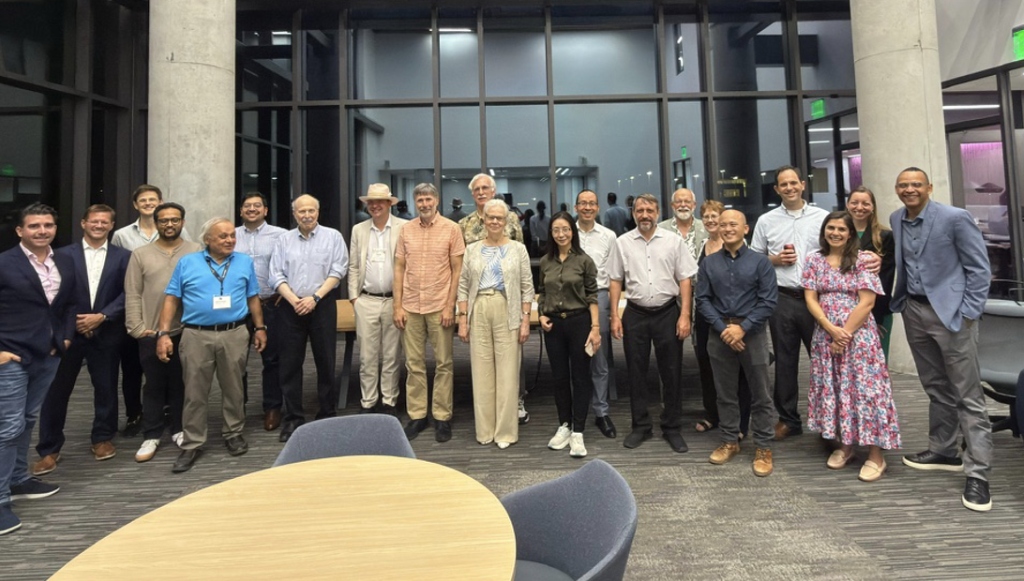
North Texas in mid-August makes a persuasive case for staying indoors, which is indeed what the state’s quantum community did for two days at the University of Texas at Dallas.
Registration had closed well before the doors opened. The people who got in came from Austin, Houston, College Station, Lubbock, San Antonio and Dallas, plus a fair number who flew in from further afield, and they spent the mornings listening and the afternoons in discussion.
Rather than run parallel technical tracks, the organizers put participants in breakout rooms, asked them to propose problems worth solving, and had the strongest pitched back to the full room. The stated goal was collaborations that line up with future funding. The summit was built to produce projects rather than proceedings.

From College Station to Richardson
Texas A&M hosted the first summit in September 2025, bringing together industry and academia. What’s changed in the intervening year is the state’s own position. HB 4751 took effect on September 1, 2025, creating the Texas Quantum Initiative inside the Governor’s Office of Economic Development and Tourism – the result of a lot of hard work from many people in the quantum community.
Governor Greg Abbott has since filled all six seats on the advisory committee that guides it. Five appointments came on June 1, drawn from the Texas Research Alliance, Texas Tech, UT San Antonio, NVIDIA and Forward Edge AI. Katie Pizzolato, vice president of quantum platform at IBM, took the sixth seat in late July.
The universities showed up in force, with people from A&M, Texas Tech, Rice, SMU, UT Arlington, UT San Antonio, the University of Houston, UT Austin and the host institution on the organizing committee or the program. So did the platform vendors. IonQ, IBM, NVIDIA, Amazon, Microsoft, QuEra, Infleqtion and Orca Computing all sent speakers.
Scott Aaronson came up from UT Austin. David Awschalom flew in from the University of Chicago and gave the Anson L. Clark Memorial Public Lecture the evening before the summit proper, capping three days of pre-programming that included a workshop on moiré quantum matter and a half-day tutorial for newcomers to the field.
Two lawmakers made the trip. Sen. Tan Parker carried HB 4751 on the Senate floor in June 2025, where it passed 25 to 6, and Rep. Greg Bonnen joined him on the program.
Momentum Across the State
The summit sits on top of a year of steady building, and the regions have played to their strengths. North Texas has worked the demand side, with the Texas Research Alliance assembling a base of corporate buyers rather than another research consortium. Its Quantum for the C-Suite Summit follows in Dallas on September 9.
Austin has built on the semiconductor base already there. UT Austin’s Texas Quantum Institute coordinates more than 30 researchers, and in December 2025 it won $4.8 million from the Texas Semiconductor Innovation Fund to build QLab, a quantum-enhanced metrology facility. Five days after the summit closed, private capital added a campus.
Houston, San Antonio, Lubbock and College Station each run programs of their own, and all of them had people in Richardson. The practical effect is that the state’s strategic plan arrives with a fuller menu than it would have had a year ago, and with most of the people who wrote the options already in the habit of talking to each other. College Station has now put a number on its ambitions: Texas A&M’s legislative appropriations request for the 2028–29 biennium asks the state for $38 million for Quantum Spur, a first-in-Texas on-campus quantum computing system built around Anyon Technologies superconducting processors (at least four 49-qubit chiplet modules operating inside a dilution refrigerator), integrated with the university’s NVIDIA DGX SuperPOD AI supercomputer, paired with a quantum sensor facility and statewide workforce programs.
A New Campus Lands
On August 18, Texas Quantum Partners and Samara, a Texas real estate developer, announced Occam Foundry, a quantum technology campus on roughly 16.5 acres in southeastern Travis County. The land is owned and the first buildings are drawn.
The design premise is co-location. University teams, startups and a working quantum system sit on one property, close to the prototyping and characterization work that turns a design into hardware. The partners say they are in discussions with prospective anchor tenants and international research partners, and estimate the campus will support hundreds of jobs. No investment figure was attached to the announcement.
The project maps closely onto the text of HB 4751, which prioritizes commercially relevant infrastructure, including hardware systems and real estate. Rep. Giovanni Capriglione, the bill’s lead author, endorsed the campus in the announcement, describing central hubs of excellence as the vision he had for the state’s quantum strategy.
It also lands in a state absorbing much larger bets. Tesla and SpaceX said on August 6 that they would invest $16.8 billion to begin building Terafab, an advanced chip factory outside Houston. Against that, a 16.5-acre quantum campus is a small piece of ground. It gives the strategy a physical address, which the state has not had.
The Policy Front Widens
The industry associations are broadening their remit to match. The Texas Blockchain Council, which Capriglione has led since January, has renamed itself to Digital Infrastructure Network, a change that formalizes a shift already visible in its material. The council now describes its members as working across blockchain, digital assets and advanced computing, and its policy agenda names quantum computing alongside AI, cybersecurity and state adoption of next-generation technologies. Its next event, the Technology, Innovation and Energy Forum, runs in Austin on August 21.
What Comes Next
The initiative owes an annual strategic plan to the governor, lieutenant governor and speaker of the House, along with a biennial report to the Legislative Budget Board by December 1, 2026. That report will be the first public account of what the initiative has done since the law took effect.
Before then, the conversation moves to Dallas on September 9 for the Texas Research Alliance’s Quantum for the C-Suite Summit. The projects sketched out in the UT Dallas breakout rooms have until the 2027 legislative session to turn into something specific, which in the life of a state program is not a long runway.
Disclosure: Alex Challans, chief executive of Resonance, which owns The Quantum Insider, is a member of Texas Quantum Partners. Matt Cimaglia, managing member of Texas Quantum Partners, is a senior advisor to The Quantum Insider. Both attended the summit.
Keep track of everything going on in the Quantum Technology Market. In one place.
Topics

Resonance
The Quantum Insider is the leading online resource dedicated exclusively to Quantum Computing. You can contact us at [email protected].

Stay Ahead of Quantum
Get the latest research, company news, and market intelligence every week.
MENTIONED IN THE ARTICLE