
Insider Brief
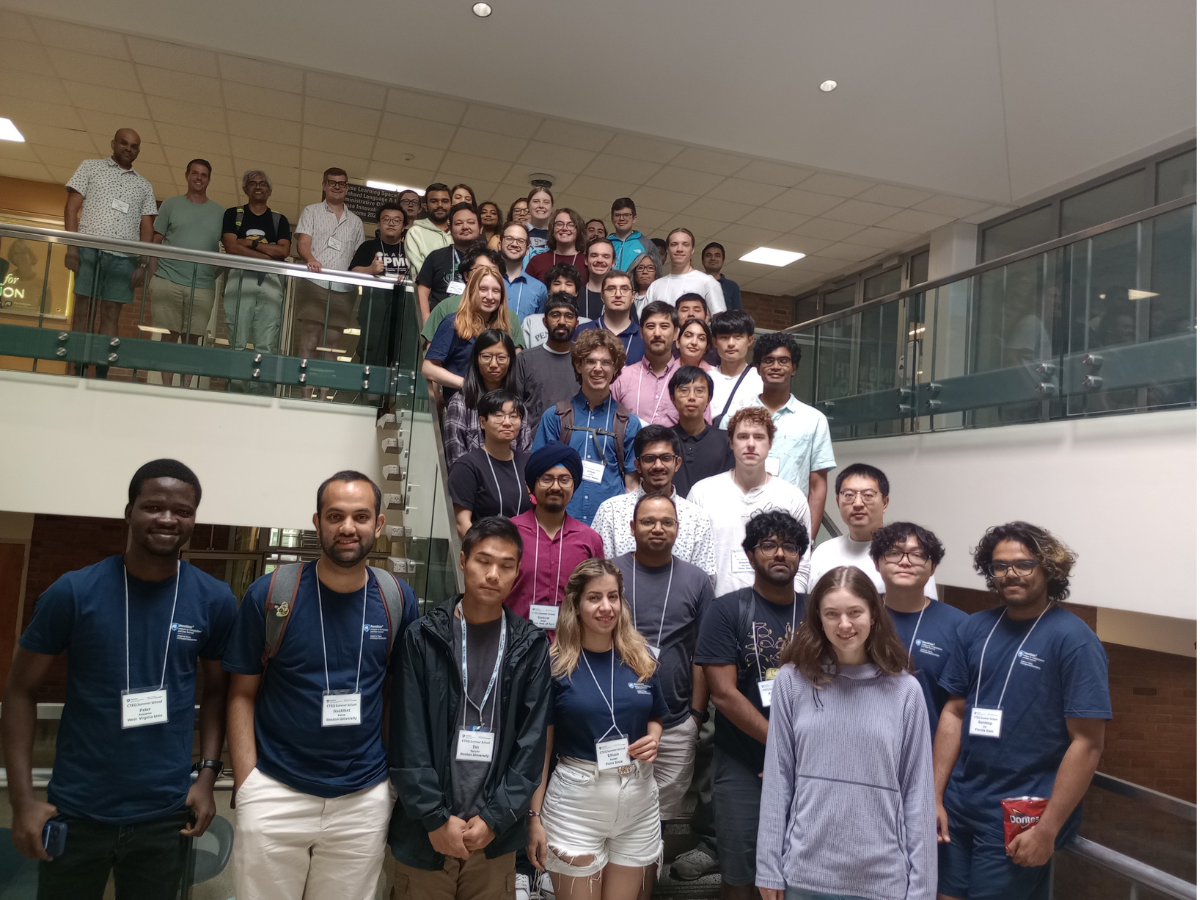
- Penn State’s Center for Theory of Emergent Quantum Matter hosted an intensive week-long summer school that brought together 80 higher education students from across the United States to study quantum simulation and strongly correlated quantum matter.
- The program featured lectures from leading researchers, student poster sessions and networking opportunities aimed at preparing graduate students and other early-career researchers for careers in quantum science.
- Organizers said they plan to continue offering the summer school with new annual themes to strengthen quantum workforce development and establish Penn State as a hub for quantum education.
PRESS RELEASE — Eighty higher education students from across the country participated in various activities and engaged with quantum science experts in a week-long summer school experience hosted by the Penn State Center for Theory of Emergent Quantum Matter (C-TEQ).
“The C-TEQ summer school selects a hot topic of emergent quantum phenomena — this year’s theme is ‘Quantum Simulation of Strongly Correlated Quantum Matter’,” said Bryce Gadway, professor of physics at Penn State, Quantum Hub advisory committee member.
The C-TEQ summer school, hosted at University Park, was held from July 13 through 17. The theme, according to summer school coordinators, refers to using hardware like quantum computers to simulate complex systems of many quantum particles and will drive collaborations between theory and experiment. The experience was designed for graduate students with an interest in quantum sciences research but was also open to undergraduates, postdoctoral scholars and faculty. Half of the attendees were students from Penn State. Interested attendees had to apply to attend the school.

“Training young researchers at the intersection of quantum information science and the theory of quantum matter is essential to meet emerging workforce needs in both academic and industrial research,” said Thomas Iadecola, associate professor of physics at Penn State, co-hire in Penn State’s Institute for Computational and Data Sciences and Quantum Hub advisory committee member. “The C-TEQ summer school contributes to this goal by bringing world-class experts to the University Park campus to educate researchers from Penn State and beyond.”
The summer school was packed with activities, including lectures presented by expert researchers, a meet- and- greet dinner with the lecturers and two student poster sessions. Lectures detailed various topics across quantum simulation and exposed students to new ideas that could stimulate new directions in research, according to Ribhu Kaul, professor of physics at Penn State and C-TEQ associate director.
“Equally important are the informal interactions, both scientific discussions and social interactions where students can get to know each other and the lecturers in the setting of our beautiful campus,” said Kaul. “They were able to also get an afternoon off to explore State College, where some of the students chose to check out downtown and others went on a hike in the neighboring mountains.”
Drew Dorner, Penn State doctoral student in physics, said that the summer school was a memorable experience.
“I was drawn to the C-TEQ summer school due to the diverse selection of experts speaking on both theoretical and experimental advancements in quantum science, however, I did not expect the enriching breadth of subjects presented ‘from the ground up’ through accessible lectures,” Dorner said. “I also got the chance to participate in the student poster sessions, which allowed me to discuss and meet with other researchers.”
Looking to the future, C-TEQ is planning to host more summer schools and select a new theme to focus activities around, according to Iadecola.
“Not many universities have the resources to offer summer schools like this one,” Iadecola said. “Running these schools on a regular basis will allow Penn State to serve as a hub for the education of emerging researchers in quantum science.”
The summer school was coordinated by Kaul; Iadecola; Gadway; and Laura Burghard, C-TEQ staff assistant.
Guest lecturers include Abhinav Kandala, who earned a doctorate of physics in 2015 from Penn State and is the current principal research scientist at IBM Quantum; Waseem Bakr, professor of physics at Princeton University; Srivatsan Chakram, assistant professor of physics and astronomy at Rutgers University; Anushya Chandran, associate professor of physics at Boston University; Shubhayu Chatterjee, assistant professor of physics at Carnegie Mellon University; Emily Davis, assistant professor in the Center for Quantum Phenomena at New York University; Sarang Gopalakrishnan, associate professor of electrical and computer engineering at Princeton; and Brian Skinner, associate professor of physics at Ohio State University.