


Insider Brief
- The Texas Quantum Summit 2026 will bring together industry leaders, researchers and policymakers at UT Dallas on Aug. 13-14 to discuss quantum computing, commercialization, workforce development and state policy.
- The summit will feature representatives from companies including NVIDIA, Amazon, IBM, Microsoft, Citigroup, IonQ, QuEra Computing and Infleqtion alongside academic and government leaders.
- The event reflects Texas’ growing investment in quantum technology following the 2025 Texas Quantum Initiative and will highlight research, industry collaboration and education needed to develop the state’s quantum workforce.
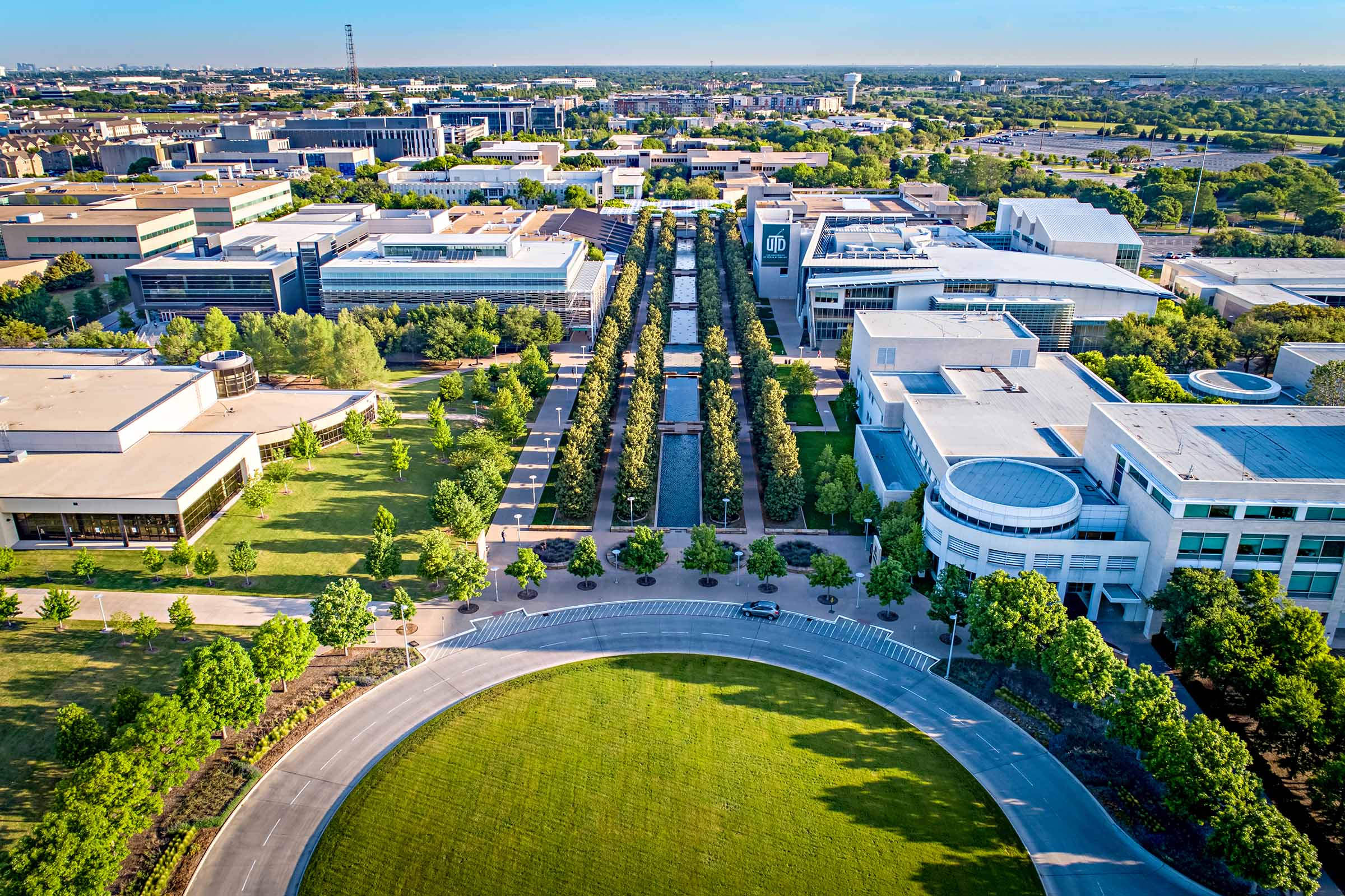
- Image: UT Texas at Dallas Admissions
Leading quantum technology companies, researchers and policymakers will gather next week at The University of Texas at Dallas to discuss the future of quantum computing, networking and workforce development as Texas expands its ambitions to become a national hub for quantum technology, according to a university news release.
The Texas Quantum Summit 2026 will take place Aug. 13-14 and convene representatives from academia, industry, state government and federal organizations to examine the latest advances in quantum science and the policies needed to accelerate commercialization.
The event comes as Texas increases its investment in quantum technologies following passage of the Texas Quantum Initiative in 2025, legislation intended to strengthen the state’s position in quantum research, economic development and workforce training.

“Quantum computing is a transformative technology with the potential to significantly impact the Texas economy and workforce,” Dr. Joseph Pancrazio, vice president for research and innovation and professor of bioengineering at UT Dallas, said, according to the release. “Bringing together leaders across the quantum ecosystem is critical as Texas continues to drive advances in quantum science and helps unlock its potential for society.”
Quantum computing harnesses the principles of quantum mechanics to process certain calculations differently than conventional computers. Instead of using binary bits that exist as either zero or one, quantum computers use quantum bits, or qubits, which can theoretically exist in multiple states simultaneously. Researchers believe this approach could eventually accelerate selected applications in areas such as materials science, chemistry, optimization and cryptography.
Industry and Government Leaders
According to UT Dallas, the summit will feature discussions on quantum hardware, software, commercial applications, university-industry collaboration and the role of Texas government in supporting the emerging sector.
Scheduled participants include representatives from NVIDIA, Amazon, IBM, Microsoft, Citigroup, IonQ, QuEra Computing and Infleqtion, alongside academic researchers and policymakers.
“The use of quantum technology in business and industry is not yet at the off-the-shelf phase, but quantum computers and algorithms have been tested, fine-tuned and calibrated for specific uses,” said Dr. Michael Kolodrubetz, associate professor of physics in the School of Natural Sciences and Mathematics, director of the Center for Quantum Integrated Systems at UT Dallas, and organizer of the symposium. “The Texas Quantum Summit brings together the people who are developing these technologies with those who want to use the technology, with the goal of setting priorities as the field quickly progresses.”
The meeting reflects growing state and federal efforts to build quantum capabilities. At the federal level, the National Quantum Initiative Act of 2018 established a coordinated research and development program to advance quantum technologies for economic competitiveness and national security. Texas has sought to complement those efforts through its own statewide initiative focused on research, commercialization and workforce development.
Workforce Development
Beyond research and technology, workforce development is expected to be a central theme of the summit.
UT Dallas researchers affiliated with the Center for Quantum Integrated Systems conduct research spanning quantum materials, quantum algorithms and quantum simulation. The university has also established undergraduate and graduate certificate programs designed to prepare scientists, engineers and professionals for work involving quantum technologies.
“These programs are designed to provide professionals with core knowledge about quantum science and computers that will complement their expertise in other fields,” Kolodrubetz said. “For example, as quantum computing becomes more prevalent in drug design, biologists, biochemists and engineers who understand the language and how to design algorithms for quantum computers will have an advantage in the workplace. It is vitally important that we train the professionals who will become the end-users as well as the next generation of scientists and engineers who will design and develop quantum information technology.”
The summit will be preceded on Aug. 12 by the 2026 Anson L. Clark Memorial Lecture, featuring Dr. David Awschalom of the University of Chicago and Q-NEXT. Awschalom, a pioneer in quantum information science, will discuss the rapid progress of quantum technologies and their potential societal impact.