

Congressional Hearing to Gauge U.S.’s Commitment to National Quantum Initiative

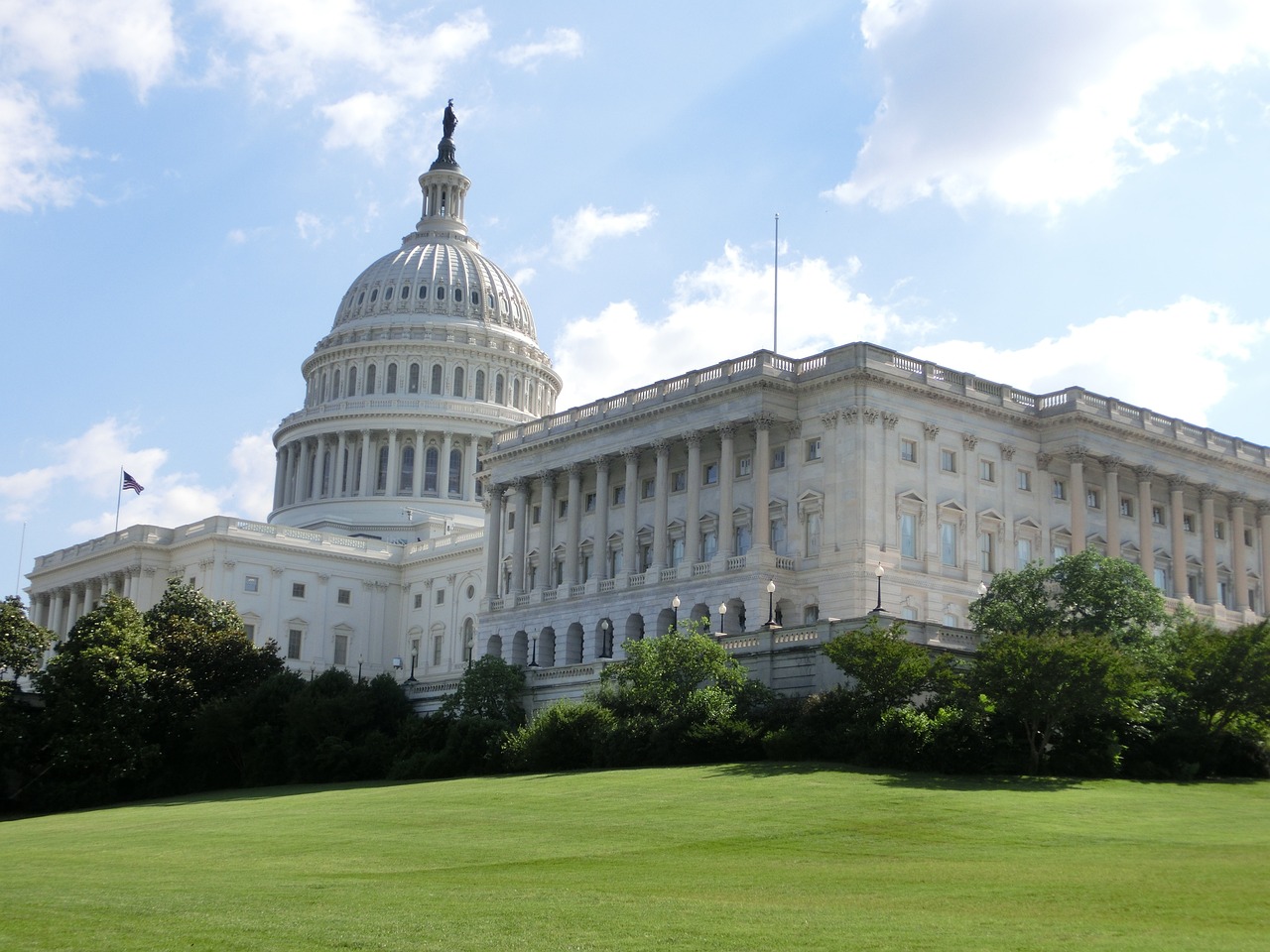
capitol, building, architecture
Hub Hub

Insider Brief

  • The House Committee on Space, Science and Technology scheduled a hearing on quantum technologies for June 7.
  • One of the topics expected to be covered will be the continuation of the National Quantum Initiative, or NQI.
  • NQI was passed five years ago with broad bi-partisan support.

The U.S. Congress will schedule a hearing on the advancement of quantum technologies on June 7, according to the House Committee on Space, Science and Technology website. Funding the country’s National Quantum Initiative — NQI — into the future may be one of the subjects up for debate.

The committee is chaired by Frank Lucas and  the session will likely include testimony from witnesses Paul Dabbar, former Undersecretary for Science, Department of Energy; Eleanor G. Rieffel, Chief Scientist, NASA Ames; Celia Merzbacher, Executive Director, Quantum Economic Development Consortium and Emily Edwards, Executive Director, IQUIST, University of Illinois.

Dabbar, who is currently the CEO of quantum communication startup Bohr Quantum, writes in a LinkedIn post that this may be an ARPA-Net-like moment, with quantum technologies maturing swiftly and a unique commercial-academic ecosystem emerging just as fast.

Introducing TQI 2.0Introducing TQI 2.0

He writes: “Today Congress is looking at reauthorizing NQI for another five years. Quantum computing is now close enough to start looking at U.S. Department of Energy (DOE) Natl Labs to stand up a next supercomputer design and purchase cycle including QPU’s in an architecture. And the technology is there for first natl deployments of quantum networks – leading to the quantum internet, just like ARPA-Net in 1969 triggered NSF Net and ultimately the Internet.”

With national security issues in the mix and a stiffening block of competitiveness in the field, there’s little to suggest that Congress will walk away from NQI. In fact, it may be strengthened. NQI had broad bi-partisan support at a time when bi-partisanship is rare.

Dabbar, who was part of the passing of the legislation as undersecretary, believes that the program’s initial success as a catalyst for quantum  should warrant an extension.

Dabbar writes: “The significant increase in quantum tech not only stood up large new efforts at National Labs and universities, it also triggered the private sector to invest over $6 billion in the area. In the investing community we call that “leverage”. I like to call the US government funding of the NQI “seed capital”. And a series of tech accomplishments resulted from that.”

The hearing will be streamed on the committee’s website.

For more market insights, check out our latest quantum computing news here.

Keep track of everything going on in the Quantum Technology Market. In one place.

Share

Stay Ahead of Quantum

Get the latest research, company news, and market intelligence every week.

MENTIONED IN THE ARTICLE

US Department of Energy
GovernmentUnited States · 10,001+ FTEs

The United States Department of Energy is a cabinet-level department of the United States Government concerned with the United States' policies regarding energy and safety in handling nuclear material.

→
NASA
InvestorUnited States · 10001+ FTEs

The National Aeronautics and Space Administration (NASA) is the U.S. government agency driving pioneering research and technological development in both atmospheric flight (aeronautics) and space exploration (astronautics). NASA acts as a research organization, utilizing advanced wind tunnels, supercomputing, and flight test laboratories to advance aircraft aerodynamics, propulsion, and materials, while simultaneously involved in the design, construction, and operation of launch vehicles and spacecraft for deep space exploration. Through its aeronautics research directorate, the agency works to improve the safety, efficiency, and environmental impact of aviation, whereas its space programs focus on developing cutting-edge flight systems, robotic explorers, and human transportation capabilities.

→
U.S. Department of Energy (DOE)
GovernmentUnited States · 10001+ FTEs

The mission of the Department of Energy is to ensure America's security and prosperity by addressing its energy, environmental, and nuclear challenges through transformative science and technology solutions. In September, 2022, Research supported by ASCR demonstrated that classical machine learning algorithms can accurately predict ground state properties and classify quantum phases of matter using data generated from quantum experiments. In November, 2022, Research supported by Q-NEXT revealed that the performance of a sensor network is constrained by the intrinsic noise associated with the quantum states used in the network. In March, 2023, Research funded by DOE SC NP achieved the first experimental observation of entanglement between dissimilar particles, specifically positive and negative pions. In August, 2023, Research funded by DOE SC BER demonstrated strong preservation of entanglement in a two-photon absorption process involving organic molecules, offering a new approach for developing quantum light-based spectroscopy and microscopy.

→

More in Research

Related Articles