
Insider Brief
- Researchers demonstrate a new way to use quantum sensors to tease out relationships between microscopic magnetic fields.
- The ability to distinguish between standalone and correlated environments at the atomic scale could have enormous impacts in medicine, navigation and discovery science.
- Critical Quote: “As far as I know, this is something people hadn’t tried to do, and that’s why we see these correlations where nobody else was able to. You really win from that.” — Shimon Kolkowitz
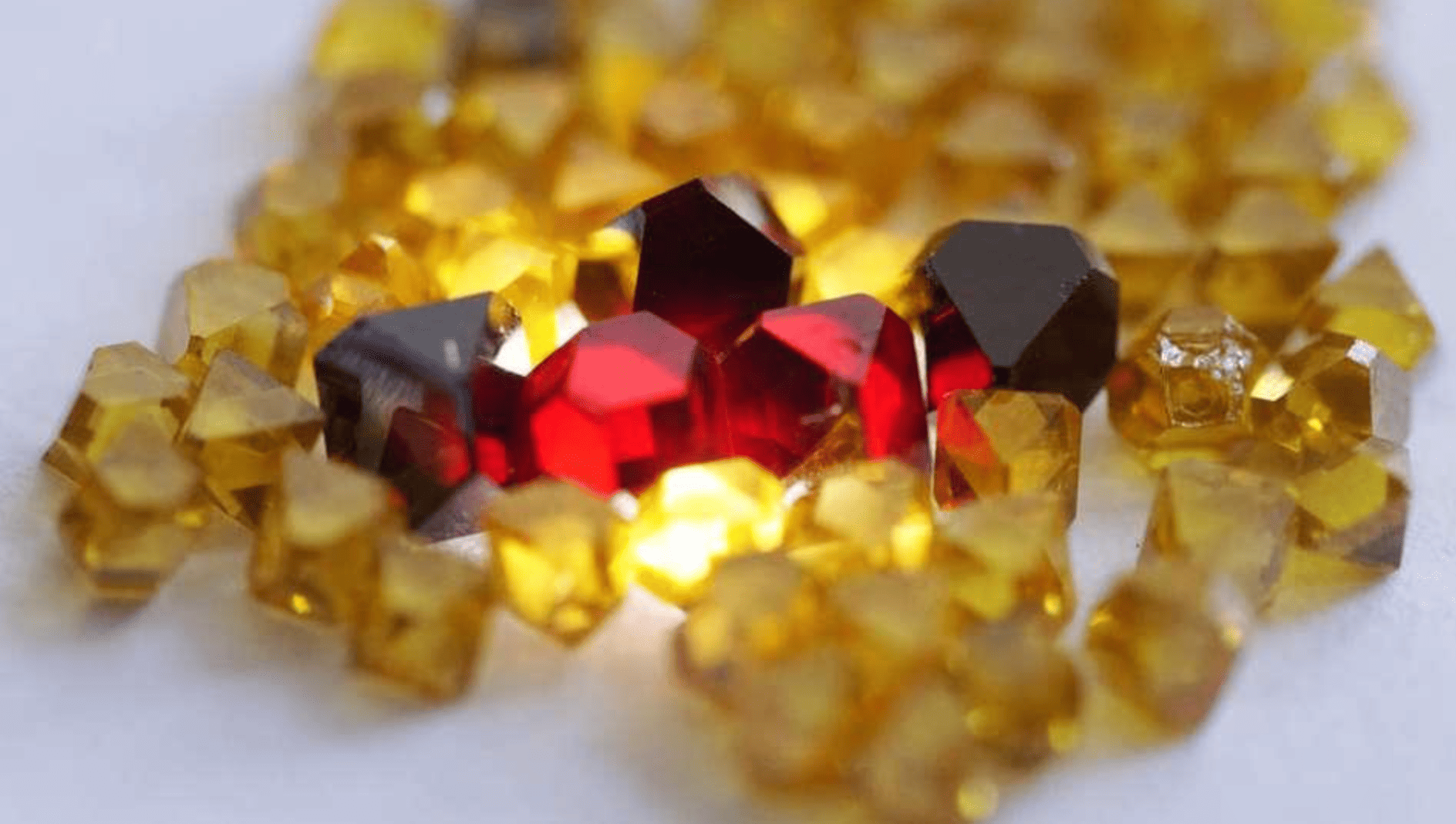
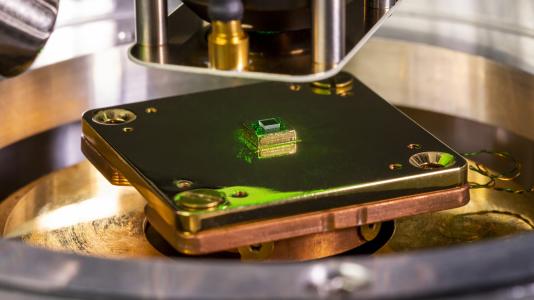
- Image: Using specially designed diamonds with nitrogen vacancy centers, researchers have developed a technique to measure magnetic fields at the atomic scale. In this image, a diamond with near-surface nitrogen-vacancy centers is illuminated by green laser light from a microscope objective lens. (Image by David Kelly Crow/Princeton University).
PRESS RELEASE — A research team supported by the Q-NEXT quantum research center demonstrates a new way to use quantum sensors to tease out relationships between microscopic magnetic fields.
Say you notice a sudden drop in temperature on both your patio and kitchen thermometers. At first, you think it’s because of a cold snap, so you crank up the heat in your home. Then you realize that while the outside has indeed become colder, inside, someone left the refrigerator door open.
Initially, you thought the temperature drops were correlated. Later, you saw that they weren’t.

Recognizing when readings are correlated is important not only for your home heating bill but for all of science. It’s especially challenging when measuring properties of atoms.
Now scientists have developed a method, reported in Science, that enables them to see whether magnetic fields detected by a pair of atom-scale quantum sensors are correlated or not.
“As far as I know, this is something people hadn’t tried to do, and that’s why we see these correlations where nobody else was able to. You really win from that.” — Shimon Kolkowitz, University of Wisconsin–Madison
The research was supported in part by Q-NEXT, a U.S. Department of Energy (DOE) National Quantum Information Science Research Center led by DOE’s Argonne National Laboratory.
The ability to distinguish between standalone and correlated environments at the atomic scale could have enormous impacts in medicine, navigation and discovery science.
What happened
A team of scientists at Princeton University and the University of Wisconsin–Madison developed and demonstrated a new technique for teasing out whether magnetic fields picked up by multiple quantum sensors are correlated with each other or independent.
The team focused on a type of diamond-based sensor called a nitrogen-vacancy center, or NV center, which consists of a nitrogen atom next to an atom-sized hole in the crystal of carbon atoms that make up diamond.
Typically, scientists measure the magnetic field strength at a single NV center by averaging multiple readings. Or they might take an average reading of many NV centers at once.
While helpful, average values provide only so much information. Knowing that the average temperature in Wisconsin will be 42 degrees Fahrenheit tomorrow tells you little about how much colder it will be at night or in the northern part of the state.
“If you want to learn not just the value of the magnetic field at one location or at one point in time, but whether there’s a relationship between the magnetic field at one location and the magnetic field at another nearby — there wasn’t really a good way to do that with these NV centers,” said paper co-author Shimon Kolkowitz, associate professor at the University of Wisconsin–Madison and Q-NEXT collaborator.
The team’s new method uses multiple simultaneous readings of two NV centers. Using sophisticated computation and signal-processing techniques, they obtained information about the relationship between the magnetic fields at both points and could say whether the two readings resulted from the same source.
“Were they seeing the same magnetic field? Were they seeing a different magnetic field? That’s what we can get from these measurements,” Kolkowitz said. “It’s useful information that no one had access to before. We can tell the difference between the global field that both sensors were seeing and those that were local.”
Why it matters
Quantum sensors harness the quantum properties of atoms or atom-like systems to pick up tiny signals — such as the magnetic fields arising from the motion of single electrons. These fields are puny: 100,000 times weaker than that of a fridge magnet. Only ultrasensitive tools such as quantum sensors can make measurements at nature’s smallest scales.
Quantum sensors are expected to be powerful. NV centers, for example, can distinguish features separated by a mere one ten thousandth of the width of a human hair. With that kind of hyperzoom capability, NV centers could be placed in living cells for an inside, up-close look at how they function. Scientists could even use them to pinpoint the causes of disease.
“What make NVs special is their spatial resolution,” Kolkowitz said. “That’s useful for imaging the magnetic fields from an exotic material or seeing the structure of individual proteins.”
With the Kolkowitz team’s new method for sensing magnetic field strengths at multiple points simultaneously, scientists could one day be able to map atom-level changes in magnetism through time and space.
How it works
How did the team make these informative measurements? They got granular.
Rather than average over many raw values to arrive at the overall magnetic field strength, the researchers kept track of individual readings at each NV center, and then applied a mathematical maneuver called “covariance” to the two lists.
Comparing the covariance-calculated figures — which capture more detail than a couple of raw averages — let them see whether the fields were correlated.
“We’re doing that averaging differently than what’s been done in the past, so we don’t lose this information in the process of averaging,” Kolkowitz said “That’s part of what’s special here.”
So why hasn’t covariance magnetometry, as the method is called, been tested before now?
For one, the team had to build an experimental setup for taking simultaneous measurements at multiple NV centers. This microscope was built by the team at Princeton, led by Professor Nathalie de Leon, a member of the Co-Design Center for Quantum Advantage, another DOE National Quantum Information Science Research Center, led by Brookhaven National Laboratory.
For another, covariance magnetometry works only when the individual measurements of these tiny magnetic fields are highly reliable. (A readout is only as good as its contributing measurements.) That’s why the researchers used a special technique called spin-to-charge conversion, which produces a raw reading with more information about the magnetic field for each measurement than other commonly used tools.
With spin-to-charge conversion, individual measurements take longer. That’s the price scientists pay for higher reliability.
However, when combined with covariance to measure minuscule, correlated magnetic fields, it saves buckets of time.
“Using the conventional method, you’d have to average for 10 full days continuously to get one piece of data to say that you saw this correlated nanotesla signal,” Kolkowitz said. “Whereas with this new method, it’s an hour or two.”
By integrating covariance information with spin-to-charge conversion, researchers can gain access to atomic and subatomic details they didn’t have before, supercharging the already powerful capabilities of quantum sensing.
“As far as I know, this is something people hadn’t tried to do, and that’s why we see these correlations where nobody else was able to,” Kolkowitz said. “You really win from that.”
This work was supported by the DOE Office of Science National Quantum Information Science Research Centers as part of the Q-NEXT center, the National Science Foundation, the Princeton Catalysis Initiative, the DOE, Office of Science, Office of Basic Energy Sciences, a Princeton Quantum Initiative Postdoctoral Fellowship, and the Intelligence Community Postdoctoral Research Fellowship Program by the Oak Ridge Institute for Science and Education through an interagency agreement between the U.S. Department of Energy and the Office of the Director of National Intelligence.
If you found this article to be informative, you can explore more current quantum news here, exclusives, interviews, and podcasts.