


Insider Brief
- DARPA selected Atom Computing, Microsoft and PsiQuantum to join the Underexplored Systems for Utility-Scale Quantum Computing (US2QC) program.
- The program will explore whether an underexplored approach to quantum computing is capable of achieving utility-scale operation.
- Critical Quote: “The goal of US2QC is to reduce the danger of strategic surprise from underexplored quantum computing systems. We put out a call last year saying that if anyone thought they had a truly revolutionary approach to building a useful quantum computer in the near future – less than 10 years – we wanted to hear from them.” — Joe Altepeter, program manager
PRESS RELEASE — DARPA has selected three industry corporations for the Underexplored Systems for Utility-Scale Quantum Computing (US2QC) program. US2QC seeks to determine whether an underexplored approach to quantum computing is capable of achieving utility-scale operation – meaning its computational value exceeds its cost – much faster than conventional predictions.
“Experts disagree on whether a utility-scale quantum computer based on conventional designs is still decades away or could be achieved much sooner,” said Joe Altepeter, US2QC program manager in DARPA’s Defense Sciences Office. “The goal of US2QC is to reduce the danger of strategic surprise from underexplored quantum computing systems. We put out a call last year saying that if anyone thought they had a truly revolutionary approach to building a useful quantum computer in the near future – less than 10 years – we wanted to hear from them. We offered to collaborate by funding additional experts to join their team and provide rigorous government verification and validation of their proposed solutions to determine its viability. The ultimate outcome of the program is a win-win — for U.S. commercial leadership in this strategically important technology area and for national security to avoid being surprised.”
DARPA has selected the following companies and their novel approaches for the initial phase:

- Atom Computing, based in Berkeley, California, builds highly scalable quantum computers based on large arrays of optically-trapped atoms.
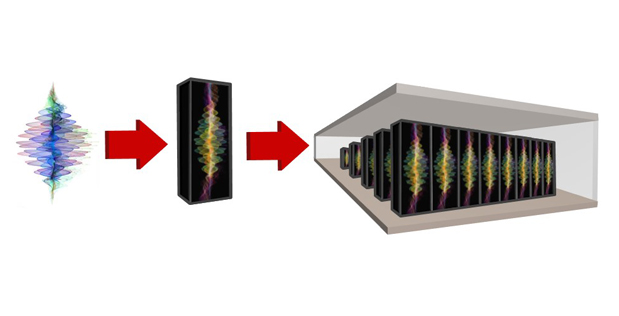
- Microsoft Corporation, Redmond, Washington, is building an industrial-scale quantum system based on a topological qubit architecture, which the company theorizes would enable their machine to be small enough to fit in a closet, fast enough to solve problems in a practical timeframe and have the capability to control more than one million qubits.
- PsiQuantum, Corp., Palo Alto, California, is using silicon-based photonics to create an error-corrected quantum computer based on a lattice-like fabric of photonic qubits.
In the initial phase of US2QC, these companies will each present a design concept describing their plans to create a utility-scale quantum computer. This design concept will guide a more rigorous system design focused on all of the components and sub-systems that — once constructed and tested — will show that the utility-scale quantum computer can be built as designed and operated as intended. A DARPA-led test and validation team comprising experts from government laboratories and federally funded research and development centers will evaluate the concepts.
If you found this article to be informative, you can explore more current quantum news here, exclusives, interviews, and podcasts.


.png)