Guest Post: What Makes The Next Breakthrough Possible? Lessons From The ‘Fosbury Flop’ For AI and Quantum in Biotech
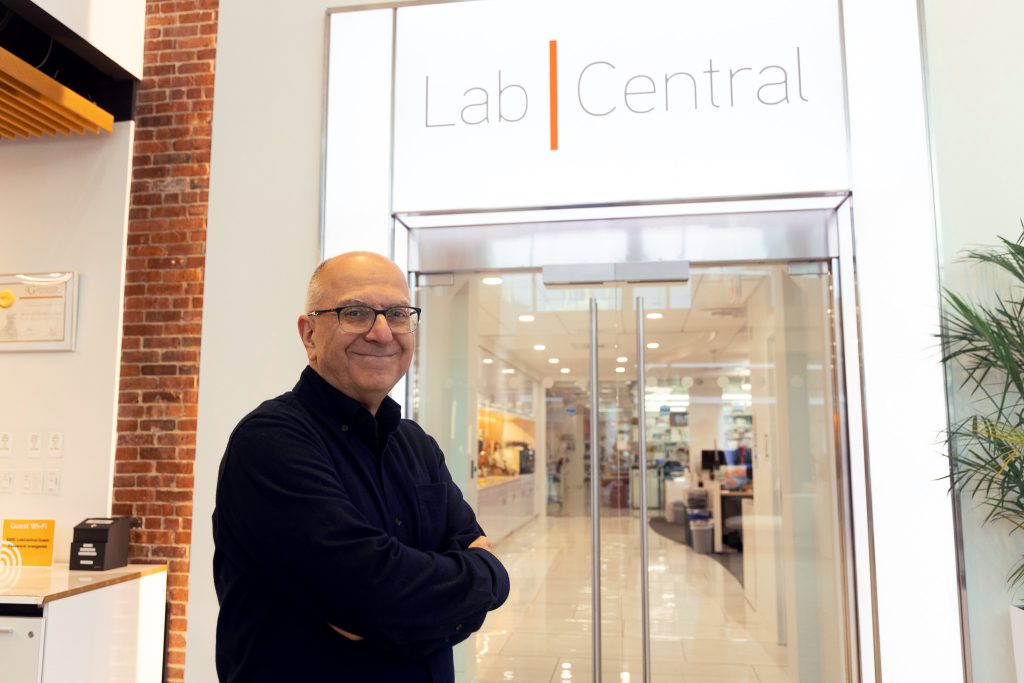


By Kamran Tavangar, Head of Science Strategy and Partnerships at LabCentral
Image: LabCentral
When 21-year-old Dick Fosbury went over the high-jump bar backwards at the 1968 Mexico City Olympics, he used a radically different technique, cleared an Olympic record 2.24 meters, and won gold. This feat was the culmination of years of practice throughout Fosbury’s high school and college years.
His method was made possible by raised, cushioned landing pads that replaced ground-level sand or wood chip pits. Over the next decade, the “Fosbury Flop” systematically replaced the traditional straddle technique, as new players and constant technique refinements clearly established its superiority.
With the AI revolution now firmly entrenched in biotech, the addition of quantum computing is now approaching its own early Fosbury moment. But like the Flop, quantum’s impact will depend on the continuous integration of the latest hardware, software, algorithms, legislation, and public-private partnerships, to deliver real impact on human health.

Biology is Complicated, AI is Helping
Billions of years of evolution have created extraordinary diversity, dynamic regulation, feedback loops, and systemic complexity across all living things. Across the decades and especially since the second half of the 20th century, generations of curious, inventive scientists have progressively helped us build numerous windows to peer into this complexity: crystallography, recombinant DNA, monoclonal antibodies, sequencing technologies, PCR, transgenic animals, CRISPR-Cas9, CAR-T cell therapy, mRNA vaccines are just some of the groundbreaking technologies in the field. The data these tools have generated is now fueling the biotech AI revolution. AlphaFold, for example, was trained on decades of experimentally determined structures in the Protein Data Bank and can now predict the three-dimensional structure of most known proteins.
AI in biotech now allows us to ask more nuanced questions, create virtual disease models, search enormous biological spaces that approach 1030 possibilities, and automate laboratory procedures using robotics, miniaturization, and cloud networks. As these models improve, they demand ever more wet lab data, driving a continuous cycle of experimentation and learning. We still have a long way to go on our journey to unravel the mysteries and intricacies of the human body, but AI provides a new and exciting catalyst in our pursuits.
An invention becomes a breakthrough only when funding, manufacturing, regulations and partnerships develop alongside the science. With support from the Commonwealth of Massachusetts, we partnered with C10 Labs, an AI venture fund and studio, to develop our AI BioHub program. Thirty early-stage, AI-forward companies joined the program and provided strong confirmation that the future of biotechnology depends on integrating wet lab expertise with data science expertise to define new treatment paradigms for unmet medical needs.
Quantum Is Still at the Early Stages
The AI BioHub program also introduced us to the potential of quantum computing. We observed one of our early-stage companies incorporate quantum computing into their virtual disease model of triple-negative breast cancer (TNBC), intended to predict the best drug therapy options for individual patients. TNBC accounts for about 10-15% of breast cancers and is defined by the lack of three receptors (estrogen, progesterone, and HER2) that the most common breast cancer therapies target, limiting treatment options. Early results are encouraging, as the company continues to refine its models, incorporating both retrospective and prospective data, and moving towards proof of concept.
We believe that a hybrid CPU-GPU-QPU approach will remain the approach of choice for the foreseeable future. Major improvements in GPU hardware, software, and algorithms continue to keep classical computing at the forefront of technology approaches. Simulated quantum algorithms tend to provide at least as good if not better results than current quantum computers. But quantum computing is improving rapidly. As processors approach fault tolerance, quantum will take on a larger share of this hybrid work, letting us explore heretofore intractable disease models that are well beyond the reach of classical computing.
Consider Fosbury in high school: he was achieving results with his unconventional technique, but he remained far short of the world record held by the straddle technique. His approach was promising but unproven at the highest level. It took time, experimentation, further advances, and an Olympic record before the Flop became standard, and another decade before the Flop achieved and maintained the world record.
Quantum is at a similar point in biotechnology. Of the 30 companies in our AI BioHub cohort, only one was actively using a quantum computer. The technology is developing, access is difficult and expensive, and expertise connecting quantum computing with biology is not yet widespread. We need people who understand each field and people who can work across both. It is imperative that we continue to build the expertise, infrastructure, and partnerships needed to incorporate quantum advances into the fabric of the biotechnology innovation lifecycle.
In the high jump, the record of 2.45 meters came from changes in both hardware and technique. The “hardware” improved (landing pads, track surfaces, asymmetric shoe design), and so did the sport’s “software and algorithms”: the Flop itself, the speed and angle of approach, single-arm versus two-arm takeoff, and the exact timing of the upward leg thrust.
Quantum in biotech also needs hardware, software, automation, expertise, and ways to bring them together. Denmark, for example, is preparing to bring Magne, one of the most powerful quantum computers in development, online by early 2027. Built in Copenhagen for QuNorth, an initiative backed by the Novo Nordisk Foundation and Denmark’s Export and Investment Fund (EIFO), it will give researchers access to quantum computing for problems in areas such as chemistry and materials science. Advances in software continue to optimize how classical and quantum systems work together. Waiting for fault-tolerant quantum computers before building expertise and partnerships would be like waiting for the Flop to set a world record before refining it, when those refinements were what got it there.
Building the Conditions for the Next Breakthrough
In February 2026, Massachusetts and Denmark signed an agreement for scientific and technological cooperation in areas including life sciences, health care, and AI. LabCentral is working with Innovation Centre Denmark Boston to understand how AI and quantum are affecting our biotech communities and where collaboration might advance the work.
Entangled 2026, a summit convened by LabCentral, C10 Labs, and Innovation Centre Denmark Boston on November 19, will bring together experts from biotech, pharma, academia, deep tech, startups, investment, and government to explore how AI and quantum might advance the speed, volume and quality of biotech discoveries. It is one example of early cross-sector collaboration in action, creating space to share perspectives, challenge assumptions, and spark the conversations and partnerships that help promising technologies move forward.
AI and quantum are tools. Very powerful tools, but tools. Without people, ingenuity, cooperation, government enablement, and a community invested in what we are trying to accomplish, these tools will flounder. We are on the verge of the next revolution in AI and biotechnology as the promise of quantum is realized. We must continue to convene, discuss, explore, and integrate. Biotech cannot wait for quantum to arrive fully formed, and quantum cannot wait for biotech to come asking.
What makes the next breakthrough possible?
It’s the people.
Kamran Tavangar is Head of Science Strategy and Partnerships at LabCentral, a nonprofit launchpad for biotech startups in Cambridge, Mass., whose residents have raised more than $21 billion and created more than 7,800 jobs since 2013. He brings over thirty years of experience in pharma and biotech, including senior leadership roles at Novartis, co-founding Affinivax as COO, and serving as CEO of Atias Pharma. He holds an MBA from MIT Sloan, a PhD in Physiology from Stanford, and an AB in Molecular Biology from UC Berkeley.
Guest posts reflect the views and opinions of their authors and do not necessarily represent those of The Quantum Insider, its staff or its affiliated organizations. Publication does not constitute an endorsement of any company, product, service or claim discussed.

Keep track of everything going on in the Quantum Technology Market. In one place.
Topics

Resonance
The Quantum Insider is the leading online resource dedicated exclusively to Quantum Computing. You can contact us at [email protected].

Stay Ahead of Quantum
Get the latest research, company news, and market intelligence every week.
MENTIONED IN THE ARTICLE