

Insider Brief
- ORCA Computing launched its PT-3 photonic quantum computer at Digital Realty’s London innovation lab, pairing it with NVIDIA accelerated computing for scientific AI and industrial optimization.
- ORCA reported that a PT-3-assisted version of NVIDIA’s Proteína model improved the proportion of useful protein designs by 20% compared with the classical baseline.
- ORCA said the PT-3 completed a hybrid energy-scheduling workflow in about an hour, more than 12 times faster than its predecessor at the same solution quality.
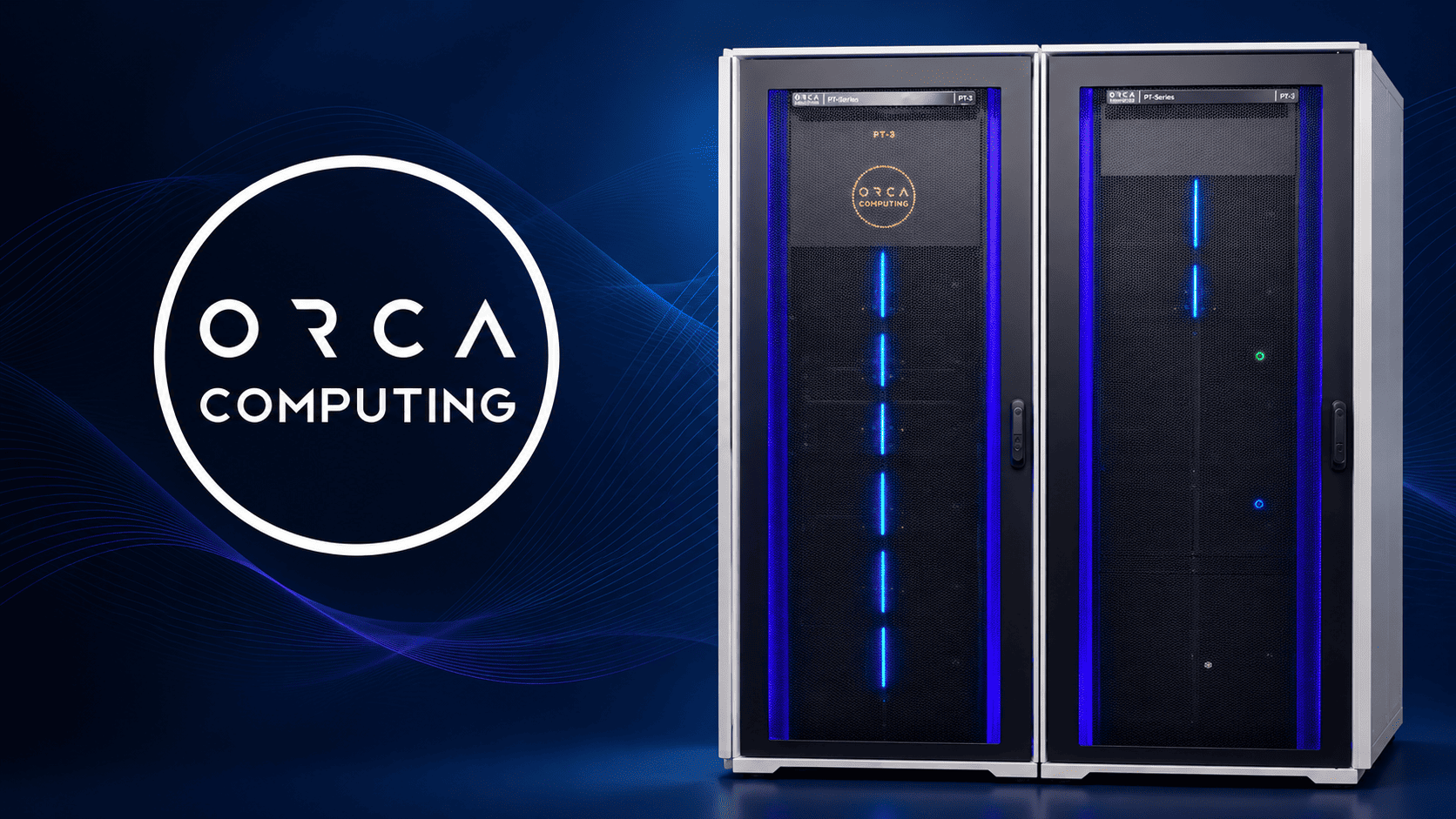
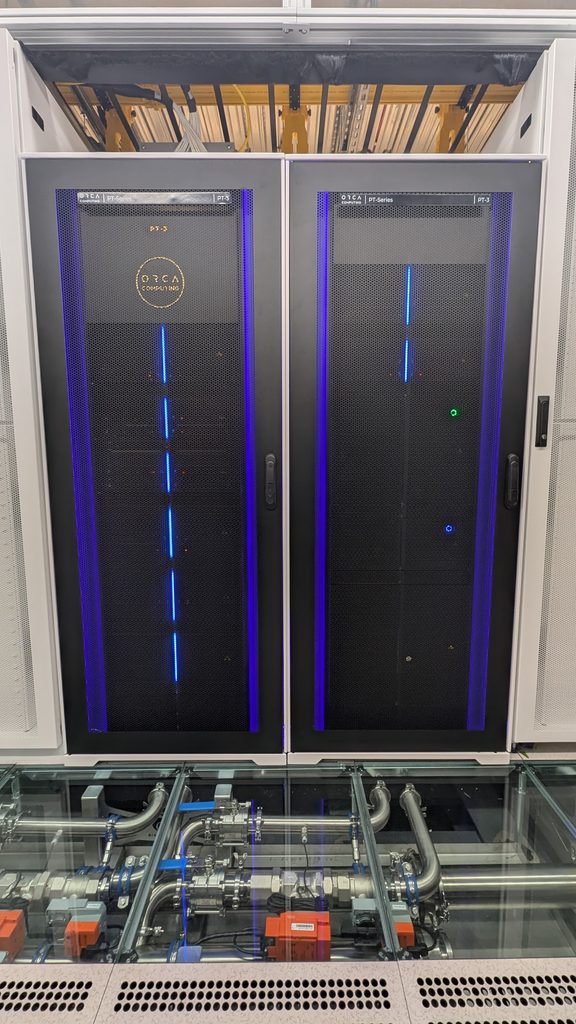
PRESS RELEASE — ORCA Computing, the company pioneering quantum-accelerated AI for science, today launches the PT-3, the newest generation of its photonic quantum computers, and the first built to deliver commercial quantum advantage. The first system is live in the Digital Realty Innovation Lab (DRIL) in London, where it runs alongside NVIDIA accelerated computing.
Quantum and AI for science
AI for science, harnessing AI to transform scientific discovery, is rapidly emerging as one of the most important new categories in computing and a major industry-wide focus, yet it is held back by limited training data. ORCA’s PT-3 works alongside GPUs to increase the expressivity of AI models (their ability to represent complex patterns and data distributions), helping them learn more from limited data and identify better, more novel candidates for new drugs and materials.

Already delivering results
The PT-3 has allowed ORCA to generate results from a hybrid quantum-classical extension of NVIDIA Proteína, the generative model for protein design. Trained on 32 NVIDIA Hopper GPUs working with a PT-3 using 64 photons in 128 qumodes, the hybrid model showed enhanced designability over the classical baseline, improving the ratio of useful proteins by 20%, and generated novel proteins with a different mix of secondary structures.
This builds on earlier life sciences results from ORCA’s PT-2 system. Working with the Technical University of Denmark, the PT-2 produced around twice as many strong peptide binders as classical AI, validated in the wet lab. It also generated 49% more valid, unique molecules on the QM9 benchmark*.
The PT-3 is also being applied to optimisation problems such as smarter energy scheduling. Earlier this year, JIJ Inc. and ORCA, in collaboration with bp and the UK’s National Quantum Computing Centre (NQCC), published a white paper that benchmarked hybrid approaches to the unit commitment problem. On that 25,755-variable benchmark, ORCA’s PT-3 now runs the hybrid quantum-classical workflow in about an hour, more than 12× faster than its predecessor at the same solution quality. In the white paper’s testing, the hybrid solver’s results were competitive with the industry-standard commercial optimisation solver on solution quality and, with more runtime, found the best solutions of any method tested.
Richard Murray, Co-founder and CEO of ORCA Computing, said: “By integrating our photonic quantum computer with NVIDIA accelerated computing, we have taken a critical first step in the future of hybrid quantum supercomputing. The PT-3 is already delivering results in AI for science and industrial optimisation, from protein design to energy scheduling. Through Digital Realty, enterprise users can now put it to work on their most challenging workloads, and customers are trialling use cases in life sciences, defence, energy and logistics. The PT-3 is built to scale: it upgrades in the field, so customers who start today keep building on the same system.”
“With the PT-3, ORCA is bringing photonic quantum computing and NVIDIA accelerated computing together in a system researchers can use to develop and test new applications,” said Sam Stanwyck, Director of Quantum Product at NVIDIA. “The value of a computing platform is in what researchers build on it. ORCA’s extension of NVIDIA’s Proteína model to generate a different range of protein structures with improved designability is a great example of what can be accomplished when these tools come together.”
“Our partnership with ORCA reflects a shared ambition to make quantum computing practical for business. Hosting the PT-3 in the DRIL gives us a real-world environment to explore how quantum can deliver value today, and it’s a significant step towards commercial quantum advantage at scale,” said Séamus Dunne, Managing Director, UK & Ireland, Digital Realty,
Richard Murray and the ORCA team are available for interview at NVIDIA GTC Berlin, 20-22 October 2026, at booth 7083 in the Inception showcase.
*The QM9 benchmark is a foundational dataset and standard testbed in quantum chemistry and molecular machine learning used to train and evaluate predictive models.