Better Together: IBM Researchers Cut Sampling Demands 63-Fold by Combining Quantum Error Detection And Mitigation



Insider Brief
- IBM researchers combined quantum error detection with error mitigation in an experiment that reduced the estimated sampling overhead by as much as 63 times compared with mitigation alone.
- The approach uses error-detecting checks to discard runs with identifiable faults, then applies probabilistic error cancellation to errors that escape detection.
- The results suggest error mitigation may continue to support quantum computations after logical qubits arrive, although the study is a preprint and the 63-fold figure represents inferred sampling overhead rather than total runtime.
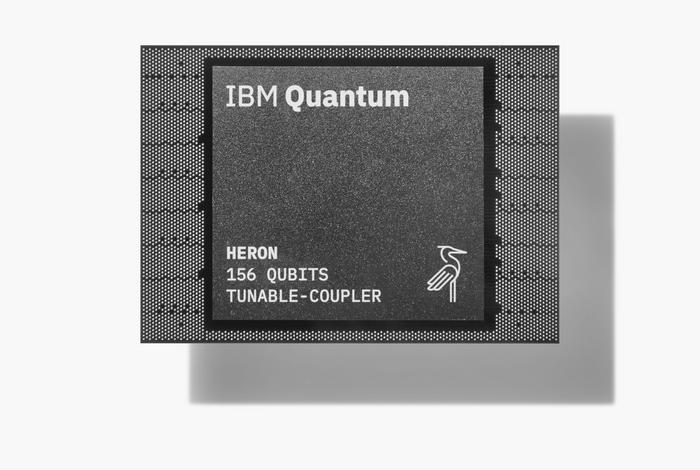
- Image: IBM
Quantum error correction may not simply replace error mitigation as quantum computers improve. In fact, the two methods could instead work together to make reliable computations possible with fewer resources, according to an IBM study.
IBM researchers combined an error-detection protocol with a statistical error-mitigation technique and tested the approach on a superconducting quantum processor. The hybrid method reproduced the expected results of a small physics simulation while reducing the estimated sampling overhead by as much as 63 times compared with error mitigation alone.
The results add experimental support to the idea that quantum error mitigation and quantum error correction should be viewed as parts of a continuum rather than tools belonging to separate eras of quantum computing, according to an IBM research blog post.

Error mitigation is generally associated with today’s noisy processors. Error correction is expected to underpin future fault-tolerant machines. However, the researchers point out in the post that early error-corrected computers will still produce some errors, leaving room for mitigation techniques to improve their results without requiring more physical qubits.
“Quantum error mitigation and quantum error correction are often framed as tools for different eras of quantum computing: mitigation for near-term devices and correction for scalable fault tolerance,” the team writes in the post. “In practice, however, we see a continuous path from error mitigation to error correction. Optimizing across a spectrum of error-correcting techniques is key to scaling from trusted quantum computations to applications that matter for the world.”
In the study, the team used error detection rather than a complete error-correction system. Error detection is a core part of quantum error correction, but instead of repairing identified faults while the calculation continues, the protocol flags affected runs so their results can be discarded.
Trading Qubits for Repeated Runs
Errors caused by noise remain one of the main barriers to useful quantum computing. Qubits can lose their quantum states or pick up small faults from control operations, neighboring qubits and their surrounding environment. Those errors accumulate as circuits become larger and run for longer periods.
Quantum error correction addresses that problem by spreading quantum information across groups of physical qubits. Measurements known as syndrome checks reveal whether an error has occurred without directly reading and destroying the protected quantum information.
This approach can, in principle, support long and reliable calculations, but, in practice, it requires additional qubits, gates, measurements and classical processing. The resource demands are expected to remain beyond the capabilities of most current hardware.
Instead of encoding and protecting information throughout the calculation, error mitigation takes a different approach by estimating how noise affected the final answer. Researchers run related versions of a circuit many times and use the resulting data to infer what the system would have produced without the noise.
One such technique is probabilistic error cancellation, or PEC. The method first develops a model of the processor’s noise and then samples modified circuits, combining their results with positive and negative statistical weights to cancel the estimated effects of that noise.
PEC can produce results that are unbiased under an accurate noise model, meaning repeated measurements should move toward the correct answer. The problem is that the required number of samples can rise exponentially as circuits become noisier or more complex.
The issue comes down to practicality because a calculation may be mathematically recoverable but require too many repeated circuit runs to be useful.
Two Lines of Defense
The IBM researchers attempted to reduce that cost by placing error detection ahead of mitigation.
The error-detection layer used additional check qubits to identify certain faults during a computation. Runs producing a nonzero syndrome, indicating a detected error, were rejected. PEC was then applied to the residual errors that passed through those checks.
One way to think of the arrangement is that it’s a two-stage inspection process. The first stage removes results containing recognizable faults while the second estimates and corrects the less obvious distortions that remain.
Neither part solves the problem alone. Error detection does not identify every fault, and it carries a cost because discarded runs must be repeated. PEC can address errors that remain, but its sampling demands can become prohibitive. Combining the methods could allow each to handle the errors it addresses most efficiently.
The researchers developed what they call spacetime probabilistic error cancellation to model faults according to both where and when they occur in a quantum circuit. That distinction matters because post-selection can create relationships between faults at different circuit locations.
A single detectable fault will normally cause a run to be discarded and two faults may produce syndromes that cancel each other, allowing the run to pass the checks even though an error remains. The method models these surviving errors and applies PEC to mitigate their effect.
This avoids constructing the processor’s complete noise channel, which becomes impractical as the number of qubits grows.
Testing a Physics Simulation
The researchers tested the protocol on IBM’s ibm_aachen superconducting quantum processor. They first used Clifford circuits, a class of circuits that can be simulated efficiently on conventional computers, to assess how well their noise model predicted the hardware’s behavior.
In that test, four error-detecting checks identified about 65% of the elementary faults included in the model. Post-selection moved the measured results closer to their ideal values, while the researchers’ model accounted for both the errors introduced by the additional check operations and the improvement obtained by discarding flagged runs.
The researchers then applied the hybrid method to a simulation of the transverse-field Ising model, a widely used model for studying interacting quantum systems and magnetic behavior.
The experiment used 22 data qubits and 27 check qubits. The circuit contained as many as six Trotter steps, a method for dividing a system’s evolution into a sequence of smaller operations, and included up to 648 controlled-Z gates.
The team compared four approaches — unmitigated results, error detection alone, PEC alone and the combined error-detection and PEC method.
The hybrid method produced results that remained consistent with the expected answer through all six stages of the simulation. Error detection alone reduced the bias but left a measurable difference from the ideal result. PEC alone developed larger uncertainties and did not converge within the same sampling budget at the greatest circuit depth.
The estimated sampling advantage increased as the circuit became deeper with the combined method reducing the inferred overhead relative to PEC alone by 3.7 times at two simulation steps, 15.9 times at four steps and 63 times at six steps.
Important to note that the 63-fold figure does not mean the quantum processor completed the entire calculation 63 times faster. It compares estimates of the sampling overhead required by the two error-control methods. The calculation also excludes some broader costs that would affect the time and resources required by a practical application.
Even with the hybrid method, the estimated overhead at six steps remained substantial. The researchers calculated an overhead measure of 1,359 for the combined protocol, compared with 85,545 for PEC alone. The result therefore represents a large relative improvement rather than the elimination of sampling costs.
A Continuum of Error Controls
The study supports a broader line of thought outlined by IBM researchers in a company research post. Quantum error mitigation and correction may occupy different points on a spectrum defined by the resources available to a system. More simply put, researchers can choose a mix of the two methods in different proportions depending on the number of qubits, repeated runs and computing resources available.
Mitigation generally uses fewer qubits but requires more circuit samples and classical processing. Error correction uses more qubits and hardware operations but can reduce the number of repeated runs required to obtain a dependable result.
Hybrid methods seek a workable point between those extremes. A processor could detect or correct the errors that are economical to handle in hardware, then use statistical methods to address the smaller amount of noise that remains.
That approach could become particularly relevant during the transition to fault-tolerant computing. Early logical qubits are unlikely to be error-free. Their reliability will depend on the error-correcting code, the quality of the physical qubits and the number and type of operations being performed.
Mitigating the residual noise affecting logical qubits could allow a machine to run larger calculations without immediately increasing the size of its error-correcting code. IBM researchers suggest that mitigation and post-selection may therefore remain useful even in systems equipped with more mature quantum error correction.
There’s still work to be done, according to the researchers. For example, the experiment checked for errors at the end of the quantum circuit rather than repeatedly detecting and correcting them as the calculation ran. To extend the method to mid-circuit measurements would require researchers to account for additional noise from measurement and qubit reset operations.
The method also depends on an accurate, manageable model of the hardware’s noise. More complex error patterns, including errors correlated across time, could be harder to characterize and cancel.
Future work could explore how often checks should be performed, how the approach behaves on larger circuits and whether it can mitigate the errors left after active quantum error correction. The eventual balance among correction, detection and mitigation will probably depend on the hardware, the calculation and the accuracy required.
The latest results do not remove the need for fault-tolerant quantum computers. They suggest the path to those machines may involve gradually changing combinations of error controls rather than a clean handoff from mitigation to correction.
IBM researchers on the study — and authors of the blog post — included Laurin E. Fischer, Ali Javadi-Abhari, Simon Martiel and Alireza Seif.
For a deeper, more technical dive, please review the paper on arXiv. It’s important to note that arXiv is a pre-print server, which allows researchers to receive quick feedback on their work. However, it is not — nor is this article, itself — official peer-review publications. Peer-review is an important step in the scientific process to verify results.

Keep track of everything going on in the Quantum Technology Market. In one place.
Topics
Matt Swayne
With a several-decades long background in journalism and communications, Matt Swayne has worked as a science communicator for an R1 university for more than 12 years, specializing in translating high tech and deep tech for the general audience. He has served as a writer, editor and analyst at The Quantum Insider since its inception. In addition to his service as a science communicator, Matt also develops courses to improve the media and communications skills of scientists and has taught courses.
[email protected]

Stay Ahead of Quantum
Get the latest research, company news, and market intelligence every week.