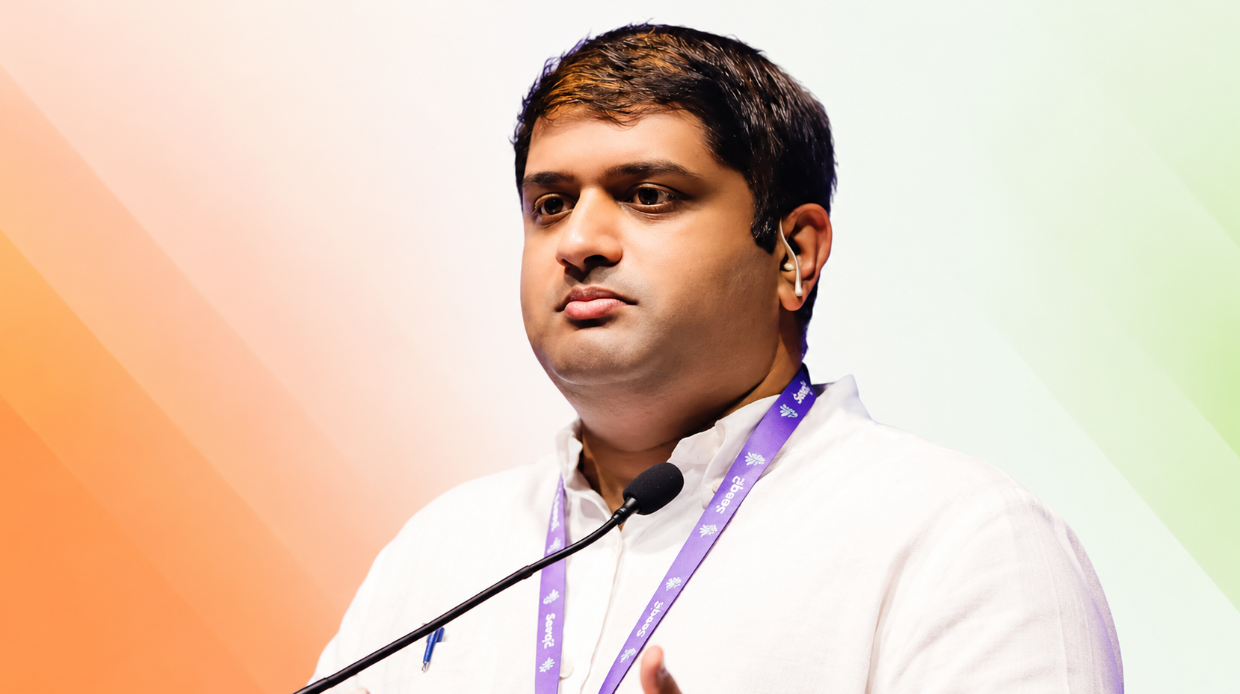

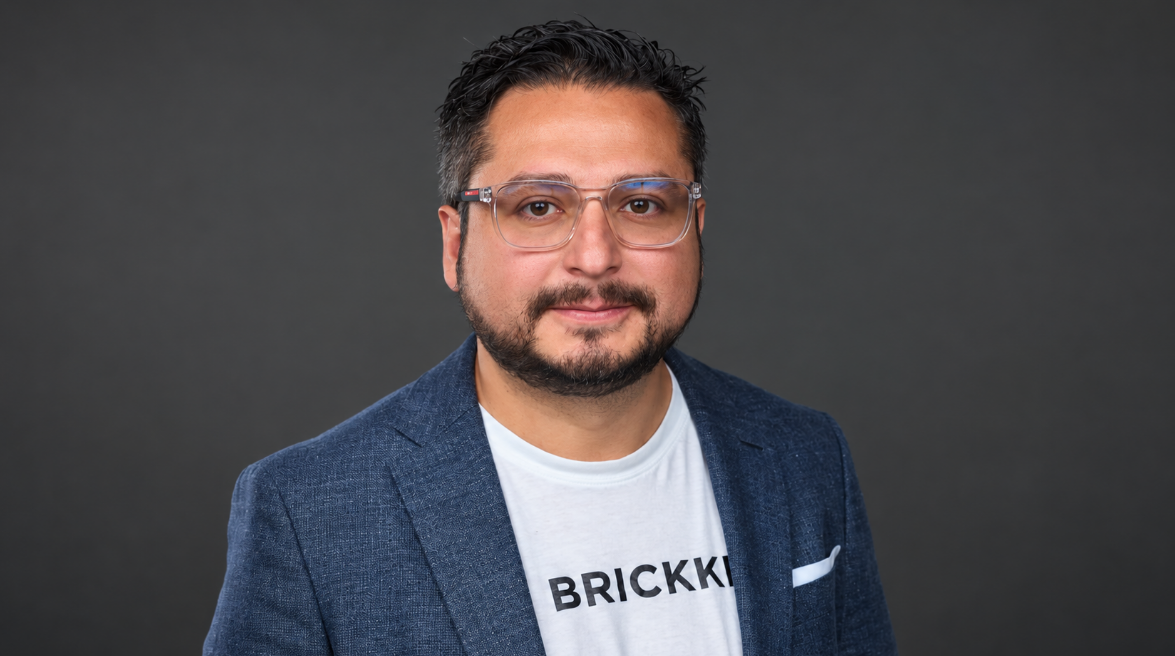


Guest Post by Edwin Mata, Co-Founder and CEO of Brickken
Building financial infrastructure is strange: you have to make decisions today for assets that may still exist long after the underlying technology has changed. That is especially true in tokenization because a bond issued on-chain today might mature in twenty years. An interest in a private company could sit on a cap table for decades. Real estate, private credit, funds and other assets being brought on-chain involve legal rights and economic relationships that can persist for a very long time.
So when we talk about quantum computing and finance, I think the useful question is not when a sufficiently powerful quantum computer will arrive. I do not know, and I am skeptical of anyone who gives you a precise date. The alternative question is much more practical: are we building tokenized financial infrastructure that can evolve when the cryptography securing it needs to evolve?
I think we can, but only if we build adaptability into the architecture now. An asset may need to outlive the technology supporting it.

We have already seen this problem, on a smaller scale, throughout the history of technology: protocols change, security assumptions evolve and networks are upgraded. Software that looked perfectly adequate ten years ago becomes obsolete.
Financial assets are different because you cannot simply treat them as old software and replace them.
Consider an investment administered through a digital asset. There is an issuer. There are ownership records. Restrictions may limit who can hold or receive the investment. There are compliance obligations, contractual rights, reporting requirements and potentially several intermediaries interacting with it. The applicable law and governing documents determine the investor’s rights.
Now imagine that the cryptographic environment changes and the asset needs to move to new infrastructure.
What exactly are we migrating? Moving the token is only one part of the problem. The harder challenge is preserving the financial and legal relationships around it.
Ownership needs to remain clear. Compliance rules need to continue operating. The new environment needs to recognise who can send and receive the asset. Custodians, wallets and other applications need to understand how to interact with it. If an enforcement action is legally required, that capability cannot disappear because the underlying security architecture has changed.
Preserving those rights requires continuity in the governing documents, applicable law and authoritative ownership records, alongside continuity in the technology.
This is where quantum readiness becomes a question for the entire financial infrastructure.
At Brickken, we have spent considerable time thinking about this through our work on open standards for tokenized assets.
ERC-7943, the Universal Real World Asset Interface, provides a common interface for regulated real-world assets. It standardises essential functions such as checking whether an account can send or receive an asset, determining whether a particular transfer is permitted, freezing assets where required and supporting enforcement transfers, without prescribing one particular compliance implementation underneath.
That last part matters significantly because good infrastructure should create enough consistency at the interface level, and enough flexibility underneath it, that the system can adapt without losing the rules that make the asset usable in regulated markets. We cannot predict every technology, jurisdiction or security requirement that will exist twenty years from now.
Quantum computing makes that principle much easier to see.
A standard should avoid unnecessarily binding the asset, its compliance logic and its ability to interact with other systems to one technological moment. These interfaces can help preserve consistent asset controls during a transition. Quantum resistance also requires appropriate cryptography, secure key management and coordinated upgrades across wallets, custodians and the underlying blockchain.
AI agents add another layer to consider, as more financial assets move on-chain, machine-readable information and agent permissions become increasingly important. At Brickken, we use the term Agentic Capital Markets to describe our strategic direction towards an environment where authorised software agents can work across machine-readable assets, mandates, permissions and settlement infrastructure.
An institutional agent should operate under defined authority: what it can do, for whom, within what financial limits and for how long. That authority should be verifiable and enforceable within the systems through which it acts.
That is why the standards layer has to extend beyond the asset itself.
ERC-7943 gives systems a consistent way to understand core controls around a regulated asset. ERC-8226, the proposed Regulated Agent Mandate Standard, or RAMS, is designed around scoped, time-bounded and financially capped authority for agents. ERC-8320, the proposed Regulated Asset Claim Standard, or RACS, addresses structured, signed, versioned and revocable claims about assets and their operating context.
When we put those ideas together and something important starts to emerge. We are moving towards markets where machines may be able to discover an asset, understand information about it, determine whether a transaction falls within a mandate, verify whether the relevant parties are eligible and prepare or coordinate execution.
That makes cryptographic resilience even more important because if machines are going to rely on signatures, permissions, claims and mandates to make sense of financial markets, we need to know those systems can transition safely when the security assumptions beneath them change. I would therefore resist treating “post-quantum” as a feature that can simply be added to a tokenization platform later.
The valuable principle is crypto-agility: building systems that can change their cryptographic components while preserving the security and continuity of the financial relationships above them.
NIST has already published post-quantum cryptographic standards, including digital signature schemes. The challenge is integrating them safely into financial infrastructure while retaining the ability to adapt again.
That requires interoperability, modularity and standards that separate what an asset is allowed to do from the specific technical implementation being used at a particular moment.
There will still be difficult questions. How do we securely migrate ownership? How do we reconcile old and new credentials? What happens to mandates signed under an earlier cryptographic scheme? How do institutions coordinate an upgrade without creating competing versions of the same asset?
We do not have to solve every one of those questions today. We do need to identify the systems and credentials that would have to change, define responsibility for the transition and begin testing migration paths before the existing cryptography becomes vulnerable.
Tokenization gives financial markets an unusual opportunity because so much of the architecture is still being built. We can design for interoperability, compliance controls, machine-readable information and the ability to operate across changing technological environments from the beginning.
To me, that is what quantum-ready tokenized finance should look like: financial infrastructure designed with the humility to know that technology will change, and the flexibility to change with it.