

Insider Brief
- The sixth annual City Quantum & AI Summit will bring leaders from technology, defense, finance, government and research to London’s Mansion House on Oct. 7.
- The program will examine quantum and AI applications and risks across cybersecurity, finance, life sciences, space and national security.
- The summit will emphasize plain-language discussions, cross-sector networking and governance for technologies developing faster than existing institutions and regulations.
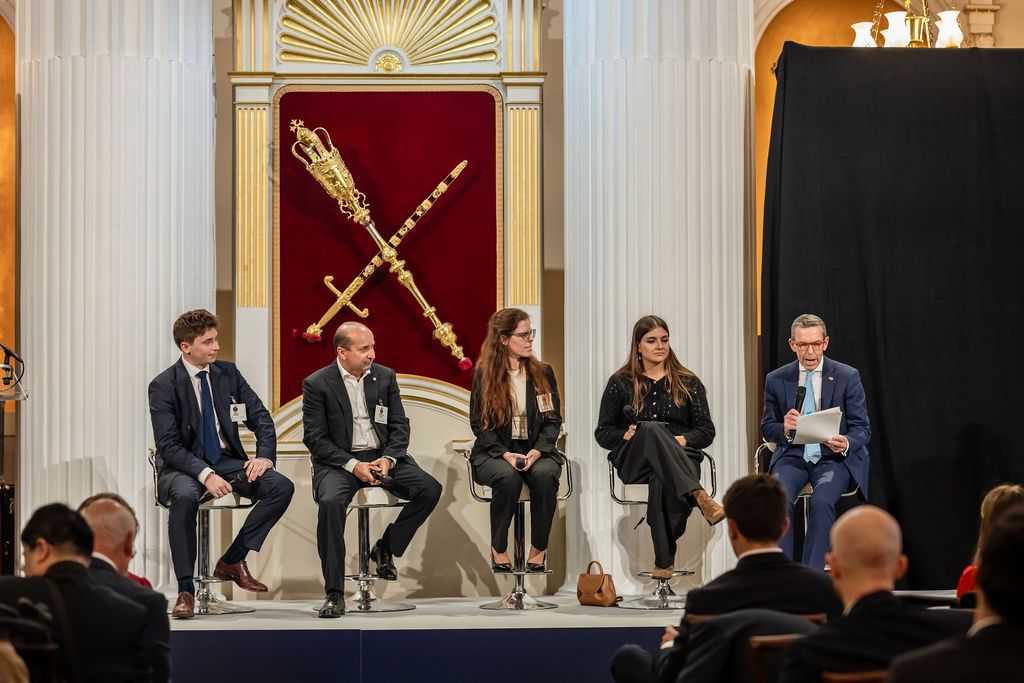
- Images: Paulina Roots Photography
The technologies changing defense, medicine and finance are advancing faster than the institutions expected to manage them. Getting the right people in the same room is a critical step toward optimizing the good that these technologies can do, while minimizing potential adverse effects.
The sixth annual City Quantum & AI Summit is aimed at bringing those people – military leaders, technology executives, researchers, investors and policymakers – to the Mansion House in London on Oct. 7. The one-day event is organized around the theme “Connections in Chaos.”
Karina Robinson, CEO of Redcliffe Advisory and founder of the summit, said the theme reflects a loss of predictability in international affairs, compounded by the rapid development of artificial intelligence and the emerging possibilities of quantum technology.

“The modicum of predictability that existed in world affairs a decade ago has vanished,” said Robinson. “How to cope? Develop personal connections. The Summit’s focus has always been to create networks across countries and across sectors. It is the best source of innovation and, in our age of AI, the last refuge of humanity.”
The summit’s program treats those human connections as practical infrastructure. It brings together industries that face related technological and security challenges but often operate separately. Defense officials will meet quantum and AI executives. Medical researchers will discuss computing with technology specialists. Investors and financial executives will examine how companies can move from research to commercial deployment.
According to Robinson, the objective of the summit is not simply to present new technology, but also help decision-makers understand how quantum and AI could affect their organizations, even if they lack scientific or engineering backgrounds.
Defense Beyond the Battlefield
Defense will open the program, reflecting the growing role of advanced computing in national security.
A panel titled “Safety and Security in Troubled Times” will be chaired by Admiral Sir Tony Radakin, former chief of the Defence Staff. Scheduled participants include Enrique Lizaso, co-founder and CEO of Multiverse Computing; Tony Lowe, CEO of quantum-sensing company Delta.g; Jeanette van Halteren, Managing Consultant at Thales; and Dr Ben Tallis, Head of Policy & Analysis at defense technology company Helsing.
The discussion will extend beyond weapons and conventional military operations to threats against digital infrastructure. Cyberattacks can disrupt communications, financial services, energy networks and public agencies without crossing a physical border.
“Defence is a clear example of the Summit’s theme,” said Robinson. “The panel is entitled Safety and Security in Troubled Times because we aren’t just talking about tanks and drones and territory, but about defending ourselves from cybersecurity attacks which can bring society to a standstill. We also have a Qnote from NATO’s Assistant Secretary General, Jean-Charles Ellerman Kingombe. The death of NATO has been much spoken of lately. It is still alive and kicking, and an indication that organisations to connect countries have value.”
Quantum computing adds urgency to the cybersecurity discussion. Large, sufficiently capable quantum computers could eventually defeat several forms of encryption now used to protect government, corporate and personal information. Governments and businesses are therefore beginning to adopt post-quantum cryptography, a new class of security methods designed to withstand attacks from both conventional and quantum computers.
AI presents a more immediate set of opportunities and risks. Defense organizations are already exploring its use in intelligence analysis, logistics, cybersecurity and planning. The same tools can also make cyberattacks faster and more difficult to detect.
Ellerman Kingombe, NATO’s assistant secretary general for innovation, hybrid and cyber, is scheduled to deliver an address on cyber defense in the quantum and AI era. The appearance continues a longstanding relationship between the summit and NATO.
Connecting Science With Capital
The program will also examine whether financial markets and institutions can provide the patient capital required by quantum and other deep-technology companies.
These businesses often face a difficult path to market. They may need years of research, specialized equipment and highly trained workers before producing meaningful revenue. That model does not always fit the short development cycles associated with conventional software startups.
Dame Julia Hoggett, chief executive of the London Stock Exchange, and Emily Turner, CEO of HSBC Innovation Bank UK, are scheduled to take part in a panel on financing innovation. U.S. venture investors are also expected to participate.
The session will consider how banks, venture firms and public markets can support companies as they progress from scientific research to products and commercial operations. It also places finance within the summit’s wider theme. Scientists may develop the technology, but investors, corporate customers and public institutions determine whether it can reach the market at scale.
Robinson said identifying companies early has helped sustain the summit over six years. Previous programs featured executives from Oxford Quantum Circuits, Nu Quantum and Multiverse Computing when the companies were considerably smaller.
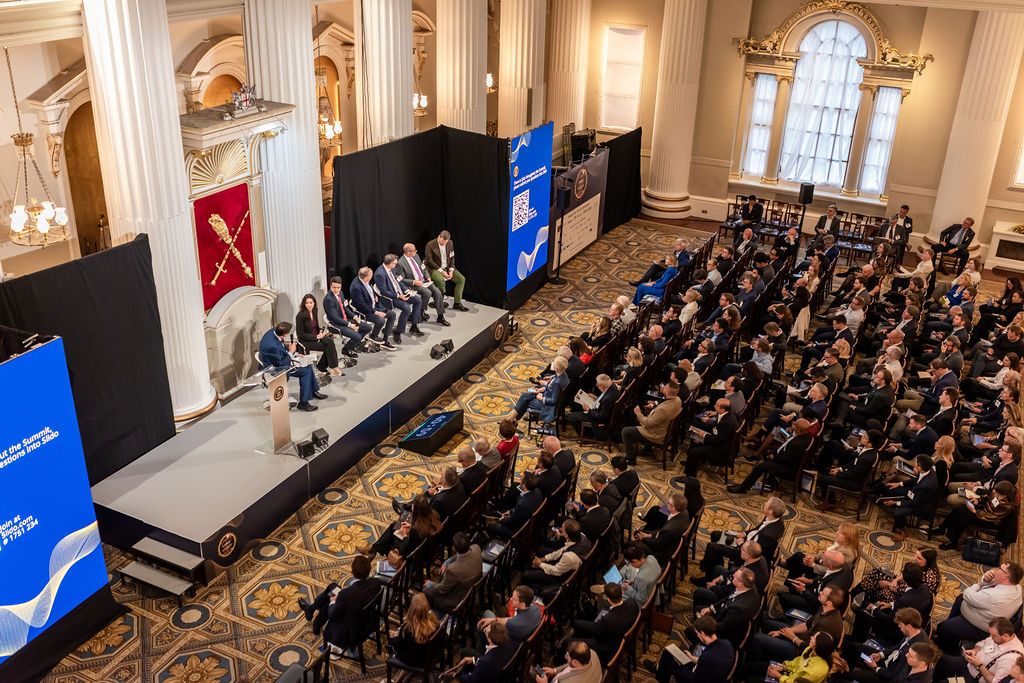
The setting – the Mansion House, the official residence of the Lord Mayor of London – adds another connection between old and new forms of commerce. It has long served as a center for business and civic events.
“The Mansion House is a palace with glittering chandeliers and vast columns,” said Robinson. “Over the centuries it has been a centre of commerce and deal-making. It provides a unique and contrasting backdrop to frontier technology.”
The summit will open with remarks from Alderman Bronek Masojada, who is expected to become Lord Mayor, followed by Robinson.
From Life Sciences to Space
Robinson pointed to life sciences and space as two areas where the summit will emphasize the constructive uses of AI and quantum technology.
“I am hugely looking forward to the Space panel, in association with Farnborough International Airshow,” said Robinson. “Their CEO, Gareth Rogers, will chair it. There will certainly be positive news from the panellists about their advances. The other panel that will focus on positive disruption is the Life Sciences one. Here the intersection of Quantum and AI will figure prominently.”
The life sciences panel will include Dr. Lara Jehi, chief research information officer at Cleveland Clinic; Sergii Strelchuk, Lead Researcher on quantum at Wellcome Sanger Institute; and Anthony Rowe, vice president of Onyx Research at GSK.
AI is already used to analyze medical information, identify patterns in biological data and assist researchers searching for drug candidates. Future quantum computers could add new tools for simulating molecules and chemical reactions, although the systems available today remain limited.
Ashley Fieglein Johnson, president and chief financial officer of Planet; Will Whitehorn, chair of Seraphim Space Investment Trust; and Phil Cooper, commercial lead for aerospace, satellite and defense at Amazon Web Services, are scheduled to participate in the space panel.
It will be chaired by Gareth Rogers, CEO of Farnborough International Airshow, one of the biggest trade shows in the world, which brings together defence and aerospace every two years.
The discussion is expected to examine the growing connections among satellites, cloud computing and AI. Spacecraft generate large amounts of information that must be processed, transmitted and converted into useful observations for businesses and governments.
Another featured session, called “Entangled Exchange,” will bring together Gerald Mullally, CEO of Oxford Quantum Circuits, and Nic Harrigan, quantum manager at Nvidia. The conversation will explore the relationship between quantum computing and AI.
AI is increasingly being used to design, calibrate and operate quantum hardware. Researchers are also investigating whether future quantum systems could assist with selected AI, simulation and optimization tasks. The two technologies are therefore developing as parts of a broader computing system rather than as isolated fields.
Plain English for Complex Technology
Making those subjects accessible remains a central part of the summit’s approach, Robinson said. Its intended audience includes board members, investors, bankers and defense executives who need to understand the business and strategic implications without receiving a technical lecture.
“‘No lingo, no jargon, plain English only,’ is our strap line,” said Robinson. “We set up the Summit to engage the non-technological, non-scientific public in the exciting – and at times scary – developments in Quantum & AI. Board members, non-tecchie investors, bankers and defence executives all appreciate the event as a way to understand at a macro level technologies that are relevant to their organisations or could be interesting investment opportunities. Words like entanglement, superposition or inference are prohibited on pain of death!”
The program will include a special reception with Sir Peter Knight, an influential figure in the development of the United Kingdom’s quantum research program. Robinson said the reception will recognize his contribution to the country’s position in quantum science.
Governance and ethics will also form part of the event. An invitation-only dinner sponsored by Clifford Chance will feature a discussion between Roman Orús, co-founder and chief scientific officer of Multiverse Computing and a member of the United Nations Independent Scientific Panel on AI, and Thore Graepel, a machine-learning professor at University College London and former distinguished research scientist at Google DeepMind.
Jonathan Kewley, chair of Clifford Chance’s global tech group, will moderate this conversation, examining how institutions can develop ethical and governance systems for technologies whose capabilities are evolving more quickly than many existing rules.
“One of our past sponsors said the Summit combined ‘a super power-networking platform and a vital source of information exchange on the mega-trends of our time’. We are well set to repeat the winning formula this year!” said Robinson.
To register, please click here.