Scientists Look to the Brain to Improve Quantum Sensors


Insider Brief
- Washington University in St. Louis biologist Keith Hengen is applying theories of brain criticality to a $750,000 Department of Energy project aimed at improving quantum sensor performance.
- The research will test whether superconducting nanowire single-photon detectors can operate more accurately and efficiently when tuned near the boundary between order and chaos.
- The team will begin with about nine months of theoretical and computational work before potentially helping design and test chips to be built at MIT.
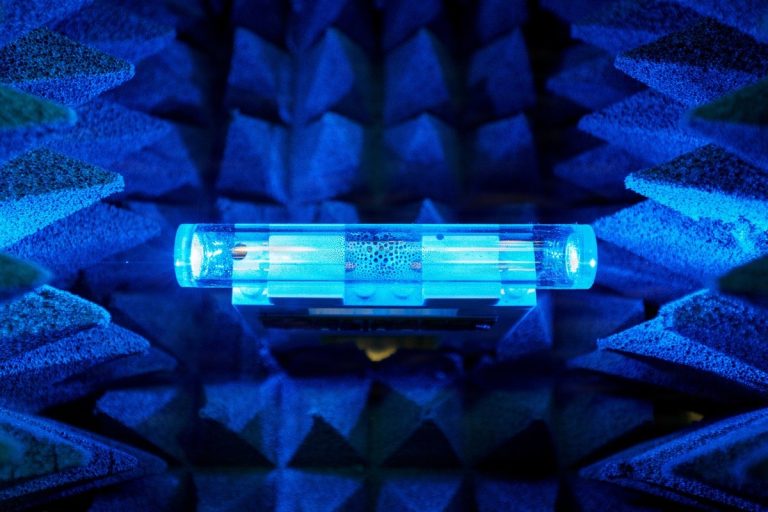
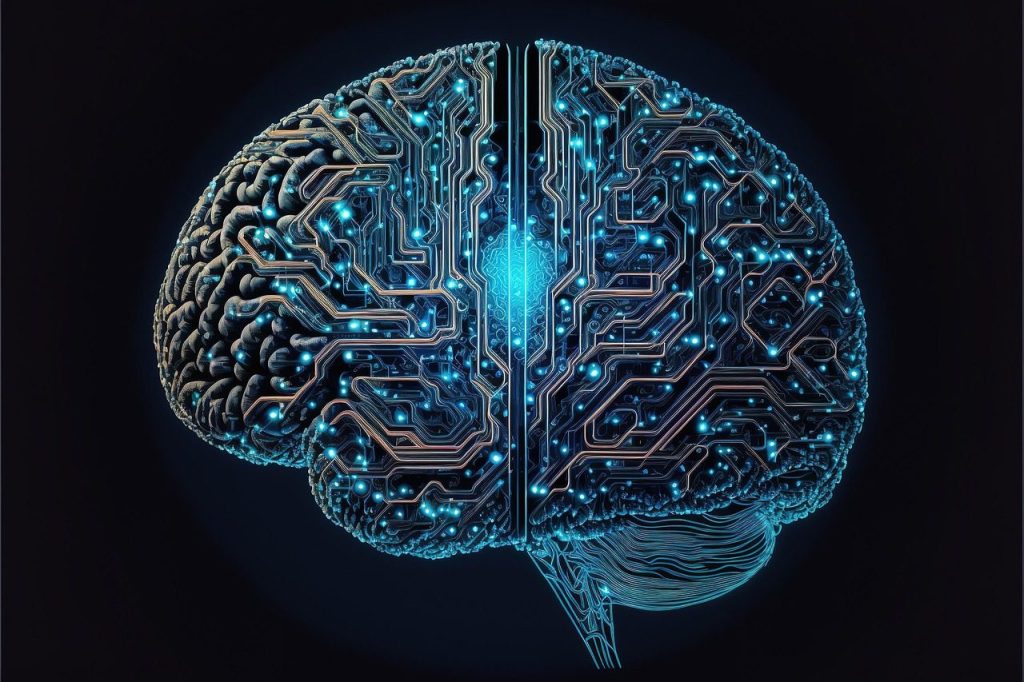
- Photo by DeltaWorks on Pixabay
A Washington University in St. Louis biologist is applying theories about how the brain balances order and chaos to a Department of Energy project aimed at making quantum sensors more accurate and energy efficient, according to an article on the university’s website.
Keith Hengen, an associate professor of biology at Washington University, has joined Argonne National Laboratory physicist Whitney Armstrong as co-principal investigator of a $750,000 project that will test whether quantum sensors can improve their performance by operating near a state known as criticality.
The university said that the Department of Energy awarded the funding in late July through its Genesis Mission, a broader federal research effort spanning artificial intelligence, quantum information science, energy and other areas. The project, called “Superconducting Polychronous Computation Near Criticality,” brings together neuroscience, physics, engineering and quantum technology.

The unusual collaboration grew out of Hengen’s research into how the brain processes information.
“My lab is especially interested in a brain state called criticality,” Hengen told Washington University’s Ampersand. “Criticality describes a complex system when it’s balanced at the tipping point between order and chaos. At criticality, information processing is maximized. For obvious reasons, we believe the brain must be tuned near criticality for optimal thinking and learning.”
The research team now wants to determine whether the same principle could help quantum sensors operate more effectively, potentially allowing devices to adjust themselves rather than requiring engineers to continually tune individual components.
Borrowing a Principle From the Brain
Criticality has been studied across physics, mathematics and neuroscience as a state between rigid order and unpredictable behavior. Systems near that boundary can respond strongly to small inputs while still maintaining enough stability to process information.
For the brain, Hengen and his collaborators have argued that staying close to criticality may help neural networks efficiently process information and adapt to new conditions.
“We’ve shown that the brain constantly adjusts itself to stay close to criticality, and that the closer a brain is to criticality, the faster it can learn,” Hengen said. “We think that quantum sensors will also work best if they’re tuned very close to a critical point. Instead of manually adjusting each chip within the sensor, the chips could self-tune, just like brain circuits do.”
That possibility caught Armstrong’s attention as he explored ways to improve quantum sensors while reducing their energy requirements.
Armstrong found a preprint written by Hengen and Leandro Fosque, a postdoctoral researcher in Hengen’s lab, along with ShiNung Ching, a professor of electrical and systems engineering at Washington University’s McKelvey School of Engineering, and University of Arkansas physicist Woodrow Shew.
The researchers had examined criticality as a general principle that could apply not only to the brain but to other systems that process information. That broader framework suggested the mathematical principles behind the brain’s behavior could potentially be transferred to engineered systems.
“The brain is an incredible computational machine, but it still has to follow the laws of math and physics,” Hengen said. “If you discover a fundamental law of computing that applies to the brain, it likely applies to other complex systems as well.”
Testing Single-Photon Detectors
The project will focus on superconducting nanowire single-photon detectors, commonly known as SNSPDs. These devices are sensitive enough to register individual photons, the quantum particles that make up light.
Single-photon detection is important across quantum technology because photons can carry extremely small amounts of information. They can be used to transmit quantum information through optical networks, perform measurements and serve as information carriers in some forms of quantum computing.
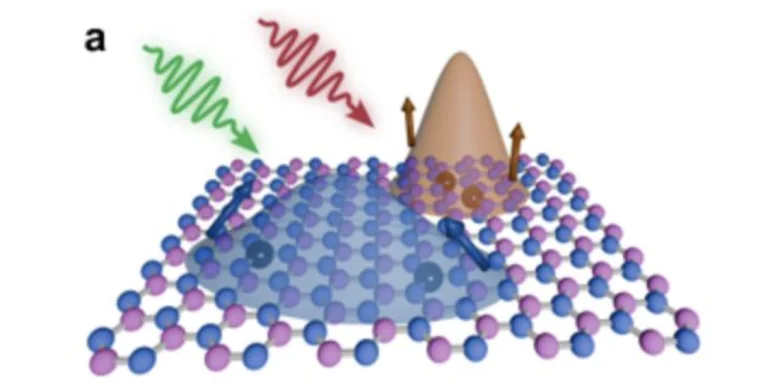
An SNSPD generally uses an extremely thin superconducting wire cooled to temperatures where electrical resistance largely disappears. When a photon strikes the wire, it temporarily disrupts the superconducting state, creating an electrical signal that allows the photon to be detected.
Armstrong is developing detectors that will sense photons released from helium nuclei, according to Washington University.
The challenge is not simply detecting photons. Researchers also want sensors that can operate accurately, efficiently and reliably as quantum systems become larger and more complex.
The new project will examine whether networks of detectors can be pushed toward criticality and potentially maintain themselves near that operating point. If the approach works, it could reduce some of the manual calibration normally required to keep complex sensor systems operating at their best.
The research remains at an early stage. Hengen’s group will initially focus on theory and computer modeling rather than hardware.
“In the early phase of the project, most of my lab’s work is going to be purely theoretical and computational,” Hengen said in the article. “We want to show that these quantum sensors will be maximally effective when they’re tuned to criticality. That work should take about nine months. If it goes well, we’ll consult on the actual construction of the chips, which will be made at MIT. Then we can help analyze the data to see how well the chips are working.”
That means the researchers must first show mathematically and through simulation that the proposed relationship between criticality and sensor performance holds before moving toward experimental devices.
Part of DOE’s Broader Quantum Push
The project is part of the Energy Department’s Genesis Mission, an initiative intended to connect national laboratories, universities, companies, supercomputers, scientific instruments, artificial intelligence systems and emerging quantum technologies.
DOE has described Genesis as an effort to accelerate scientific discovery in areas including energy, materials, biotechnology, nuclear science and quantum information. The department announced a $293 million funding opportunity earlier this year for interdisciplinary teams addressing more than 20 science and technology challenges.
The sensor project illustrates the type of cross-disciplinary work the initiative is seeking. Rather than improving a detector solely through conventional electrical engineering, the researchers are testing whether a principle first studied in neural circuits can provide a useful design rule for quantum hardware.
There is no guarantee the behavior seen in biological networks will translate cleanly to superconducting electronics. The initial nine-month phase is intended in part to determine whether the connection is strong enough to justify building and testing hardware.
If it succeeds, however, the work could provide another approach to keeping increasingly complex systems operating near their most useful state without adding equally complex layers of external control. That’s a persistent problem in advanced computing, the researcher suggested.
For Hengen, the project also represents an unexpected extension of research that began with questions about cognition rather than quantum electronics.
“This is definitely not something I envisioned when I started developing theories of cognition,” Hengen said. “I certainly didn’t expect to hear from Whit about this project. But when he explained his interest in our work, it all made sense – kudos to him for the insight and ability to make connections between disciplines! Criticality could be crucial for the next generation of quantum computing;I hope that my group can offer something useful.”

Keep track of everything going on in the Quantum Technology Market. In one place.
Matt Swayne
With a several-decades long background in journalism and communications, Matt Swayne has worked as a science communicator for an R1 university for more than 12 years, specializing in translating high tech and deep tech for the general audience. He has served as a writer, editor and analyst at The Quantum Insider since its inception. In addition to his service as a science communicator, Matt also develops courses to improve the media and communications skills of scientists and has taught courses.
[email protected]

Stay Ahead of Quantum
Get the latest research, company news, and market intelligence every week.
MENTIONED IN THE ARTICLE

Washington University in St. Louis
Washington University in St. Louis is a private research university located in St. Louis County and Clayton, Missouri. It was established in 1853 and is named after George Washington. The university is consistently ranked as one of the top universities in the United States.
→

US Department of Energy
The United States Department of Energy is a cabinet-level department of the United States Government concerned with the United States' policies regarding energy and safety in handling nuclear material.
→