Nations at the Quantum Table



Who’s Playing, Who’s Ahead, and What It Means
Insider Brief
- Since mid-2025, the US, UK, Japan, and Canada have moved quantum computing from research funding into binding policy — including roughly $2 billion in US CHIPS Act financing, a further £2 billion added to the UK’s National Quantum Strategy, Japan’s ¥1.05 trillion “first year of quantum industrialization,” and Canada’s $900+ million Defence Industrial Strategy commitment.
- Smaller “middle power” nations — Singapore, the Netherlands, Australia, and Israel — are making narrower, targeted quantum bets, from Singapore hosting Quantinuum’s Helios processor to Israel’s new Project Nexus tender for a sovereign quantum computing platform.
- Naftali Bennett, former Israeli Prime Minister and Quantum Source board member, frames quantum computing as a matter of national sovereignty, warning that “Q-day” would render current encryption methods obsolete and urging governments to pursue aggressive migration strategies and alliance-based development models.
A year ago, quantum computing read like a research story. Here was a technology that might eventually matter. Now, things are getting very, very real … and nations are preparing.
Since mid-2025, the United States, the United Kingdom, Japan, and Canada have each moved quantum policy from something pursued in the academic arena into something that governments fund, regulate, and defend. Executive orders, multibillion-dollar equity stakes, hard cryptographic migration deadlines, and dedicated defense programs have replaced conference-circuit optimism with line items that proliferate national budgets. Meanwhile, countries like Singapore, the Netherlands, Australia, and Israel are making their own serious inroads — smaller in scale, but shaping the race in ways worth watching.
The contest at hand is no longer about whether quantum computing will work, but who is positioned to benefit the moment it does, and who will be exposed if they are unprepared. As conventional hardware gradually edges past symbolic milestones, encryption deadlines are now fixed on the calendar, and the money attached to both has stopped being theoretical.

The Geopolitical Quantum Race Heats Up
Three forces are converging to turn quantum computing into policy rather than pure research.
For starters, hardware is beginning to mature. Systems like the 98-qubit Helios processor are demonstrating capability beyond what classical computers can simulate, moving quantum from theoretical promise to something with a tangible timeline.
There is also a sense of cryptographic urgency surrounding the field. Federal agencies face hard 2030/2031 target deadlines to migrate sensitive systems to post-quantum encryption, driven by the “harvest now, decrypt later” threat that could eventually break the public-key standards that protect global finance and state secrets.Security officials describe adversaries already engaged in intercepting and storing encrypted data today in anticipation of decrypting it once quantum capability arrives.
Layered on top of these developments is a renewed great-power competition characterized by geopolitical rivalries, such as the US and China, among many others. These nations have begun treating quantum leadership as a matter of economic and military standing, as well as intelligence advantage, not just scientific progress.
Governments have responded with concrete commitments.
- In the U.S., the Department of Commerce announced roughly $2 billion in CHIPS Act financing for nine quantum companies in May 2026. This was followed weeks later by twin executive orders, “Ushering in the Next Frontier of Quantum Innovation” and “Securing the Nation Against Advanced Cryptographic Attacks”, signed with the heads of Google and IBM in attendance.
- The UK, building on its £2.5 billion National Quantum Strategy, added a further £2 billion in March 2026, anchored by ProQure, the world’s first government quantum procurement program.
- Japan’s government designated 2025 its “first year of quantum industrialization,” backing the declaration with roughly ¥1.05 trillion in funding.
- Canada folded quantum into national defense planning, committing more than $900 million to its Defence Industrial Strategy, including over $161 million specifically for quantum sensing, secure communications, and computing.
Canada’s commitment took tangible form on August 6, 2026, when Minister of National Defence David J. McGuinty launched the Quantum Defence Innovation Secure Hub (DISH) in Calgary under the Bureau of Research, Engineering and Advanced Leadership in Innovation and Science (BOREALIS) — a secure facility aimed at translating quantum sensing, secure communications, and resilience against threats like GPS spoofing into operational capability for the Canadian Armed Forces.
The Middle Powers Are Making Their Own Bets
The four heavy hitters above aren’t the whole story, however. A tier of smaller, deliberate national bets is emerging alongside them — not competing for scale, but making calculated plays for relevance. A few examples:
- In February 2026, Singapore Prime Minister Lawrence Wong unveiled a S$37 billion Research, Innovation and Enterprise 2030 plan — a 32 percent increase over the previous cycle — naming quantum a primary growth area and an “early and deliberate bet” the country is now moving from theory to commercial reality. The centerpiece: Singapore will become the first country outside the United States to host Quantinuum’s flagship Helios quantum computer, giving local researchers and startups on-shore access to some of the most advanced commercial hardware available anywhere.
- The Netherlands is playing a longer, more institutional game. Building on more than a decade of coordinated investment through Quantum Delta NL, the country’s 2026 Action Agenda for Quantum Technologies sets an explicit target: a top-three global position by 2035, backed by more than €2 billion in combined public-private investment across computing, communications, sensing, and software. A pending EU Quantum Act, expected in the same window, could give that ambition regional teeth.
- Australia’s bet is narrower but higher-stakes: in 2023-24, the government invested A$940 in PsiQuantum, the U.S.-founded photonics startup building what it calls a utility-scale, fault-tolerant quantum computer near Brisbane. Construction is now underway, but it’s worth noting the project has drawn both enthusiasm and domestic criticism over a tender process that bypassed open competition — a reminder that strategic quantum bets carry political risk at home, not just abroad.
- Israel is making its own play, aimed less at scale than at sovereignty: in June 2026, as part of a new national AI and advanced-technology strategy, the government formally committed to advance the establishment of a national quantum computer built to the extent possible” on Israeli knowledge, technology, and development capabilities. The Knesset was subsequently told a development roadmap would follow. Now, in August, the Prime Minister’s Office has opened a tender, dubbed “Project Nexus,” to build a domestically produced quantum computing platform drawing on multiple Israeli-developed technologies.
None of these four rival the scale of the US, UK, Japan, or Canada. But each is a signal that the race has more entrants than headlines suggest — and that smaller, well-placed bets can still shape where the industry’s supply chains and talent ultimately land.
These moves matter well beyond the technology itself. Governments frame quantum as central to economic competitiveness with projections that the sector could generate up to $2.7 trillion in global economic value by 2035. This statistic also includes national security, given its codebreaking and defense applications, and workforce development, with multiple governments now writing quantum talent pipelines directly into policy. Supply chain control has become explicit policy too, with the U.S. directing agencies to prevent “countries of concern” from acquiring critical quantum-enabling technology.
For businesses and citizens in these countries, this shift creates both opportunity and exposure. New procurement programs are opening direct commercial pathways. Job creation claims are substantial with nearly 100,000 new jobs and £212 billion in economic impact, in the UK alone. Nevertheless, the current global quantum workforce still numbers only in the tens of thousands. Meanwhile, companies operating in the sector face intensifying export controls and counterintelligence scrutiny, with the FBI, for instance, expanding its Quantum Information Science and Technology Counterintelligence Protection Team.
Where the Leaders Stand
No single country currently holds a monopoly on the quantum race, and the leaderboard looks different depending on what is being measured.
The United States combines federal policy muscle with by far the deepest private capital markets, giving it a breadth of resources other nations cannot easily match. At the June 2026 executive order signing, White House science advisor Michael Kratsios credited that government commitment with unlocking private-sector momentum— though outside physicists have cautioned that the administration’s stated 2028 timeline for a scientifically useful machine sits at the edge of what the field currently believes is possible.
The UK has traded speed for consistency: Twelve years of stable funding, from the 2014 National Quantum Technologies Programme through the £2.5 billion National Quantum Strategy, have built physical infrastructure like the National Quantum Computing Centre, which has drawn in over £1 billion and connects 15 universities with 130 industry partners.
Sir Peter Knight, chair of the UK’s National Quantum Technology Programme Strategic Advisory Board, has described the logic behind ProQure’s phased procurement model in blunt, mechanistic terms:
“We want to make sure that we’re in the game. We want to be among the first countries to actually benefit from a scaled quantum computer. We want to make sure that we actually anchor this into the UK.” – Sir Peter Knight, UK National Quantum Technology Programme
Canada has taken the most defense-angled approach among the group, folding quantum directly into military procurement and treating it, alongside drones and uncrewed systems, as a sovereign capability requiring dedicated funding. Announcing the Calgary DISH in August, Defence Minister David J. McGuinty put the country’s posture plainly:
“Quantum will shape the next generation of defence capabilities, and Canada must be prepared to lead — not follow. Through the Quantum Defence Innovation Secure Hub, we’re bringing together Canadian researchers, innovators, industry, and government to accelerate Made-in-Canada quantum technologies into mission-ready capabilities that strengthen the operational advantage of the Canadian Armed Forces while growing Canada’s sovereign defence industrial base.” – David J McGuinty, Canadian Minister of Defence
Meanwhile, Japan is pursuing an industrial coordination model, pairing quantum funding with its broader semiconductor and AI strategy under a single national umbrella, orchestrated jointly by the Cabinet Office, the Ministry of Economy, Trade and Industry, and the Ministry of Education, Culture, Sports, Science and Technology.
Not every country is playing the same game, and that appears to be by design. Broad-spectrum powers like the U.S. and China are pursuing strength across nearly every layer of the technology from computing and sensing to communications simultaneously. Because they can afford to, these nations are spreading their bets across multiple hardware approaches and application areas.At the other end of the spectrum, smaller, focused programs are making calculated wagers on where they can realistically compete.
The trade-off in both cases is real: smaller programs stand to gain outsized influence in their chosen niche if the bet pays off, but they also carry more concentrated risk than a superpower that can absorb a dead end in one technology and simply fund another.
If there is one common link across the race, it is that across nearly every country, the same structural problems recur:
- Workforce shortages top the list. One recent industry estimate puts the ratio at roughly one qualified quantum candidate for every three open roles, with a particular scarcity of people who can bridge physics and engineering, or physics and software.
- Success metrics remain genuinely unclear; quantum progress does not reduce neatly into a single number the way, say, transistor counts once did for chips.
- Coordination across government agencies is also its own persistent challenge, even for the countries with the most to spend. The U.S. Government Accountability Office made that case directly in a March 2026 report, finding that the country’s National Quantum Strategy lacks performance measures, does not specify the resources it needs, and does not clearly assign responsibilities across the agencies expected to carry it out.
It is a useful corrective to the funding headlines: money committed and money coordinated are not the same achievement, and several governments in this race are still discovering the difference.
To understand what these pressures look like from the inside, we spoke with someone who has the unique position of having run a government and a quantum company: Naftali Bennett (Former Israeli PM; Board Member, Quantum Source).
The Interview: Naftali Bennett on Pressure, Players, and Prognosis
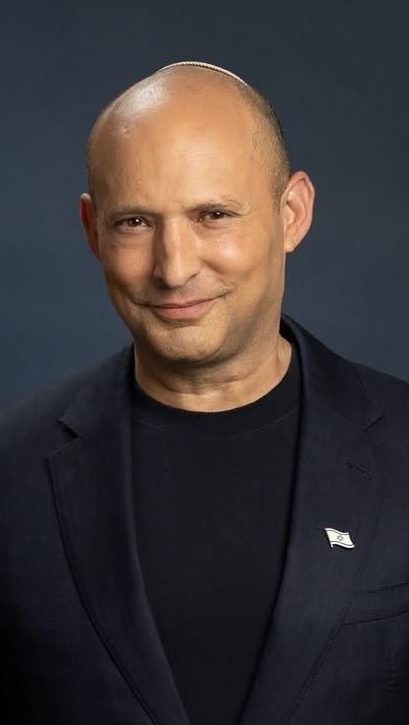
Naftali Bennett has spent decades building and exiting technology companies before entering politics, eventually serving as Israel’s Prime Minister. After leaving office, he sought out quantum computing as his next chapter. Bennett spent considerable time surveying competing quantum hardware approaches, concluding that photonics offered the most promising path to a fault-tolerant machine. He set out to find the team he judged most capable of executing on that architecture. This search led him to Quantum Source, which he describes as among Israel’s leading quantum computing companies, before ultimately joining the company’s board in 2023.
“I view quantum computing as a matter of national sovereignty,” says Bennett. He points to cryptography as the most immediate stake: “The moment Q-day arrives, effectively all the current encryption methods are deemed useless and we’re vulnerable.”
Bennett’s prescription is direct: governments need “very aggressive migration strategies,” built through both domestic capability and alliances with like-minded nations.
That reasoning underpins what he describes as a deliberate government philosophy: engineered serendipity. He points to Be’er Sheva’s cyber park, built adjacent to a military intelligence base, where young officers, university researchers, and startup founders share the same physical space.
“You can’t command innovation,” he says. “What you can do is create an environment that dramatically increases the chances of innovative breakthroughs.”
It is an ecosystem that Bennett acknowledges has outpaced government funding. Israeli quantum companies have collectively raised significant private capital, but state investment has not kept pace with the commitments made by the likes of the U.S., or the UK.
Bennett is unambiguous about the fix: “I have to be radically generous as a government toward my own technology, and specifically the quantum computing industry, if I don’t want to be left behind.” He frames the model as a form of alliance-building rather than pure self-reliance — a pairing of Israel’s talent density with larger partners’ capital, with “each side bringing to bear its unique advantages.” On timing, Bennett is cautious but optimistic: he expects a fully functional quantum computer to deliver real breakthroughs within four or five years, though he acknowledges that timeline may not hold for every company chasing it.
Watching What’s Next
So with all this, what should our readers take away?
The key is to watch the partnerships and the ecosystems that arise from that, not just which countries spend the most. In a July 2026 analysis, researchers at the International Institute for Strategic Studies described Western export-control policy as shifting from denying their rivals access to technology to something more deliberate: “The decisive question is no longer which technologies to deny an adversary, but which nodes of one’s own ecosystem to sustain.”
That framing is worth taking seriously well beyond export policy, because it describes the whole race. No country — not the U.S., not China — controls the full quantum supply chain. A handful of choke points do most of the work: isotopically enriched silicon-28 for spin qubits, helium-3 for dilution refrigeration, and the dilution refrigerators themselves, built at industrial scale by only a handful of firms, led by Finland’s Bluefors and the UK’s Oxford Instruments. Whoever occupies those nodes, and whoever those node-holders trust enough to keep supplying, matters as much as whoever spends the biggest headline number. And even the tightest controls are friction rather than a wall: China has already stood up domestic dilution-refrigerator production and expanded synthetic-diamond substrate manufacturing within two years of the initial restrictions, a reminder that nobody, including Beijing, is actually self-sufficient.
When applying that lens to the leaderboard, some dynamics emerge:
The U.S. still has the deepest capital markets of any country in this race, but the same export-control analysis that praises its industrial strategy also notes Washington had to build specific carve-outs out of concern that overly aggressive restrictions could weaken the very research ecosystem it depends on.
Canada, by contrast, is behind on raw capital but is all-in on the partnership game. Facilities like the new Calgary DISH are a strong effort to make Canada a place allied researchers and companies want to plug into.
The UK, almost by accident of industrial history, already holds a genuine choke point: Oxford Instruments is one of a small handful of companies manufacturing dilution refrigerators at scale worldwide. That’s leverage that has nothing to do with the size of a strategy document.
Our advice for the next 12–18 months? Follow the alliances, and they’ll tell the story.
The Chess Pieces Are Already Moving
In the quantum race that is unfolding across the globe, the countries and companies making real moves now will define the defaults everyone else inherits later: which cryptographic standards become universal, which supply chains become dependable, which cities become talent hubs nobody can easily replicate. The chess pieces are already on the board. Which ones end up controlling the center of the game, rather than merely occupying a square, is what the next few years will decide.

Keep track of everything going on in the Quantum Technology Market. In one place.
Topics

Resonance
The Quantum Insider is the leading online resource dedicated exclusively to Quantum Computing. You can contact us at [email protected].
Stay Ahead of Quantum
Get the latest research, company news, and market intelligence every week.
MENTIONED IN THE ARTICLE