


Insider Brief
- Hitachi has launched a government-backed research project with Intel K.K. and AIST to develop silicon quantum computing technologies that support the transition from laboratory research to industrial-scale manufacturing.
- The project will develop 100-qubit silicon quantum chip designs, manufacturing toolkits, 3D integration technologies for future 1,000-qubit systems, and a cloud platform that will give researchers remote access to experimental quantum hardware.
- Hitachi aims to launch an initial cloud service in fiscal 2027, demonstrate a 100-qubit quantum error-correcting prototype in fiscal 2028, and reach a 1,000-qubit prototype milestone in fiscal 2030.
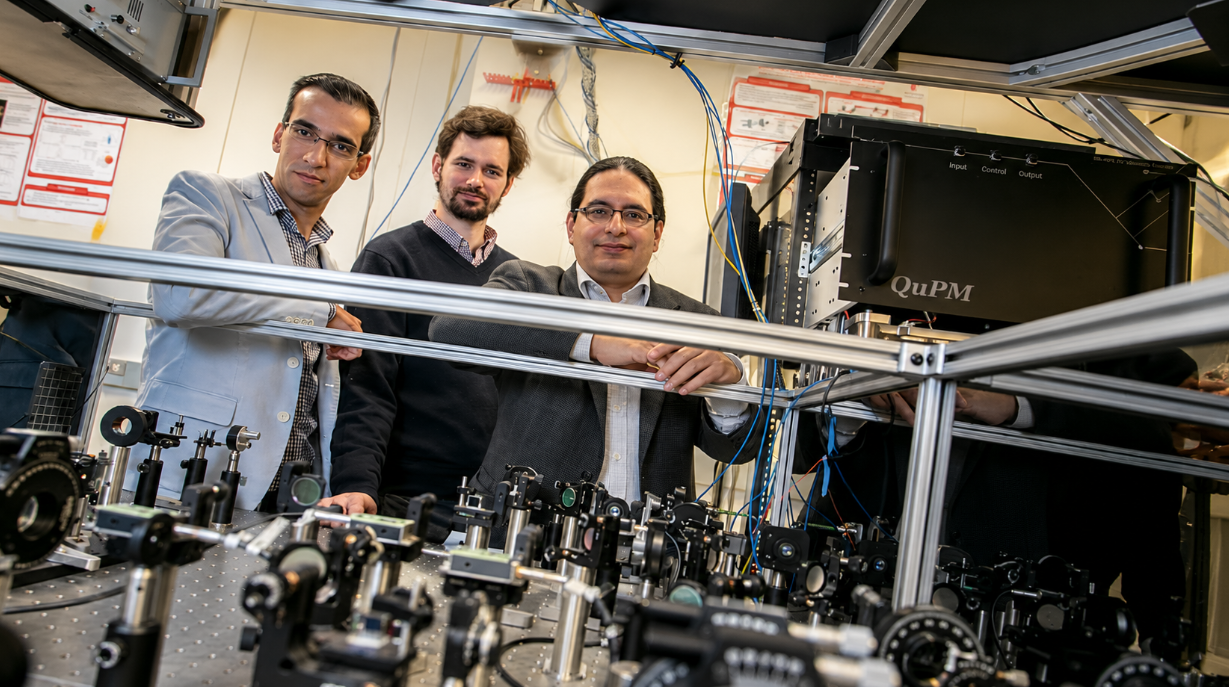
Hitachi has launched a government-backed research effort with Intel K.K. and Japan‘s National Institute of Advanced Industrial Science and Technology, or AIST, to develop silicon-based quantum computing technologies aimed at moving the field from laboratory research toward industrial deployment.
According to a Hitachi press release, the company has been selected by Japan‘s New Energy and Industrial Technology Development Organization, or NEDO, to lead a project under the agency’s “Accelerating the Development and Demonstration of Next-Generation Quantum Computers to Solve Social Challenges” program. The effort, which is scheduled to run through March 2029, will focus on technologies needed to manufacture, package and operate large-scale silicon quantum computers.
The project expands a strategic collaboration announced in June between Hitachi and Intel. AIST will participate in the research through joint development activities and by providing cloud-based experimental environments for researchers.

The initiative reflects Japan‘s broader push to establish domestic capabilities in quantum computing while leveraging its strengths in semiconductor manufacturing. Rather than pursuing a single prototype machine, the project is intended to build the engineering foundation needed to manufacture reliable quantum processors at scale.
Building Toward Industrial Production
Quantum computers use quantum bits, or qubits, which can represent multiple theoretical states. While the unique properties of quantum mechanics could eventually allow systems to solve certain problems beyond the reach of conventional computers, today’s machines remain limited by noise and errors.
According to the press release, practical quantum computing will require fault-tolerant systems capable of correcting those errors, a milestone expected to require roughly one million qubits. Silicon-based quantum computers have attracted growing attention because they can potentially be manufactured using processes similar to those already used throughout the semiconductor industry.
Hitachi said the project is intended to bridge the gap between academic demonstrations and industrial manufacturing by addressing challenges that emerge when quantum devices move beyond laboratory prototypes. Those include improving manufacturing consistency, integrating larger numbers of qubits and designing systems that can operate reliably at extremely low temperatures.
The company also said the effort builds on its previous quantum research, including participation in Japan‘s Moonshot Research and Development Program and collaborations with organizations including RIKEN and imec.
Four Areas of Development
The research program is organized around four technical objectives.
The first is the development of industrial-quality silicon quantum computers with at least 100 qubits. Hitachi and Intel will collaborate on chip designs intended to improve qubit stability while taking advantage of Intel’s semiconductor manufacturing technology. The companies also plan to design supporting circuits and packaging that enable operation at cryogenic temperatures while reducing the amount of wiring required inside quantum systems.
The second objective is the creation of a process design kit, or PDK, for silicon quantum chips. Such toolkits package the manufacturing rules and design information needed for semiconductor development, allowing engineers to design chips that are compatible with production processes rather than laboratory fabrication methods.
The third area focuses on three-dimensional integration technologies needed for future systems containing approximately 1,000 qubits. As quantum processors grow, routing electrical connections to every qubit becomes increasingly difficult. Hitachi said it will develop high-density packaging technologies that allow chips and supporting components to be integrated more efficiently in ultra-low-temperature environments.
The fourth objective centers on cloud deployment. Hitachi and AIST plan to develop a cloud system compatible with silicon quantum computing experiments and make it available through AIST’s Global Research and Development Center for Business by Quantum-AI Technology, known as G-QuAT. According to the press release, the platform is intended to allow outside researchers and engineers to access experimental hardware remotely while helping build a broader development ecosystem.
Roadmap Through 2030
The project outlines several milestones extending beyond the research period.
Hitachi said it plans to launch an initial cloud service based on the technologies developed in the project during fiscal 2027 before expanding those services in stages.
The company also aims to demonstrate a prototype silicon quantum computer implementing quantum error-correcting codes with approximately 100 qubits during fiscal 2028. A larger prototype incorporating roughly 1,000 qubits is targeted for fiscal 2030.
According to the press release, the long-term goal is to establish the manufacturing, design and operational infrastructure needed for highly reliable, large-scale silicon quantum computers while supporting future industrial applications in areas such as materials development, drug discovery, logistics, energy systems and supply chain optimization.
Quotes
Shigetoshi Samejima, Vice President and Executive Officer, CTO, GM of the Research & Development Group, Hitachi, Ltd.:
“With the advancement of AI, demand for computing that supports society and industry is expanding rapidly. At the same time, challenges are becoming more apparent, including rising power consumption in computing infrastructure such as data centers, as well as optimization issues in drug discovery, materials development, energy systems, logistics, and supply chains that are difficult to address with conventional computing alone. Hitachi positions quantum computers as a strategic technology that can break through the limits of computation itself and support future social infrastructure and industrial systems. We are pleased to have been selected for this NEDO project and to launch R&D together with Intel and AIST. By bringing together the collective knowledge of industry, government, and academia around the world, Hitachi aims to contribute to the early realization of FTQC (fault-tolerant quantum computing). In addition, through the realization of large-scale quantum computers originating in Japan, the creation of new markets, and the development of an ecosystem, Hitachi will continue to drive the further growth of its digital business centered on Lumada.”
Makoto Ohno, Representative Director and President of Intel K.K.:
“Quantum computing holds tremendous promise to help solve scientific and industrial challenges that are beyond the reach of classical computing. Realizing that promise will require chips, manufacturing processes and system technologies designed for an entirely new model of computing. Through this collaboration, Intel and Hitachi are bringing together Intel’s advanced semiconductor process and design expertise with Hitachi’s quantum R&D capabilities to help establish the foundational chip design, manufacturing and packaging technologies needed to move silicon quantum computing from research demonstration toward scalable industrial application.”
Masahiro Horibe, Deputy Director, Global Research and Development Center for Business by Quantum-AI Technology, National Institute of Advanced Industrial Science and Technology:
“G-QuAT, AIST is equipped with evaluation capabilities for quantum devices and a demonstration environment for a fusion computing platform combining quantum computers and supercomputers. We are very pleased to be fully involved in leveraging these capabilities under the collaborative project between Hitachi and Intel, from research and development of silicon quantum computers to providing experimental environments via the cloud. We believe that this new silicon quantum computing initiative at G-QuAT, AIST will accelerate the formation and expansion of the ecosystem, and we will continue to contribute to market formation through quantum technology.”