

Insider Brief
- A White House quantum summit brought together senior government officials and leaders from nearly every major U.S. quantum company to focus on accelerating commercialization, strengthening domestic capabilities, and implementing the administration’s new quantum strategy.
- Discussions emphasized the federal government’s role as an early customer for quantum technologies, with new investments, a 2028 quantum computing goal, expanded support for quantum sensing, and an emphasis on practical applications alongside classical computing and AI.
- Participants also highlighted unresolved technical challenges, including algorithm development, verification standards, and supply chain resilience, while stressing the need for long-term investment in manufacturing, workforce development, and collaboration with allies.
The invitation came in plain language. A summit from the White House on American quantum innovation, a Tuesday in July, eleven in the morning. I have spent years in rooms where quantum is the subject, most of them nothing like this one. I accepted without hesitation.
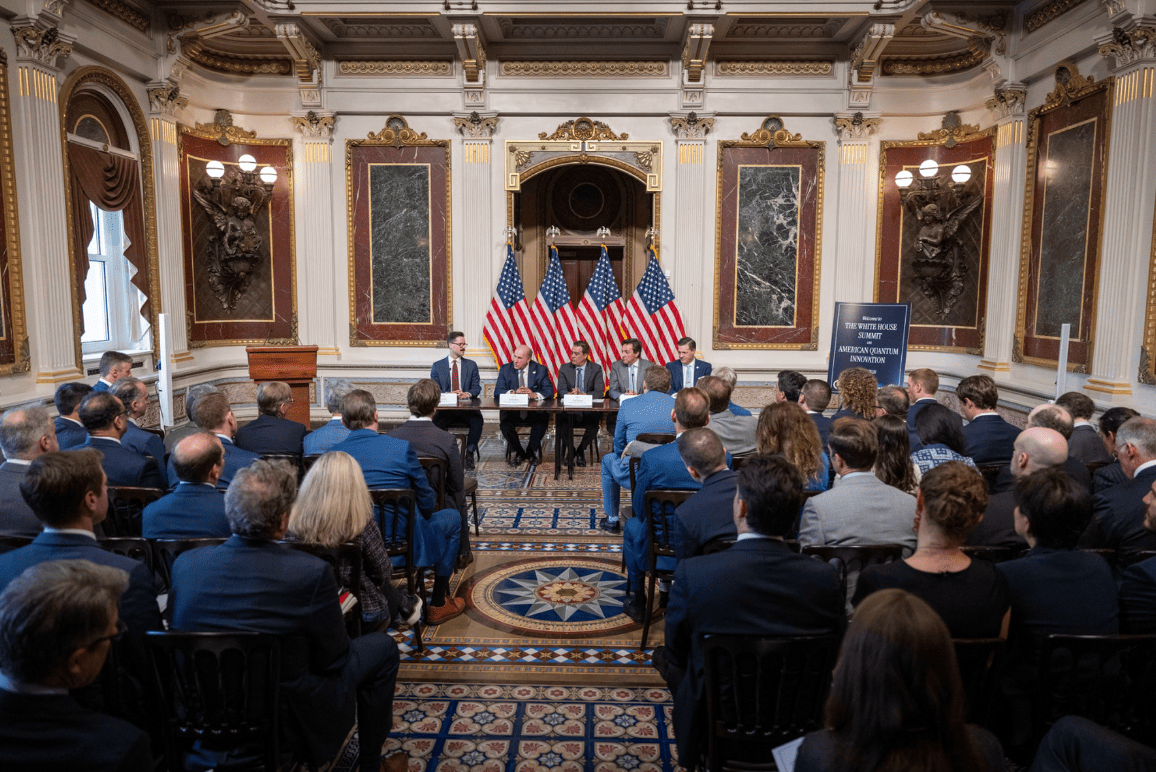
Nearly every major quantum company in the country had a seat: the chief executives, the founders, the people whose names sit on the papers and the funding rounds. We met in the Indian Treaty Room, in the Eisenhower building beside the West Wing. Across the table were the officials who now carry this technology inside the government, the people who make policy and marshall resources for the U.S. Government’s quantum strategy. What struck me was not who was in the room, but how fast we got to work. No one pitched a product or talked up a single machine. The people there already knew each other, so the conversation started at the level of the technology itself. Every goal on the table was about quantum broadly, not about any one company.
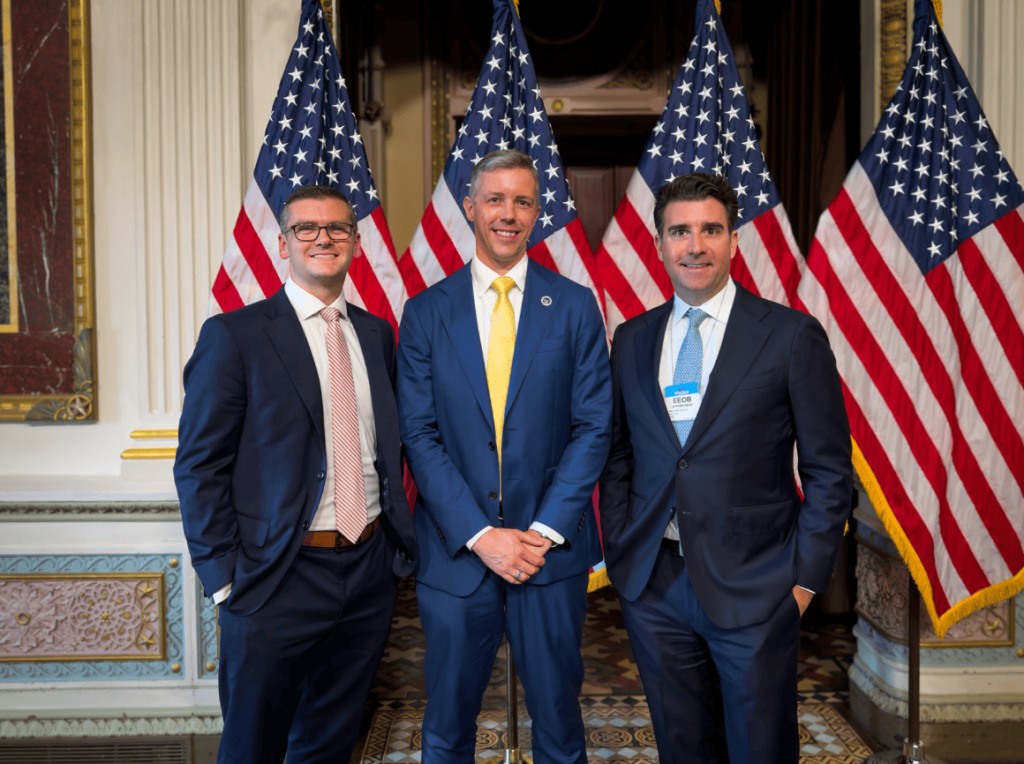
A word about how I am writing this. The event ran under Chatham House rules, so I will not tell you who said what. I will tell you what was said, and what it felt like to sit in a room where the country’s most serious quantum people, in government and industry, talked to each other as if the outcome were still in doubt. The photographs show who was there. The words travel on their own.

All of this traces back a few weeks, to a pair of quantum-focused executive orders. The president signed both in front of the cameras, and the language was deliberate: move the technology out of the laboratory and into commercial use, and secure long-term American ownership of what comes next while protecting our digital infrastructure. Most strategy documents in this field describe the future in the conditional tense. These read like instructions. What had been deliberated quietly for months was now policy, and the room was no longer debating whether. It was working on how.
For most of the last decade, quantum in America has run on federal research money and the patience of a few believers. The work was serious, but it sat upstream of anything you could sell. This morning was where that changed. The announcements came one after another, and together they described a government that has decided to become a customer.
That decision matters more than any single dollar figure, though the figures were there too. A quantum allocation inside the national chips effort that started at zero and now sits well over a billion. A sensing initiative in the hundreds of millions, built to move at the speed of a commercial solicitation instead of a typical government contract. A national quantum computing goal set for 2028, framed as an open competition across every hardware approach rather than a bet on one company. Big numbers, but the posture behind them is the real news.
There is a long American precedent for it. The government has always been the first buyer of technologies too hard and too early for anyone else, from radar to the nuclear age to the satellites and the positioning system that now sits in every phone. In each case the first purchase came before the market existed and helped make it. The same logic applied in the room. The government will, in many cases, be the first buyer of quantum-safe cryptography, quantum sensing, and quantum computing. The private market will follow, as it always has, but the government intends to go first.
The industry side impressed me because it did not oversell. Asked what would shape the next five to ten years, the founders and chief executives did not describe a machine that replaces the computer on your desk. They described a companion to it: quantum working alongside classical computing and AI, handling the narrow set of problems where it has a real advantage and leaving the rest alone. One quantum computer will not replace all the classical computers in New York, and no one pretended otherwise. The consensus even put sensing ahead of computing on the calendar. The example that stayed with me was a quantum sensor on an aircraft, letting a plane navigate without a satellite signal that can be jammed or lost. Not a distant idea, but an engineering program with a timeline.
Then came the part I did not expect. The people closest to the technology spent real time on what is still broken. The algorithms are still ahead of the hardware; we do not yet have enough of the ones that would make a 2028 machine worth building for a problem of real national or economic weight. There is a certification problem: if you build a quantum computer to solve a problem too hard for any classical computer to check, how do you prove the answer is right? And the field still lacks the standards to tell a real demonstration from a staged one. Without shared ways to measure and compare, the whole ecosystem runs on trust, and trust does not scale a supply chain.
That supply chain was the quiet worry under the whole morning. The most sober point of the day was that the enabling layer will not build itself. Fund the top of the stack and assume the suppliers will follow, and you will be wrong. Someone had run the survey to prove it, mapping roughly a hundred and sixty companies by where they headquarter, source, build, and sell; the result is complicated, deeply connected, and does not respect national borders. The states are already moving on it, faster than Washington. I heard one account of getting every partner in a state aligned in months, the universities, the national laboratory, and the utilities, with three hundred million tied to real infrastructure and a workforce plan that ran through the trade schools as seriously as the doctoral programs. This industry will not run on physicists alone. It needs the technicians who keep the machines cold and the networks lit.
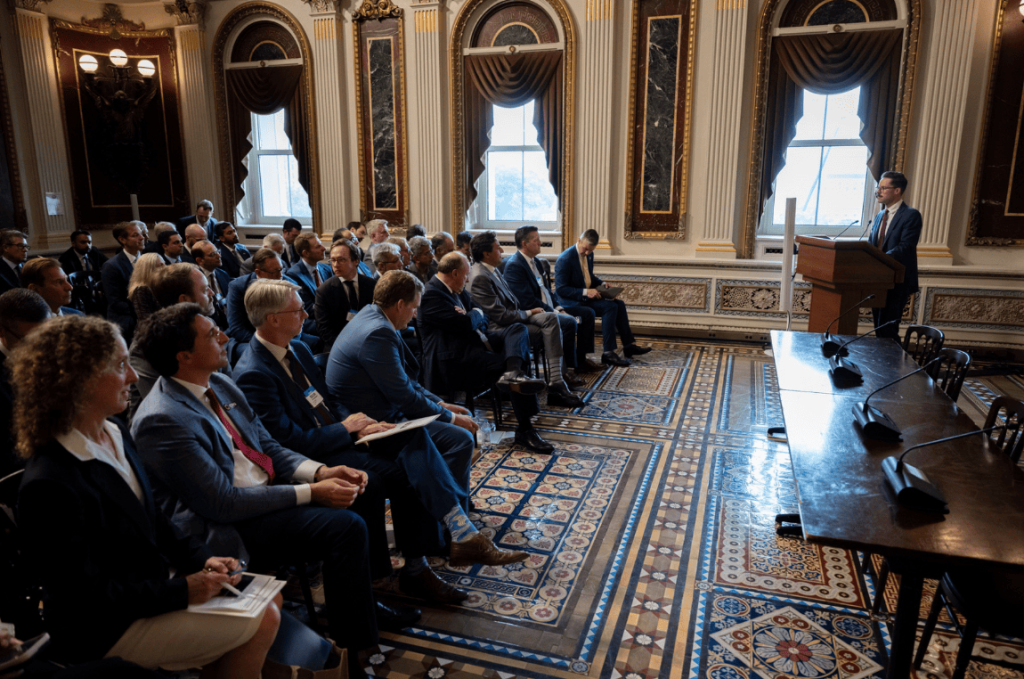
The China question sat in the room without taking it over, which I read as a sign of maturity. China is investing across the entire stack, and allies are increasingly building their own local versions of everything. The risk the room named was not falling behind in one race. It was ending up with too few suppliers and too few paths, the redundancy that makes an industry hard to knock over. The answer that kept coming up was to onshore what has to be onshored and work with friends on the rest.
One quality ran through the morning that I did not expect. The agencies were careful in a way Washington is not known for. The repeated theme was to get it right rather than fast, to build something that lasts past any one administration. The science here outruns the politics, and the people responsible treated that as a responsibility rather than a nuisance. That stayed with me longer than any of the numbers.
Near the end, more than one person said out loud what I had been feeling since I walked in: that this was one of those days we will look back on, the point where the commitment became real and public. I am wary of that kind of talk, because every field wants to believe its meetings are historic. But I walked out and could not shake the sense that this time it was true. I know the difference between momentum and ceremony. This was momentum.
And it all came from two orders signed a few weeks earlier, and from the seriousness with which a room full of serious people chose to answer them. The country said an ambitious thing out loud, put its name on it, and filled a room with the people who will have to make it true. They showed up ready to work, not to celebrate. The morning did not draw up a plan so much as commit to one, in person, among the people who will carry it.
I folded the program along its crease and put it in my jacket. Outside, the city went on as usual. But something had settled that morning. A country and the architects of the next technological revolution had lined up behind the same intention, and I was in the room when it happened. That does not happen often, and I expect I will remember it for a long time.