
Insider Brief
- Yale-led ERASE received a $4 million NSF grant to begin a two-year second phase aimed at developing a blueprint for a large-scale, error-correcting quantum computer.
- The project focuses on erasure qubits that can flag dominant errors when they occur, potentially making quantum error correction easier to manage.
- ERASE will expand research, software, algorithm and workforce-development efforts with partners including D-Wave Quantum, Princeton, the University of Maryland and Southern Connecticut State University.
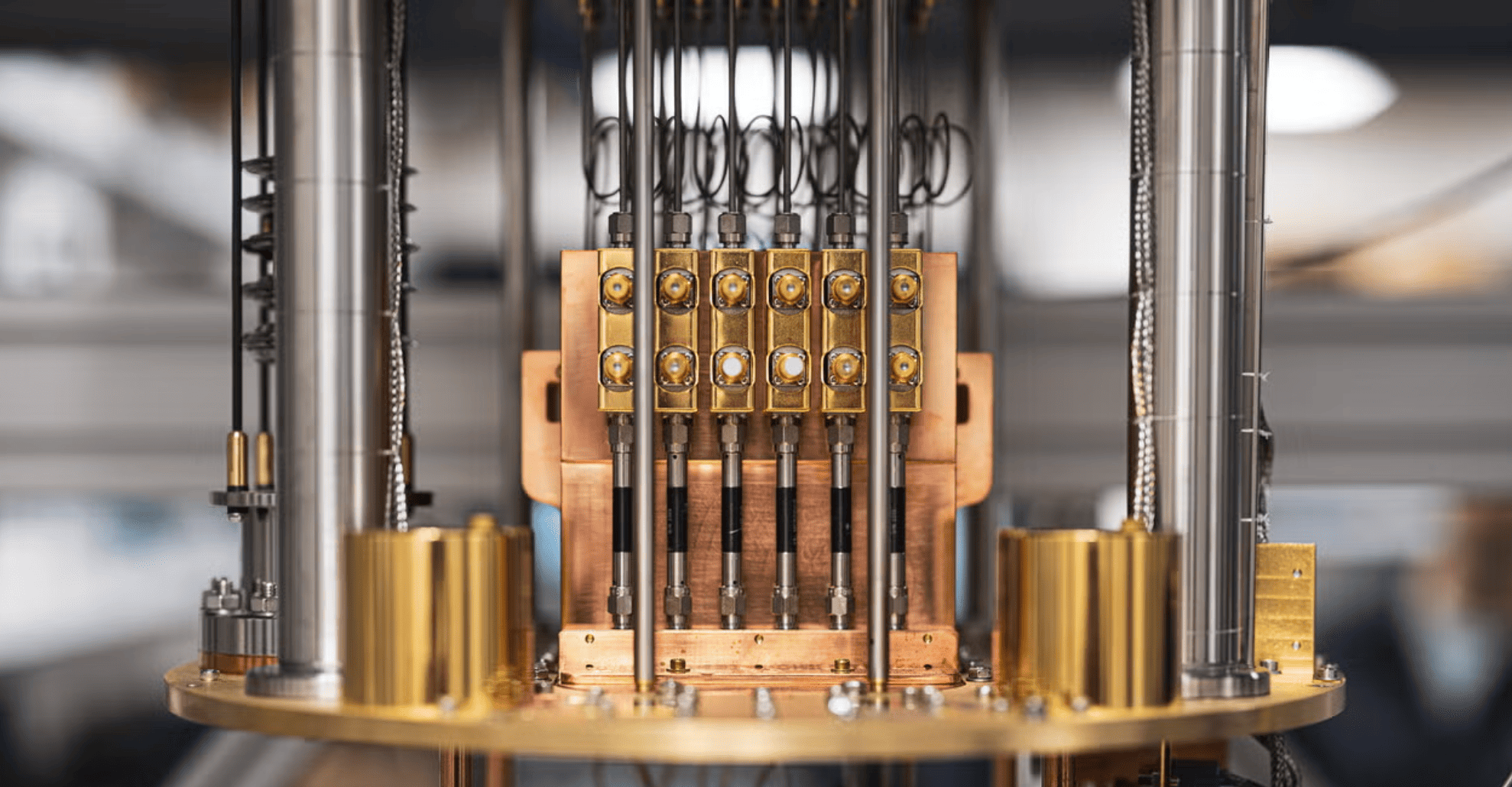
- Image: Hatridge Lab.
PRESS RELEASE — A Yale-led project — aided by a national community of researchers — has reached the next step in its effort to develop the first large-scale, error-correcting quantum computer.
More than a year ago, the ERASE project — Erasure Qubits and Dynamic Circuits for Quantum Advantage — was one of six pilot projects awarded $1 million grants by the National Science Foundation (NSF). Those pilot projects all drew upon the expertise of the National Quantum Virtual Laboratory, an online group of researchers in computer applications and algorithms, software, and systems architecture.
On June 24, the NSF announced a new, $4 million grant that will support ERASE’s second phase of work and is expected to advance efforts to expand the quantum workforce in New Haven.

In this new phase, ERASE will develop an initial blueprint for the hardware and software necessary for its unique approach to quantum computing, the project’s leaders say. It will also expand its efforts to develop a quantum tech workforce in Connecticut, along with industry partner D-Wave Quantum, which in January acquired the Yale start-up company Quantum Circuits, Inc.
At the heart of the project is a new way to tackle error correction, featuring “erasure flag” quantum bits that identify errors when they occur, making them easier to fix, said Yale’s Steven Girvin, the principal investigator for ERASE.
“The particular hardware architecture we are developing with D-Wave Quantum is quite different from existing architectures because the dual-resonator, or erasure, qubits can raise a flag when the dominant error occurs,” said Steven Girvin, who is also Sterling Professor of Physics in Yale’s Faculty of Arts and Sciences (FAS) and professor of applied physics at Yale School of Engineering and Applied Science (Yale Engineering).
“To take full advantage of this capability, we will need the help of a national community of researchers from physics, computer science and related fields who can experiment at all levels of the system ‘stack’ to find the best ways to utilize this error flag information,” Girvin said. “We will need new algorithms, new software, new compilers, and new quantum error correction protocols.”
Co-PIs on the project are Michael Hatridge, an associate professor of applied physics at Yale Engineering, Christine Broadbridge of Southern Connecticut State University, Margaret Martonosi of Princeton, and Xiaodi Wu of the University of Maryland.
Additional senior members of the project from Yale include Yongshan Ding, assistant professor of computer science and applied physics at Yale Engineering; Shruti Puri, assistant professor of applied physics at Yale Engineering and assistant professor of physics at FAS; and Aleksander Kubica, assistant professor of applied physics at Yale Engineering.
The second phase of the ERASE project will last two years, Hatridge said.
“What will happen in this phase is that we will expand our research and workforce and education efforts, build out our interface between our physical hardware and researchers who want to work on algorithms, compilation, and error correction in our unique erasure-qubit hardware, and develop a detailed plan for the hardware we plan to build in phase 3,” Hatridge said.
He added that D-Wave Quantum’s research and development component of the project will be based in New Haven. “D-Wave Quantum will be substantially expanding the New Haven workforce,” he said.