
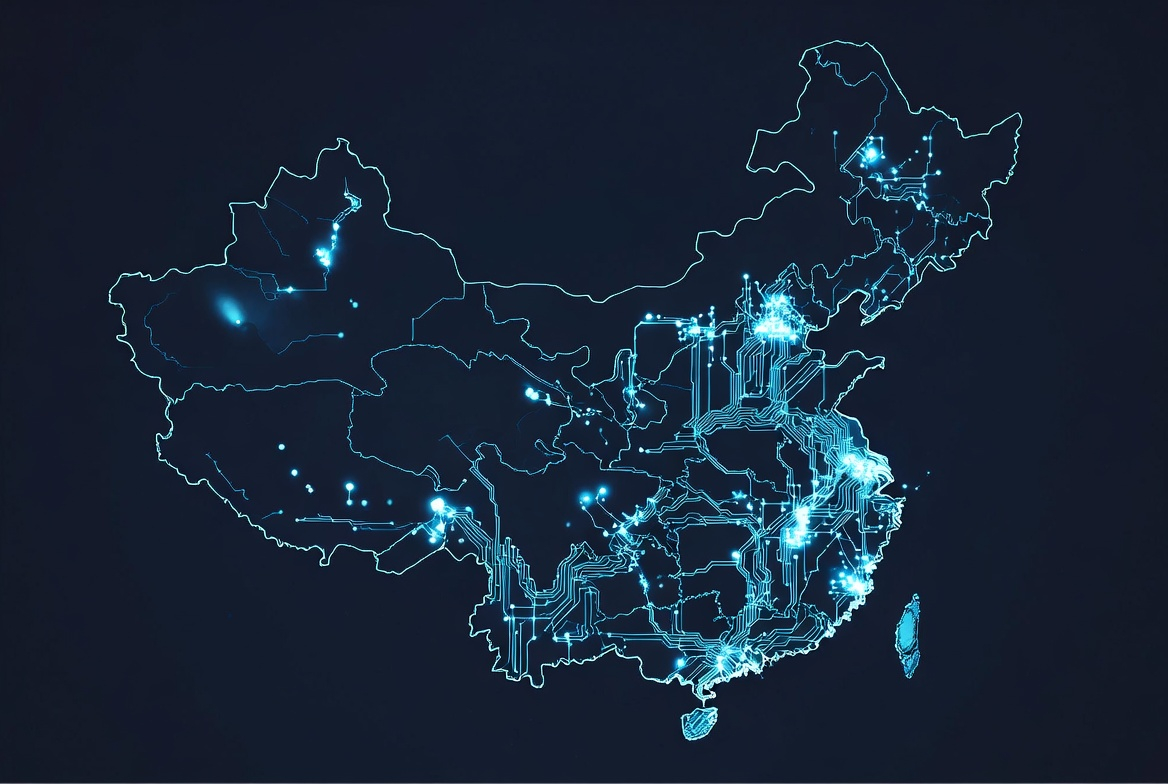

As Beijing’s 15th Five-Year Plan designates quantum as the country’s top “future industry,” two startups close ~$145 million rounds within days of each other, marking the return of large-scale capital to a sector that went quiet after Alibaba and Baidu walked away.
SpinQ Technology, a Shenzhen-based superconducting quantum computing company, completed a CNY 600 million ($87 million) Series C+ on April 3, bringing its total Series C to nearly CNY 1 billion ($145 million) in three months. Days earlier, Beijing-based photonic quantum company QBoson (Bose Quantum Technology) closed a CNY 1 billion ($145 million) Series B. Until recently, individual quantum funding rounds at this scale were almost exclusively concentrated in the United States and Europe. Their appearance in China, within the same week, marks the return of larger-scale capital to a sector that had been notably quiet on the private investment front.
The timing is not incidental. China’s 15th Five-Year Plan (2026-2030), adopted in March, names quantum technology as the first of seven “future industries” earmarked as new engines of economic growth. The plan backs that designation with a National Venture Guidance Fund that has allocated CNY 121.8 billion ($17.5 billion) across three regional investment vehicles covering Beijing-Tianjin-Hebei, the Yangtze River Delta, and the Guangdong-Hong Kong-Macao Greater Bay Area.
The $15 Billion Question
China’s government investment in quantum technology is widely cited at approximately $15 billion. That figure, referenced by CSIS, McKinsey, and others, deserves context. It includes infrastructure spending such as the Hefei National Laboratory for Quantum Information Sciences, a 37-hectare campus that alone absorbed an estimated $10 billion. It includes university R&D grants, the 12,000-kilometer quantum communication backbone network, and satellite programs like Micius. A CSIS analysis noted that some analysts apply a 60% effectiveness discount to China’s announced figures, reflecting a pattern where funding targets are not always fully realized, or where activities are relabeled as “quantum” to meet political targets.

What the headline number obscures is how little private capital was reaching Chinese quantum startups. TQI Intelligence Platform data shows that prior to 2022, funding rounds for Chinese quantum companies were overwhelmingly small, typically in the $1-16 million range, and backed almost entirely by government-linked vehicles: CAS Star, Shenzhen Angel FOF, Hefei High-tech VC, and similar entities. Rounds above $50 million were rare. Rounds above $100 million were essentially nonexistent outside of Origin Quantum’s $148 million Series B in 2022, which was itself led by the state-backed China Internet Investment Fund.
An important caveat applies to the current wave as well. The distinction between “private” and “public” capital in China is not as clear-cut as it would be in the United States or Europe. Several of the lead investors in the SpinQ and QBoson rounds, including ICBC Capital, Beijing Financial Holdings, and CCB Private Equity, are subsidiaries of state-owned banks and enterprises. This is capital deployed through commercially oriented vehicles with return expectations, but it operates within a state-directed financial system. It is a hybrid model that does not map cleanly onto Western categories.
When the Big Companies Left
The return of larger funding rounds is especially notable against the backdrop of 2023-2024, when China’s two biggest technology companies abandoned quantum research.
Alibaba shut down its DAMO Academy quantum lab in November 2023, donating equipment to Zhejiang University. Baidu followed in January 2024, offloading its lab and 36-qubit Qian Shi superconducting system to the Beijing Academy of Quantum Information Sciences (BAQIS). Neither company gave a public explanation, though restructuring pressures, a pivot toward generative AI, and the impact of U.S. export controls on cloud infrastructure were widely cited as contributing factors.
Table 1: Chinese Tech Giants and Quantum
| Company | Peak Quantum Activity | Status | Disposition |
|---|---|---|---|
| Alibaba | DAMO Academy quantum lab, 11-qubit cloud platform | Exited (Nov 2023) | Lab and equipment donated to Zhejiang University; DAMO pivoted to AI |
| Baidu | Quantum Computing Institute, 36-qubit Qian Shi system | Exited (Jan 2024) | Lab donated to BAQIS; focus shifted to generative AI |
| Huawei | HiQ Quantum Cloud Platform (beta) | Scaled back | Cloud platform remains in beta; no significant public quantum updates |
| Tencent | Tencent Quantum Lab | Scaled back | Lab appears in maintenance mode; strategic focus on HPC and AI convergence |
At the time, the exits reinforced a narrative that China’s private sector lacked the appetite for the long-horizon investment that quantum demands. What has followed looks more like a reallocation: capital has moved from generalist tech conglomerates toward specialist quantum startups with clearer hardware roadmaps and, increasingly, commercial revenue.
Larger Rounds Return
According to Chinese venture tracking platform IT Juzi, the domestic quantum computing track recorded 150 financing events with an estimated total of CNY 11.2 billion as of mid-March 2026. Total financing in the first three months of 2026 reached CNY 2.2 billion, nearly matching the full-year total for 2025 (CNY 2.5 billion).
The SpinQ and QBoson rounds are the most prominent examples, but TQI Intelligence Platform data shows a broader pattern of escalating round sizes and a widening investor base across Chinese quantum companies over the past 18 months.
Table 2: Selected Chinese Quantum Funding Rounds (2024-2026)
| Company | Date | Round | Amount (Est.) | Technology | Lead Investors |
|---|---|---|---|---|---|
| SpinQ | Apr 2026 | Series C+ | $87M | Superconducting | Guotai Junan, Cornerstone Capital, Sichuan Zhenxing |
| QBoson | Mar 2026 | Series B | $145M | Photonics | Beijing Financial Holdings, ICBC Capital, CMB International |
| YOFC (quantum unit) | Feb 2026 | Series A | $146M | Hardware/components | Yangtze River Industrial Investment Group |
| Zhongke Qingneng | Jan 2026 | Pre-A | $72M | Cryogenics/cooling | CDH Baifu, NIO Capital, Henan Assets |
| SpinQ | Jan 2026 | Series C | ~$58M | Superconducting | Longli Technology, Jadex Capital, HTHS Capital |
| Zhongke Kuyuan | Jan 2026 | Strategic | $14M | Neutral atoms | China Mobile |
| QBoson | Oct 2025 | Series A++ | $15M | Photonics | Huade Tech Innovation, Nanshan Strategic Investment |
| SpinQ | Jul 2025 | Series B | $14M | Superconducting | CCB Private Equity, Liangxi Sci-Tech City Fund |
| Huayi Quantum | Jan 2024 | Seed | $14M | Trapped ion | China Mobile Capital |
| Origin Quantum | Jul 2022 | Series B | $148M | Superconducting | China Internet Investment Fund, CCB International |
Source: TQI Intelligence Platform.
Commercialization Signals
The funding is arriving alongside tangible commercialization milestones that distinguish the current moment from earlier waves of Chinese quantum investment.
SpinQ reported 80% year-over-year order growth in Q1 2026, with its superconducting business now accounting for 65% of total revenue. The company became the first Chinese enterprise to export a complete superconducting quantum system and chip to international markets, with products now deployed in over 200 institutions across more than 40 countries. QBoson opened China’s first large-scale photonic quantum computer factory in Shenzhen in November 2025, and has delivered systems to clients including the National Supercomputing Center in Chengdu and China Mobile.
On the public markets side, Origin Quantum initiated IPO counseling for the Shanghai STAR Market in September 2025, with an implied valuation of approximately CNY 6.9 billion (~$950 million). CIQTEK, a quantum sensing and instruments company, received STAR Market IPO approval in December 2025 at an implied valuation of roughly CNY 11.7 billion (~$1.6 billion). And China Telecom became the controlling shareholder of QuantumCTek in January 2025, creating a state-anchored entity operating the Tianyan quantum cloud platform, which has attracted over 37 million visits from users in more than 60 countries.
Table 3: Top-Funded Chinese Quantum Companies (Cumulative Disclosed Funding)
| Company | Founded | Total Raised (Est.) | Technology | Stage | Notes |
|---|---|---|---|---|---|
| SpinQ | 2018 | ~$175M+ | Superconducting / NMR | Series C+ | First Chinese firm to export superconducting system; 80% YoY Q1 order growth |
| QBoson | 2020 | ~$175M+ | Photonics | Series B | First photonic quantum factory (Shenzhen, Nov 2025); delivered to NSCC Chengdu |
| Origin Quantum | 2017 | ~$165M | Superconducting | Pre-IPO | Targeting Shanghai STAR Market; ~$950M valuation; 72-qubit Wukong system |
| TuringQ | 2021 | ~$128M | Photonics | Series B | CMOS-compatible silicon photonics chips; valued at ~CNY 7B |
| QuantumCTek | 2009 | ~$43M (IPO) | QKD / Communications | Public (STAR Market) | Now under China Telecom control; market cap ~CNY 66B |
| CIQTEK | 2016 | Undisclosed | Sensing / instruments | Pre-IPO | STAR Market IPO approved Dec 2025; ~$1.6B implied valuation |
Source: TQI Intelligence Platform. Figures reflect cumulative disclosed funding from all rounds; actual totals may be higher where round amounts were not publicly confirmed.
The Policy Backdrop
The funding activity coincides with a significant policy shift. China’s 15th Five-Year Plan, adopted in March 2026, treats quantum as an industrial policy priority on par with semiconductors and AI. The key change from the previous plan period: during the 14th FYP, most quantum programs were funded through university research grants. The 15th Plan directs resources toward commercialization support, government procurement, and manufacturing subsidies.
U.S. export controls have also accelerated domestic supply chain development. Entity list restrictions on QuantumCTek, several CAS institutes, and related supply chain firms were intended to slow China’s quantum progress. The practical effect has been a crash program in domestic dilution refrigerators, low-temperature electronics, and photonic components. Origin Quantum now exports its own SL400 dilution refrigerator to countries along the Belt and Road Initiative, a capability that did not exist three years ago.
What to Watch
China’s quantum sector is not undergoing a single, clean transition from public to private. It is becoming a more layered market in which state capital, SOE-linked financial institutions, and specialist venture investors coexist, and where the boundaries between them are often blurred. What is clear is that the scale of individual funding rounds has reached levels previously concentrated in the United States and Europe, and that the companies receiving this capital are shipping hardware, generating revenue, and preparing for public listings.
For Western quantum companies and policymakers tracking competitive dynamics, the data points accumulating in early 2026 are worth watching closely.
Go Deeper: China Quantum Briefing
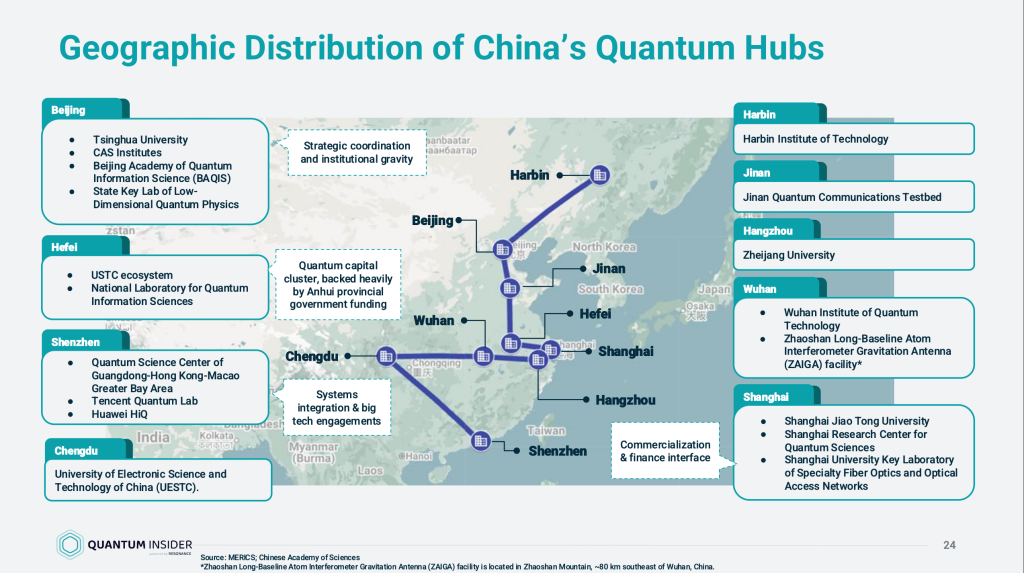
For comprehensive coverage of Chinese quantum companies, funding trends, and competitive landscape analysis, explore The Quantum Insider’s China Briefing on the TQI Intelligence Platform. The briefing covers company profiles, investment tracking, policy analysis, and technology benchmarking across quantum computing, communications, and sensing.Explore the China Briefing on TQI Intelligence Platform →