

Insider Brief
- IonQ has partnered with the University of Cambridge to establish the IonQ Quantum Innovation Centre, aimed at accelerating quantum research commercialization and workforce development in the UK.
- The collaboration will deploy IonQ’s 6th-generation 256-qubit system on campus and provide access to IonQ’s quantum cloud to support research in computing, networking, sensing, and security.
- The initiative aligns with UK national quantum strategies and will focus on research in quantum hardware, applications for chemistry, materials science, optimization, security, and advanced communication protocols.
PRESS RELEASE — IonQ (NYSE: IONQ), the leading quantum company, today announced a landmark agreement with the University of Cambridge to establish the IonQ Quantum Innovation Centre. The collaboration is designed to accelerate quantum research commercialization, expand IonQ’s intellectual property portfolio, and deepen the company’s commitment to the United Kingdom’s quantum ecosystem.
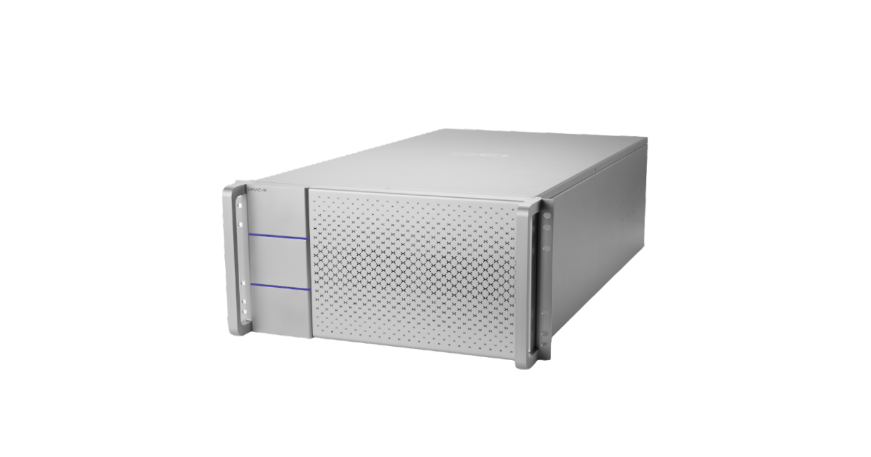
As part of the initiative, the parties intend to deploy IonQ’s 6th-generation, chip-based, 256-qubit system on campus and provide access to IonQ’s quantum cloud, supporting advanced research and workforce development across quantum computing, networking, sensing, and security. The partnership will generate significant innovation and intellectual property to be shared under established licensing terms. The structure of the agreement is designed to align academic research incentives with commercial outcomes and long-term industry impact.
“This historic agreement with Cambridge deepens IonQ’s commitment to the United Kingdom and accelerates our technology platform with novel research at one of the world’s most storied physics powerhouses,” said Niccolo de Masi, Chairman and CEO of IonQ. “By establishing the IonQ Quantum Innovation Centre, we are strengthening the bridge between academic discovery and commercial quantum advantage. We believe this partnership will contribute meaningfully to the UK’s commitment to advancing scalable quantum computing, networking, sensing, and security.”

“We’re proud that Cambridge is at the heart of the UK’s next computing revolution,” said Professor Deborah Prentice, Vice-Chancellor of the University of Cambridge. “This new and ambitious partnership is the first of its kind for a UK university. It’s not just a new facility for Cambridge — it’s one for the whole of the UK, and it will develop not only exciting new technologies but also the UK’s next generation of leaders in quantum science.”
The collaboration also aligns with the United Kingdom’s broader strategy to accelerate quantum innovation and commercialization. The initiative complements national efforts such as the UK National Quantum Technologies Programme, the National Quantum Computing Centre (NQCC), and commercialization initiatives supported by Innovate UK, which aim to translate academic breakthroughs into commercial technologies. The University of Cambridge also plays a central role in the country’s quantum ecosystem, participating in four of the UK’s five national quantum technology hubs that connect leading universities, industry partners, and government laboratories. Cambridge has further emerged as a leader in quantum networking research, including development of a large-scale fiber-based testbed linking Bristol and Cambridge—one of the longest experimental quantum communication networks in the United Kingdom.
Cambridge’s Cavendish Laboratory—is associated with 36 physicists who won Nobel Prizes in that field, of the University’s 126 Nobel Prize laureates—remains one of the world’s leading centers for physics research. Its legendary innovators include James Clerk Maxwell who was the first Cavendish Professor of Physics and first to prove that light, electricity, and magnetism work together as “electromagnetic waves;” as well as Ernest Rutherford who discovered the architecture of the atom and is widely regarded as the “Father of Nuclear Physics.”
The new IonQ quantum center is expected to support collaborative research programs, academic engagement, talent development initiatives and industry-facing events, while creating a structured pathway for translating foundational research into commercial applications.
Research areas include quantum hardware for computing, networking, sensing, and security, and quantum applications for chemistry, materials science, optimization, security, and advanced communication protocols – all areas aligned with IonQ’s roadmap of critical quantum technologies.