

Insider Brief
- Chromos Labs, Tessara Therapeutics, Quantum Brilliance, Axol Biosciences and the University of Melbourne have formed a consortium to develop a quantum-enabled brain-on-chip platform that uses diamond-based sensing to measure real-time electrical activity in 3D human neural micro-tissues.
- The platform integrates Tessara’s RealBrain® cultures with diamond nano-pillar sensors capable of detecting millivolt-scale neural signals, aiming to improve the predictability and decision-making of neurological drug development by using human-relevant tissue models.
- Backed by Australian Government funding under the Critical Technologies Challenge Program, the expanded consortium will build a prototype designed to distinguish between healthy, diseased and toxin-exposed neural tissues while establishing a scalable manufacturing pathway for quantum-grade diamond sensor chips.
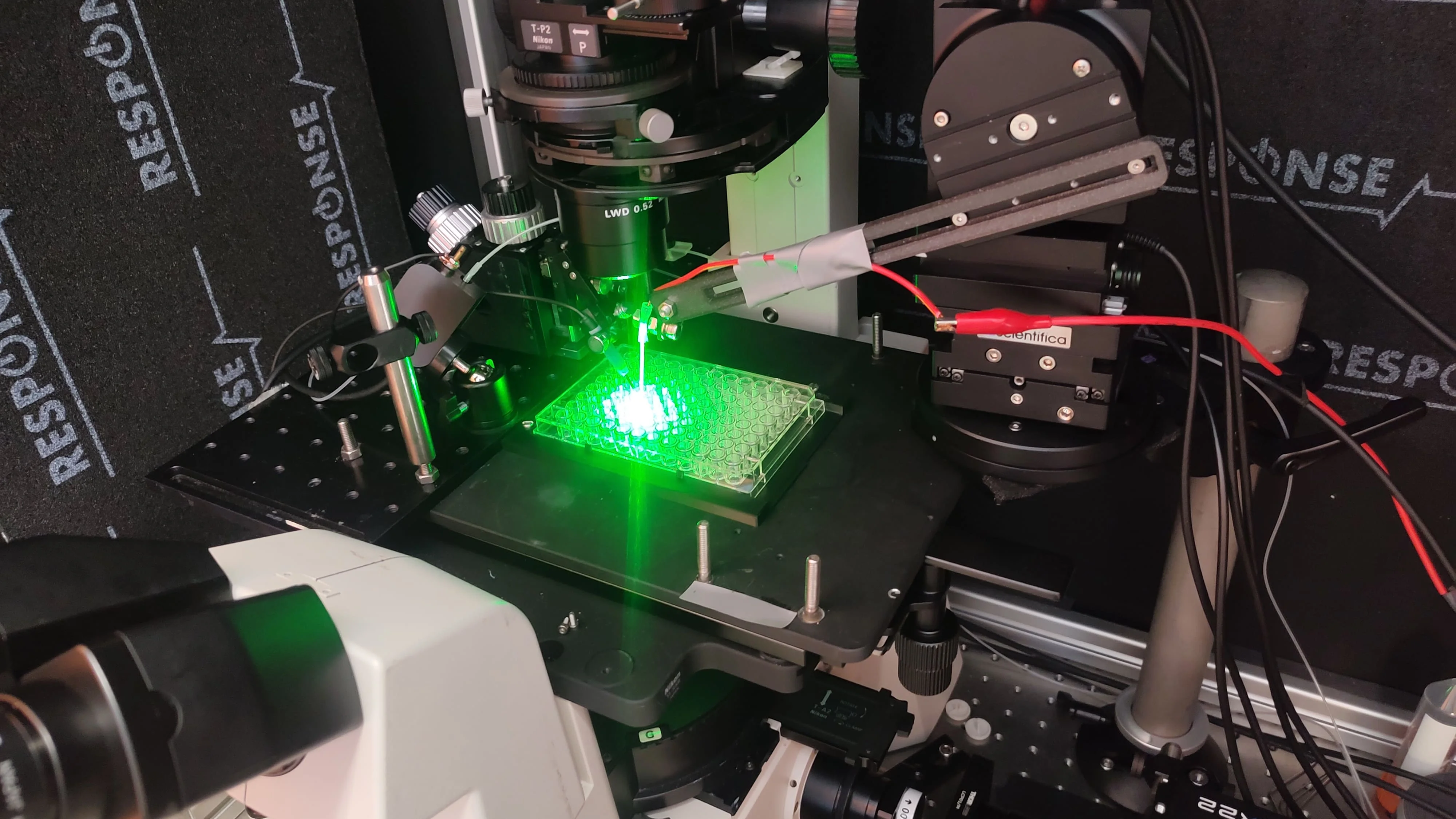
- Image: Diamond voltage imaging trials on a prototype fluorescence microscope. (Chromos Labs)
PRESS RELEASE — Chromos Labs, Tessara Therapeutics, Quantum Brilliance, Axol Biosciences, and the University of Melbourne today announced a consortium to develop a quantum-enabled brain-on-chip platform that measures real-time electrical activity from 3D human neural micro-tissues. The platform will integrate Tessara’s RealBrain® human neural micro-tissue cultures with a diamond-based quantum sensing approach that optically detects electrical signals produced by brain cells.
Neurological drug development remains one of the highest-risk areas in biopharma, in part because many preclinical models do not reliably predict human outcomes. By capturing functional neural activity directly in human-relevant 3D tissue models, at scale, the consortium aims to help researchers assess disease effects and treatment responses sooner and improve decision making across the development pipeline.
“This collaboration moves us closer to a new standard in neurological drug development. We are creating a platform that aligns with the global regulatory shift toward more accurate, human-relevant methods for identifying and advancing new therapies,” said Dr. Christos Papadimitriou, Co-Founder and CEO of Tessara Therapeutics. “With the strength of our partners, we are building a technology that has the potential to accelerate the development of better treatments for people living with neurological disease.”

Tessara Therapeutics, Chromos Labs, and the University of Melbourne have already successfully demonstrated the feasibility of integrating diamond micropillar arrays with Tessara’s RealBrain® micro-tissues, achieving world-first high-aspect-ratio pillar fabrication and validating their ability to detect millivolt-scale electrical signals relevant to neural activity.
“In the first phase of this project, we developed world leading fabrication techniques that allowed us to produce sensors that can look below the surface of neural tissues,” said Dr. Nikolai Dontschuk, Founder and CEO of Chromos Labs. “In this next phase, we are expanding the field of view so that we can measure the electrical signals across the whole RealBrain micro-tissues, ensuring we get the most comprehensive picture of the network state.”
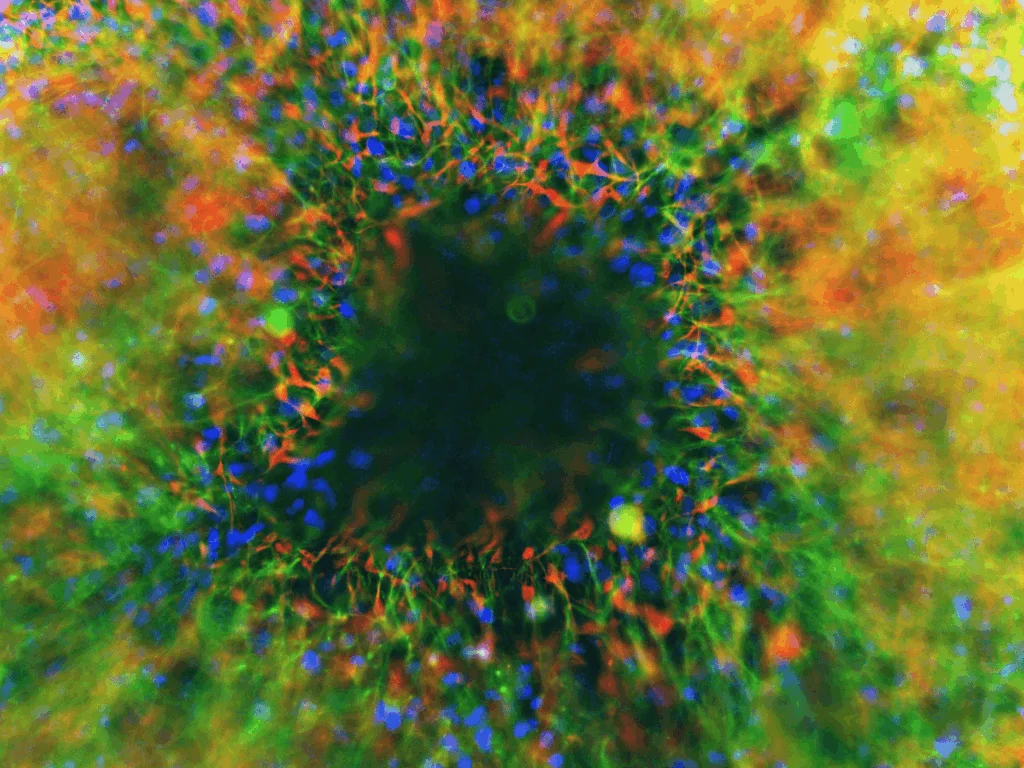
The consortium now expands to include Quantum Brilliance and Axol Biosciences, supporting development of a working prototype capable of measuring baseline electrophysiological activity and distinguishing between healthy, diseased, or toxin‑exposed versions of the neural micro-tissues.
Associate Professor David Simpson from the University of Melbourne said this second phase is critical for the translation of research in Australia. “This program brings together technology developers with end users to evaluate a novel quantum biotechnology platform. The consortium will help fast-track the development and commercialisation of the Brain-on-Chip technology.”
Each partner contributes a distinct piece of the platform: Chromos provides the diamond nano-pillar sensing chip technology, Tessara provides the RealBrain® human neural micro-tissue platform, Quantum Brilliance provides the pathway to scalable sensor chip manufacturing, and Axol Biosciences provides high-quality human iPSC-derived neurons to support standardized biological inputs.
“This consortium brings together Australia’s strength in advanced technology and manufacturing and validates our long-held belief that access to scalable, reliable quantum-grade diamond is essential.” said Dr. Marcus Doherty, Co-Founder and Chief Technology Officer of Quantum Brilliance. “The next step is establishing the manufacturing pathway that makes diamond-based products as accessible as any other chip. With that capability in place, we can realize the full social and economic potential in Australia and worldwide.”
This project received grant funding from the Australian Government under the Critical Technologies Challenge Program, Round 1, Stage 2.