


Insider Brief
- Qilimanjaro has released EduQit, a modular on-site superconducting quantum computing kit that allows universities and research institutions to train and experiment on real quantum hardware.
- EduQit fills a gap in quantum education by giving students hands-on exposure to hardware, control systems, operations, and system-level design, rather than relying only on theory, simulators, or cloud access.
- The modular, expandable design supports long-term academic use, research experimentation, qubit modality comparison, and optional cloud workflows via Qilimanjaro’s SpeQtrum platform.
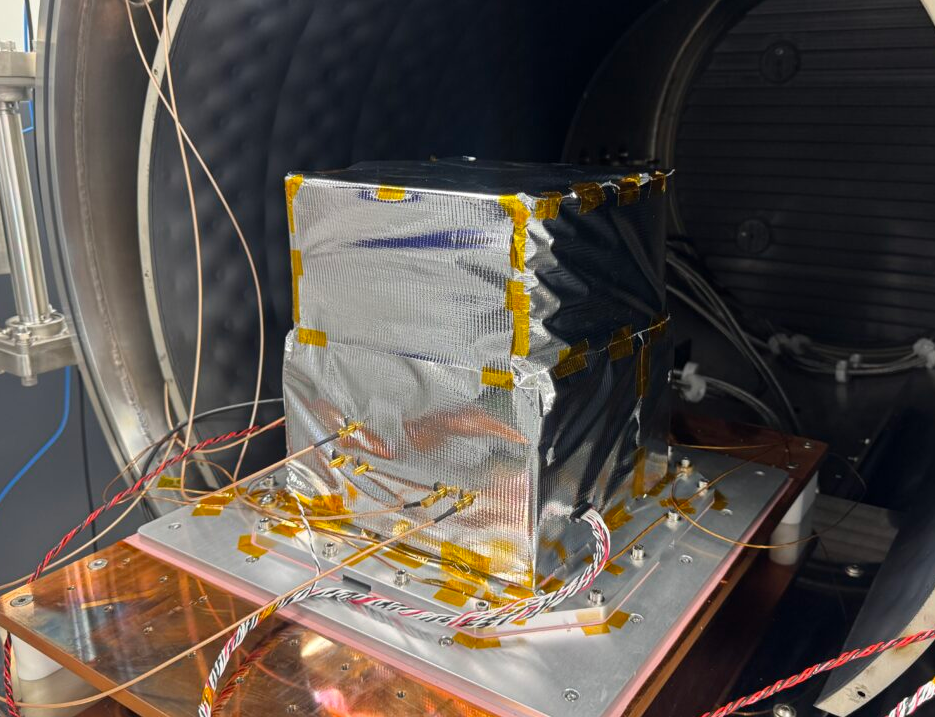
PRESS RELEASE — Qilimanjaro Quantum Tech today announced the release of EduQit, a modular quantum computing kit designed to enable hands-on training, experimental learning, and early-stage research using an on-site superconducting quantum computing system. EduQit enables universities and research institutions to work directly with a physical quantum computing system. This provides hand-on experience with hardware, control systems, operations, and application development.
With this new offering, Qilimanjaro extends its mission to build practical quantum computing capability by providing institutions with the tools needed to educate, train, and experiment on real quantum computing systems.
EduQit addresses a long-standing gap in quantum education: most academic programs rely on theory, simulators, or cloud-based access which means students miss out on learning directly how quantum systems are built, operated, and maintained. EduQit includes hardware, software, manuals and support from the Qilimanjaro team. This open design allows students and professors to understand the entire process of building and running a quantum computer as well as tailoring the hardware to fit each user’s goals.

Professor Bruno Julià Díaz is the coordinator of the interuniversity master’s degree in Quantum Science and Technology and a professor in the Department of Quantum Physics and Astrophysics at the University of Barcelona. He has worked with the Qilimanjaro’s hardware and quantum experts to provide hands-on experience for students.
“Access to modular quantum systems and close interaction with Qilimanjaro’s technical teams have allowed students, particularly at the master’s thesis level, to acquire system-level understanding and practical experience that is rarely accessible within a traditional academic setting,” he said. “This type of hands-on exposure plays a key role in advanced quantum computing education, helping bridge the gap between academic training and the realities of operating and evolving quantum technologies.”
Designed as a deployable and expandable package, EduQit supports laboratory courses, project-based learning, and bachelor’s, master’s, and doctoral thesis work. Its modular architecture allows institutions to refine the system over time, reducing technological lock-in. EduQit also provides a platform for qubit modality comparison, research experimentation, and the development and testing of enabling technologies.
Optional cloud access to Qilimanjaro’s SpeQtrum platform allows institutions to complement on-site experimentation with remote workflows and perform benchmarks, while preserving direct interaction with the system. This additional access provides researchers with the opportunity to work with a multi-modal quantum hardware design that supports digital, analog, and hybrid quantum computing paradigms. Qilimanjaro’s multi-modal data center uses this infrastructure that allows users to select the compute platform that is the best fit for their use case.
EduQit contributes to long-term institutional and ecosystem development by supporting workforce development, and enables collaboration between academia, industry, and public stakeholders. This offering also aligns with national and global industry priorities related to advanced skills development, technological sovereignty, and sustainable capability building.